TRENDING

Sunday, 8 November 2026
----------------------
28 Jumada Al-Awwal 1448 AH
A wave of protests, sparked by student grievances in France, has swept across Europe, exposing deep-seated frustrations over economic hardship and declining public services. Ordinary citizens are increasingly bearing the brunt of policies that prioritize fiscal austerity over social well-being.
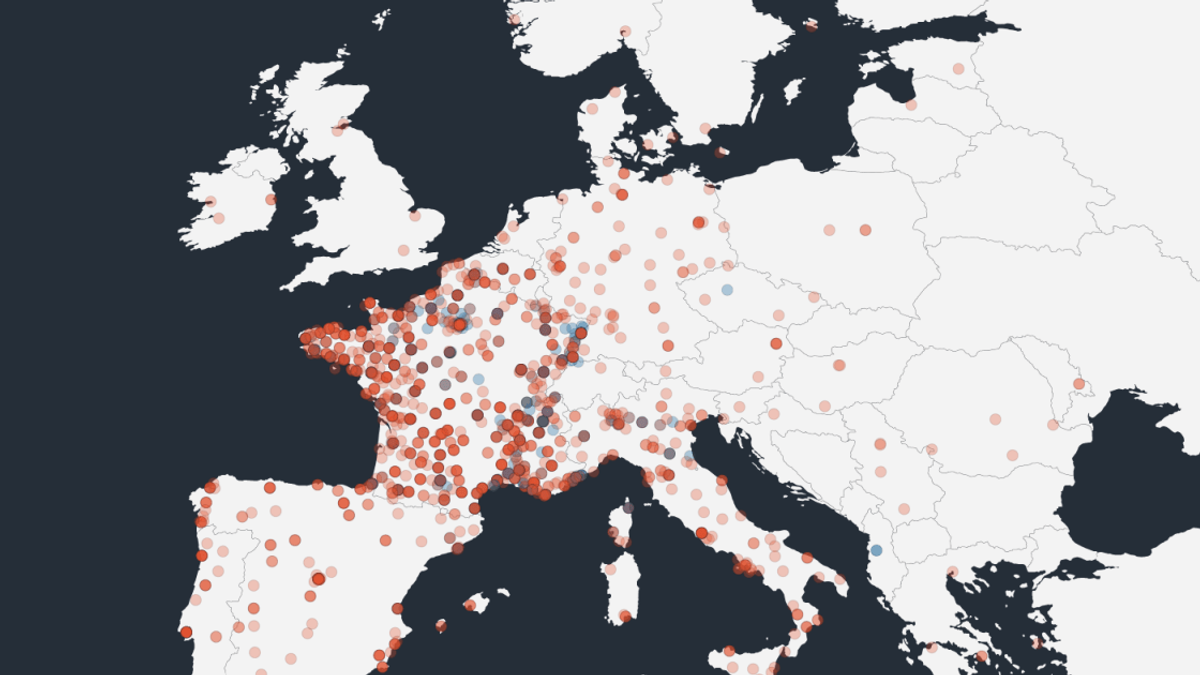
Beginning in mid-September 2026, a localized protest by high school students in France against dilapidated classrooms and teacher shortages rapidly escalated into a nationwide movement. This discontent quickly broadened, encompassing a wide array of grievances including the soaring cost of living, stagnant wages, and a severe lack of affordable social housing. The demonstrations, which drew in established trade unions and the resurging “yellow vests” movement, have been marked by an unprecedented level of confrontation, with nearly a quarter of events classified as riots—a significant increase from historical averages. French authorities have responded with substantial security deployments, leading to accusations of excessive force by United Nations experts and numerous arrests, many involving minors.
Crucially, this wave of unrest has not remained confined to France. Over the same period, more than 1,700 similar protests and riots have erupted in at least 30 other European countries, from Portugal to Poland. While none have matched the sheer scale of the French rallies, these widespread demonstrations are fueled by a common thread of underfunded public services, rising expenses, and a growing inability for ordinary citizens to secure basic necessities like housing and decent wages. This synchronized eruption of public anger across the continent signals a deeper, systemic crisis impacting the daily lives of millions.
The widespread European protests are not spontaneous outbursts but rather the predictable consequence of long-term policy choices made by powerful actors. At the heart of the crisis lies a fundamental imbalance between the demands of globalized capitalism and the social contract governments are expected to uphold. For decades, many European governments, often under pressure from European Union fiscal rules and neoliberal economic doctrines, have pursued policies of austerity. This has meant significant underinvestment in critical public services like education, healthcare, and social housing, while simultaneously advocating for wage restraint and deregulation in labor markets.
The initial trigger in France—crumbling classrooms—is emblematic of this erosion. When public infrastructure essential for social mobility and well-being is allowed to decay, it signals a deeper societal neglect. Governments, in their pursuit of balanced budgets or to attract foreign investment, often deprioritize these long-term social investments, viewing them as costs rather than foundational pillars of a stable society. The power here lies with finance ministries and economic policymakers who dictate national spending priorities, often with limited direct accountability to the citizens who rely on these services daily.
Another critical power dynamic is the widening gap between corporate profits and real wages. While inflation, particularly in fuel and food prices, has squeezed household budgets across Europe, corporate earnings have often remained robust. This suggests that powerful corporations have largely been able to pass on increased costs to consumers, while workers' wages have not kept pace, leading to a decline in purchasing power. The power to set wages and prices, influenced by powerful industry lobbies and the relative weakness of labor unions in some sectors, disproportionately benefits capital over labor. Governments, often reliant on corporate investment and tax revenue, frequently hesitate to intervene decisively to rebalance this equation, fearing economic slowdowns or capital flight.
When public discontent reaches a boiling point, the state's ultimate power—its monopoly on legitimate force—comes into play. The deployment of 70,000 security personnel in France and the documented use of tear gas and batons against protesters, including minors, illustrates this. While governments frame such actions as necessary to maintain public order, the scale of arrests and the accusations of excessive force by UN experts reveal a different dimension. This demonstrates the state's capacity to suppress dissent, even when that dissent arises from legitimate grievances, rather than addressing the root causes of the unrest. The political survival of governing parties often hinges on projecting an image of control, even if it means alienating segments of the population.
The abstract policy decisions made in distant capitals translate directly into tangible suffering and hardship for ordinary Europeans. The current wave of protests is a stark indicator of a social fabric under immense strain, with specific populations bearing the brunt of economic pressures and governmental neglect.
For high school students in France, the initial spark, the cost is immediate and profound. Attending classes in crumbling buildings, facing overcrowded classrooms, and suffering from a lack of teachers directly impacts their educational quality and future prospects. This isn't just an inconvenience; it's a systemic disadvantage that limits their ability to compete in an increasingly complex global economy. Furthermore, their participation in protests has come at a high personal price, with thousands arrested, many of them minors, and instances of severe injury, such as a teenager losing a hand. This level of state response against young citizens exercising their right to protest can instill deep-seated disillusionment and distrust in democratic institutions, shaping their political engagement for decades to come.
Across Europe, the most significant human cost falls upon the working poor and households struggling with precarious employment. Rising fuel prices, escalating food costs, and unaffordable housing are not abstract economic indicators for these individuals; they represent daily choices between heating their homes, feeding their families, or affording rent. Stagnant wages, which have failed to keep pace with inflation, mean that even those with full-time employment find themselves falling behind. The dream of homeownership becomes an impossibility, and the security of a stable life recedes further out of reach. This economic pressure leads to increased stress, mental health issues, and a constant state of anxiety, eroding the quality of life for millions.
Beyond economic hardship, the human cost extends to the erosion of civil liberties. When police respond to largely peaceful demonstrations with what UN experts describe as
Protests are spreading due to a combination of factors, including rising living costs, stagnant wages, unaffordable housing, and the deterioration of public services like education. These issues have created widespread economic hardship and a sense of neglect among ordinary citizens.
France has been identified as the epicenter of the current protest wave. Demonstrations there, initially sparked by student grievances over crumbling classrooms, quickly broadened to encompass wider economic and social issues, inspiring similar movements across at least 30 other European countries.
The cost of living crisis disproportionately affects students, the working poor, and precarious households. These groups struggle with stagnant wages, high inflation in essential goods like fuel and food, and a lack of affordable housing, leading to significant daily hardship and stress.
Editor's Note: Analysis is based on provided raw intelligence and general geopolitical context. Dates (2026) are taken directly from the source material.
Source referenced: ALJAZEERA
This brief was synthesized by our Editorial Engine and reviewed by The Ground Narrative team.