TRENDING

Saturday, 7 November 2026
----------------------
27 Jumada Al-Awwal 1448 AH
A surge in AI data center construction across Mexico, fueled by global tech demand, is sparking widespread concern among residents. Communities in central Mexico are particularly worried about the immense water consumption of these facilities, threatening their already strained resources.
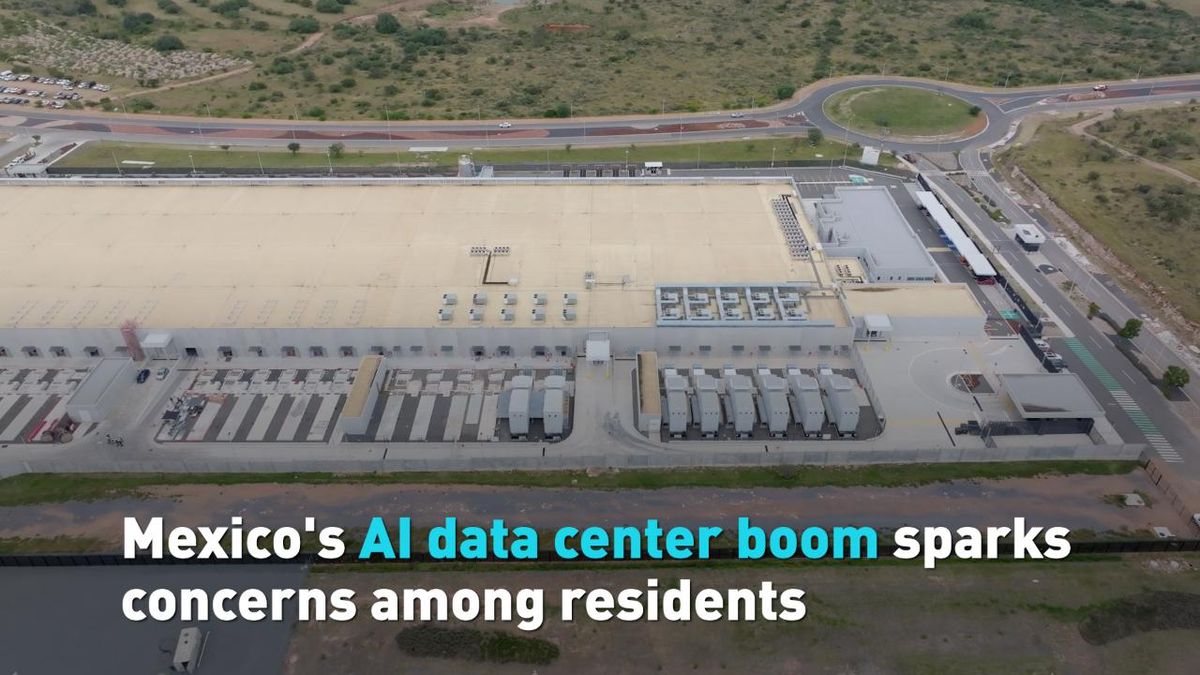
Mexico is experiencing a rapid expansion of artificial intelligence data centers, positioning itself as a key hub in the global race for advanced computing infrastructure. This boom, concentrated largely in central Mexico, is driven by major international technology companies seeking to expand their cloud services and AI processing capabilities. However, this industrial growth has not been met with universal enthusiasm; residents in affected areas are increasingly vocal about the profound impact these facilities are having on their local environments and daily lives, primarily citing concerns over massive water and energy consumption.
At the heart of Mexico's data center boom lies a complex interplay of global technological demand, national economic ambition, and corporate strategy. The insatiable appetite for AI, machine learning, and cloud computing requires vast networks of data centers, which are essentially massive warehouses of servers. These servers generate immense heat, necessitating constant and substantial cooling, often achieved through water-intensive processes or energy-intensive air conditioning.
Mexico's appeal to global tech giants is multi-faceted. Its geographical proximity to the United States offers reduced latency for data transmission, a critical factor for real-time AI applications and cloud services. Compared to its northern neighbor, Mexico often presents lower operational costs, including land, labor, and potentially less stringent regulatory hurdles or easier pathways for project approval. This aligns with a broader trend of 'nearshoring' or 'friendshoring,' where companies relocate operations closer to home or to politically aligned nations to mitigate supply chain risks.
For the Mexican government, attracting such foreign direct investment represents a strategic opportunity. It promises economic growth, job creation (albeit often highly specialized and limited in number), and integration into the high-value global technology supply chain. Local governments, in particular, may be incentivized to approve these projects through promises of tax revenue or infrastructure development, often overlooking or downplaying the long-term environmental and social costs. This creates a significant power imbalance: on one side are multinational corporations with vast financial resources and influence, often backed by national development agendas; on the other, local communities with limited political leverage, struggling to protect their immediate environment and resources.
The most immediate and devastating human cost of Mexico's data center expansion is the exacerbation of water scarcity. Data centers are notoriously thirsty, consuming millions of gallons of water annually for cooling systems. In regions of central Mexico that already face chronic water stress due to climate change, over-extraction, and inefficient infrastructure, this new demand places an unbearable burden on local ecosystems and communities.
For ordinary citizens, the diversion of water to these industrial facilities means less water for drinking, sanitation, and household use. This translates into stricter rationing, reduced access to clean water, and increased health risks. Women and children, often responsible for water collection in many Mexican communities, bear a disproportionate burden as they spend more time and effort securing this basic necessity. The struggle for water can also ignite social tensions and conflicts within and between communities, as competition for dwindling resources intensifies.
Beyond domestic use, agriculture is a cornerstone of many Mexican regional economies. When water tables drop or surface water is diverted for data center operations, farmers face devastating crop failures. This directly impacts food security for local populations and destroys the livelihoods of countless small-scale farmers and agricultural workers. The economic ripple effects can be severe, leading to increased poverty, forced migration to urban centers, and the erosion of traditional rural ways of life that have sustained communities for generations.
Data centers are also massive consumers of electricity. While Mexico has been investing in renewable energy, the rapid increase in demand from these facilities can strain the national grid, potentially leading to higher energy costs for consumers or increased reliance on fossil fuel-based power generation, thereby contributing to air pollution and climate change. Furthermore, the construction of these large facilities often involves significant land use change, habitat destruction, and the generation of electronic waste, adding further pressure on already fragile environments.
Governments and corporations often present the data center boom as a win-win scenario, highlighting economic benefits while downplaying or outright omitting the severe environmental and social consequences. The narrative frequently focuses on job creation and technological advancement, obscuring the true costs borne by local populations.
Many tech companies actively promote their sustainability initiatives, touting commitments to renewable energy and efficient cooling technologies. However, these claims often mask the sheer scale of resource consumption. A data center, even if powered by renewables, still requires vast amounts of water for cooling, especially in warm climates. The 'green' branding can serve as a powerful public relations tool, diverting attention from the localized environmental burdens placed on host communities. The public is led to believe that these facilities are environmentally benign, when in reality, their footprint is significant and concentrated.
While Mexico has environmental regulations, their enforcement can be inconsistent or weak, particularly when faced with powerful corporate interests and the promise of large-scale investment. Loopholes, expedited permits, or even outright corruption can allow projects to proceed without adequate environmental impact assessments or community consultations. This regulatory vulnerability is a critical, often unspoken, factor in why Mexico becomes an attractive location for such resource-intensive industries. The long-term costs of environmental degradation are externalized, meaning they are paid by the public and the environment, not by the corporations benefiting from the operations.
The global distribution of data centers reflects a form of digital colonialism, where the physical infrastructure supporting the digital lives of developed nations is increasingly located in developing countries. While the data processed and stored serves users globally, the environmental burden, resource depletion, and social disruption are localized in nations like Mexico. This creates a stark imbalance: the benefits of the digital economy accrue primarily to the global North, while the physical costs are offloaded to the global South. This fundamental asymmetry is rarely acknowledged in official statements, which tend to frame these developments as mutually beneficial partnerships.
The demand for AI and cloud services is abstract for most users – a seamless experience on their devices. The physical reality of meeting that demand, however, is concrete and often devastating for the communities hosting the infrastructure. Governments and corporations benefit from this disconnect, as the average consumer in Europe, North America, or Asia is largely unaware of the environmental sacrifices made in places like central Mexico to power their digital lives. This allows powerful actors to avoid accountability for the full lifecycle impact of their operations.
As the AI data center boom continues in Mexico, several critical developments bear close observation. The most immediate concern will be the escalating frequency and intensity of local protests and community-led legal challenges against these projects. Watch for whether these grassroots movements gain broader national and international support, potentially forcing a re-evaluation of current policies.
Another key area is the response of the Mexican government. Will it prioritize foreign investment and technological integration above all else, or will it implement more robust environmental protections and water management strategies that genuinely safeguard local communities? Any new legislation or regulatory frameworks, particularly those addressing water rights and resource allocation, will be crucial indicators. Pay attention to how the government balances its economic development goals with its responsibility to its citizens and the environment.
Finally, observe the actions of the multinational tech corporations themselves. Will they face sufficient public and investor pressure to adopt truly sustainable cooling technologies, invest in water recycling, or select locations that are not already water-stressed? Their commitments to environmental, social, and governance (ESG) principles will be tested by their practices in Mexico. The choices made in Mexico could set a precedent for how the global AI infrastructure race unfolds in other developing nations, determining whether the digital future is built on equitable resource distribution or further environmental exploitation.
Source referenced: CGTN
This brief was synthesized by our Editorial Engine and reviewed by The Ground Narrative team.