TRENDING

Tuesday, 6 October 2026
----------------------
25 Rabi' Al-Thani 1448 AH
Spain and Italy's reciprocal border checks signal a deepening fracture within the EU's free-movement zone, impacting citizens and revealing the political calculations behind migration policy. This tit-for-tat move highlights how domestic pressures are eroding core European principles.
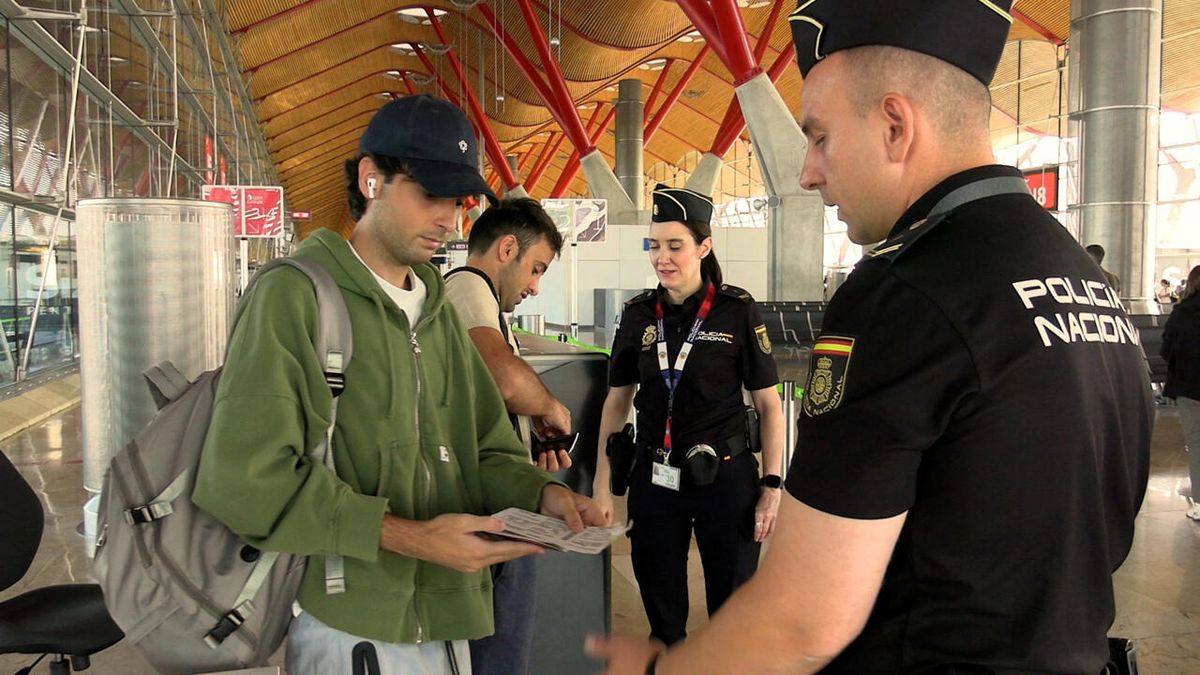
Spain has initiated temporary border checks on travelers arriving from Italy, a direct response to similar measures imposed by Rome. This tit-for-tat action effectively suspends the EU's Schengen visa-free travel arrangements between the two nations, escalating a dispute rooted in migration flows and domestic political pressures.
At its core, this dispute exposes the fragility of the Schengen Area, a cornerstone of European integration. Both Spain's left-wing government and Italy's hard-right administration are invoking national security pretexts to reassert border controls, driven by internal political imperatives rather than a unified European strategy. Italy's initial move followed a significant, albeit temporary, influx of over 70,000 migrants into Spain's North African enclave of Ceuta from Morocco. While most of these migrants returned within 48 hours, the event provided a potent political lever for Italy's government to demonstrate a 'tough on migration' stance to its electorate. Spain's retaliation, citing 'persistent irregular migration pressure' facing Italy, is a clear signal that it will not be singled out or absorb blame for a challenge that is fundamentally European. The power dynamic here is one of mutual blame-shifting, where national governments prioritize short-term domestic political survival over the long-term cohesion of the European project. The EU's foundational principle of free movement is being sacrificed on the altar of nationalistic posturing.
The most immediate and visible cost of these political maneuvers falls squarely on ordinary citizens. Tourists, business travelers, and families accustomed to seamless cross-border movement within the EU now face the inconvenience of checks, delays, and the psychological burden of seeing a cherished freedom curtailed. As one Italian tourist noted, the absence of 'diplomacy' in these decisions is palpable, replaced by a bureaucratic friction that erodes trust and goodwill. Beyond the inconvenience, the deeper human cost is borne by the very migrants whose plight sparked this political skirmish. While the Ceuta migrants largely returned, the underlying 'irregular migration pressure' represents countless individuals undertaking perilous journeys, often fleeing conflict, poverty, or persecution. They are the unseen human element, caught in a political game where their desperation becomes a tool for national governments to score points, rather than a call for a humane, coordinated response. Their lives remain precarious, their routes increasingly dangerous, as Europe's internal borders harden.
What governments on both sides are downplaying, or outright omitting, is the systemic nature of Europe's migration challenge and the complex web of external pressures. This is not merely a bilateral spat between Spain and Italy; it is a manifestation of the EU's profound internal contradiction on migration policy, exacerbated by the rise of nationalist ideologies across the continent. Furthermore, the role of external actors, particularly Morocco, in managing—or at times, weaponizing—migration flows into Spanish enclaves like Ceuta is consistently understated. The sudden influx of 70,000 people was not a random occurrence; it often reflects a strategic lever used by Morocco in its diplomatic dealings with Spain and the wider EU, particularly concerning issues like the disputed Western Sahara territory or economic aid. Both Spain and Italy present these border checks as effective measures to 'control' migration. Yet, this narrative largely serves domestic audiences. In reality, such temporary, reciprocal checks do little to address the root causes of migration or dismantle the sophisticated human smuggling networks. Instead, they primarily inconvenience legitimate travelers, while determined migrants will inevitably find alternative, often more dangerous, routes. The true 'control' remains elusive, and the political theater distracts from the deeper, unresolved issues.
As these temporary checks are set to expire, several critical dynamics warrant close observation. Firstly, the future of the Schengen Area itself hangs in the balance. Will this tit-for-tat become a normalized pattern, leading to a permanent erosion of free movement, or will the EU Commission intervene decisively to uphold its founding principles? The Commission's response, or lack thereof, will be a crucial indicator of the bloc's internal strength. Secondly, watch for any shifts in the delicate diplomatic relationship between Spain and Morocco; any changes here could directly impact future migration flows into Ceuta and Melilla. Finally, the upcoming electoral cycles in both Italy and Spain will undoubtedly see migration remain a potent political football, with leaders continuing to prioritize nationalistic rhetoric over collaborative European solutions. The human cost, both for ordinary travelers and for those seeking refuge, will continue to mount as Europe grapples with its internal divisions.
Source referenced: FRANCE24
This brief was synthesized by our Editorial Engine and reviewed by The Ground Narrative team.