TRENDING

Monday, 5 October 2026
----------------------
24 Rabi' Al-Thani 1448 AH
A record drought grips France, impacting nearly all its mainland and highlighting Europe's vulnerability to climate shifts. This crisis exposes critical fault lines in energy, agriculture, and social stability.
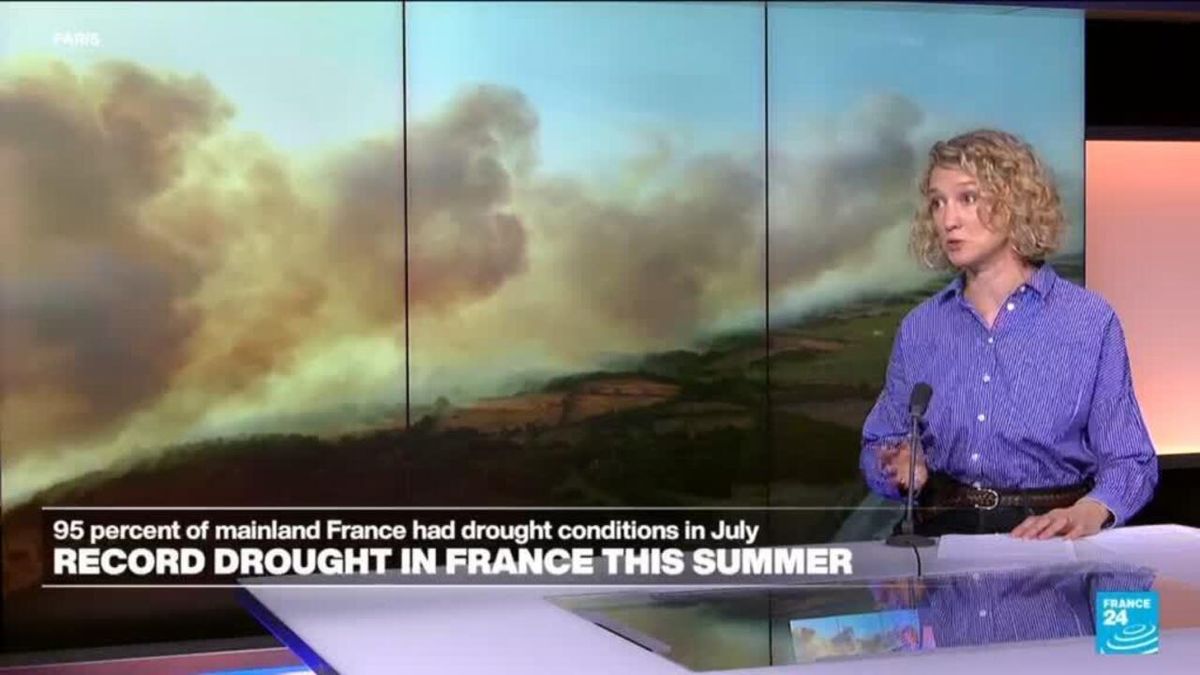
France, a cornerstone of European agriculture and energy, found itself in the grip of a record-setting drought in July 2026. With 95 percent of its mainland experiencing drought conditions, this environmental crisis is not an isolated incident but part of a broader pattern of successive heatwaves sweeping across Europe, stressing vital resources and exposing systemic vulnerabilities.
The power dynamics at play are fundamentally about resource allocation and national resilience. France's heavy reliance on nuclear energy, which accounts for roughly 70% of its electricity, makes it particularly susceptible to water shortages. Nuclear power plants require vast amounts of river water for cooling. As river levels drop and water temperatures rise during prolonged heatwaves, plants are forced to reduce output or even shut down to avoid overheating or discharging excessively warm water back into ecosystems, which violates environmental regulations. This directly impacts France's energy security, potentially driving up electricity prices and forcing a greater reliance on imported energy or, paradoxically, on fossil fuel power plants to bridge the gap, undermining climate commitments. Simultaneously, France's powerful agricultural sector, a major contributor to the EU's food supply, faces devastating crop losses. The competition for dwindling water resources between energy production, farming, and municipal consumption becomes a zero-sum game, forcing difficult political and economic trade-offs. Governments must decide who gets priority, a choice that carries significant political risk and economic consequences.
The human cost of this drought is borne most directly by ordinary citizens and specific communities. Farmers, the backbone of rural France, face the immediate threat of ruined harvests, livestock distress, and potential bankruptcy. Their livelihoods, often passed down through generations, are at stake, leading to immense financial strain and mental health crises. Consumers across Europe will likely feel the pinch through higher food prices, particularly for staples like grains, dairy, and wine, contributing to inflationary pressures. Beyond the economic impact, water restrictions become a daily reality for millions, affecting everything from personal hygiene to garden maintenance. The elderly and low-income households are disproportionately affected by heatwaves and rising energy costs, exacerbating existing social inequalities. The environmental toll on biodiversity, forest fires, and freshwater ecosystems, while less immediately visible, represents a long-term cost to the quality of life for all.
What is often downplayed or omitted in official statements is the deeper systemic failure to adequately prepare for and mitigate the accelerating impacts of climate change. While individual heatwaves are weather events, their increasing frequency and intensity point to a clear climate trend. Governments and corporations tend to focus on immediate relief measures or technological fixes, rather than addressing the fundamental need for systemic shifts in water management, agricultural practices, and energy infrastructure. The interconnectedness of these systems – how a lack of rain impacts power, which impacts food, which impacts prices – is rarely articulated in its full complexity. Furthermore, the political will to implement truly transformative, long-term climate adaptation strategies, which often require significant upfront investment and can be unpopular in the short term, remains insufficient. The narrative often frames these as 'natural disasters' rather than predictable consequences of human activity and policy choices.
As Europe moves beyond this immediate crisis, several critical areas bear watching. Observe the policy responses from Paris and Brussels: Will there be significant investment in water infrastructure, such as improved irrigation systems, desalination plants, or water recycling technologies? How will agricultural subsidies adapt to support farmers in a climate-stressed environment? On the energy front, watch for shifts in France's nuclear strategy, particularly regarding cooling systems and potential diversification into other renewable sources that are less water-dependent. Critically, monitor the social and political fallout: Will farmer protests intensify? Will public pressure for more aggressive climate action grow, or will the focus remain on short-term economic relief? The long-term stability of European food and energy markets, and indeed the social contract, hinges on these unfolding responses to a drying continent.
Source referenced: FRANCE24
This brief was synthesized by our Editorial Engine and reviewed by The Ground Narrative team.


