TRENDING

Monday, 5 October 2026
----------------------
24 Rabi' Al-Thani 1448 AH
Serbian President Aleksandar Vucic expressed skepticism about a swift expansion of the European Union, casting doubt on the near-term prospects of EU membership for aspiring countries, including Serbia.
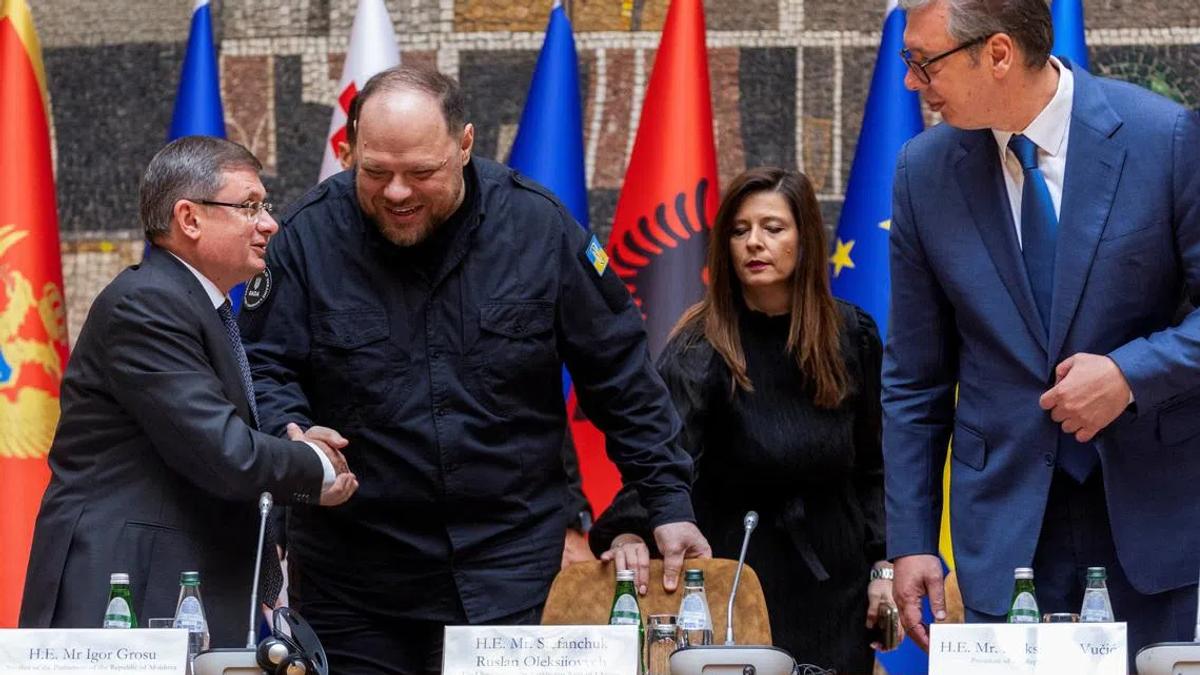
Serbian President Aleksandar Vucic's recent statement at the inaugural meeting of the Speakers of Parliament of EU candidate countries in Belgrade has sent a clear signal that the European Union's expansion plans may be put on hold. Vucic expressed skepticism about a swift expansion of the EU, stating that while the European path remains the best option for the Western Balkans, Ukraine, Moldova, and Georgia, a major enlargement of the bloc should not be expected anytime soon.
Vucic's comments can be seen as a reflection of Serbia's complex relationship with the EU and its traditional ally, Russia. Serbia has been a vocal supporter of Ukraine's territorial integrity and has condemned Russia's invasion, but it also maintains ties with Russia and has refused to recognize Kosovo's independence. This delicate balancing act may be a key factor in Vucic's cautious approach to EU membership.
The Western Balkans has been a region of significant geopolitical interest for decades, with many countries aspiring to join the EU. However, the region's complex history, including the Yugoslav wars and the ongoing tensions between Serbia and Kosovo, has created a challenging environment for EU expansion. The EU's enlargement process has been slow and arduous, with many countries facing significant hurdles before being granted membership.
Vucic's statement has significant implications for the region, particularly for Ukraine, Moldova, and Georgia, which are all aspiring to join the EU. These countries have been granted candidate status, but their membership bids are expected to be complex and lengthy. Ukraine's bid, in particular, is expected to be challenging due to its ongoing conflict with Russia and the need to implement significant reforms.
The consequences of Vucic's statement are far-reaching and may have significant implications for the EU's expansion plans. If the EU's expansion is put on hold, it may embolden Russia's aggressive policies in the region and undermine the EU's credibility as a champion of democracy and stability. On the other hand, a swift expansion of the EU may create new challenges and tensions within the bloc, particularly if new member states are not fully prepared to meet the EU's membership criteria.
Vucic's statement has cast a shadow of uncertainty over the EU's expansion plans, highlighting the complex and challenging environment that aspiring countries face. While the EU's expansion remains a key aspect of its foreign policy, Vucic's comments serve as a reminder that the process is slow, arduous, and often unpredictable. As the EU navigates this complex landscape, it must balance its commitment to democracy and stability with the need to manage the expectations of its member states and aspiring countries.
Editor's Note: While Vucic's statement is a clear indication of Serbia's cautious approach to EU membership, the exact implications for the EU's expansion plans remain uncertain.
Source referenced: STRAITSTIMES
This brief was synthesized by our Editorial Engine and reviewed by The Ground Narrative team.