TRENDING

Tuesday, 6 October 2026
----------------------
25 Rabi' Al-Thani 1448 AH
Four years after a peace deal, fighting in Ethiopia has erupted across Tigray, Amhara and Afar, pulling new armed groups into a widening war. The human toll is mounting while regional powers are quietly reshaping the battlefield.
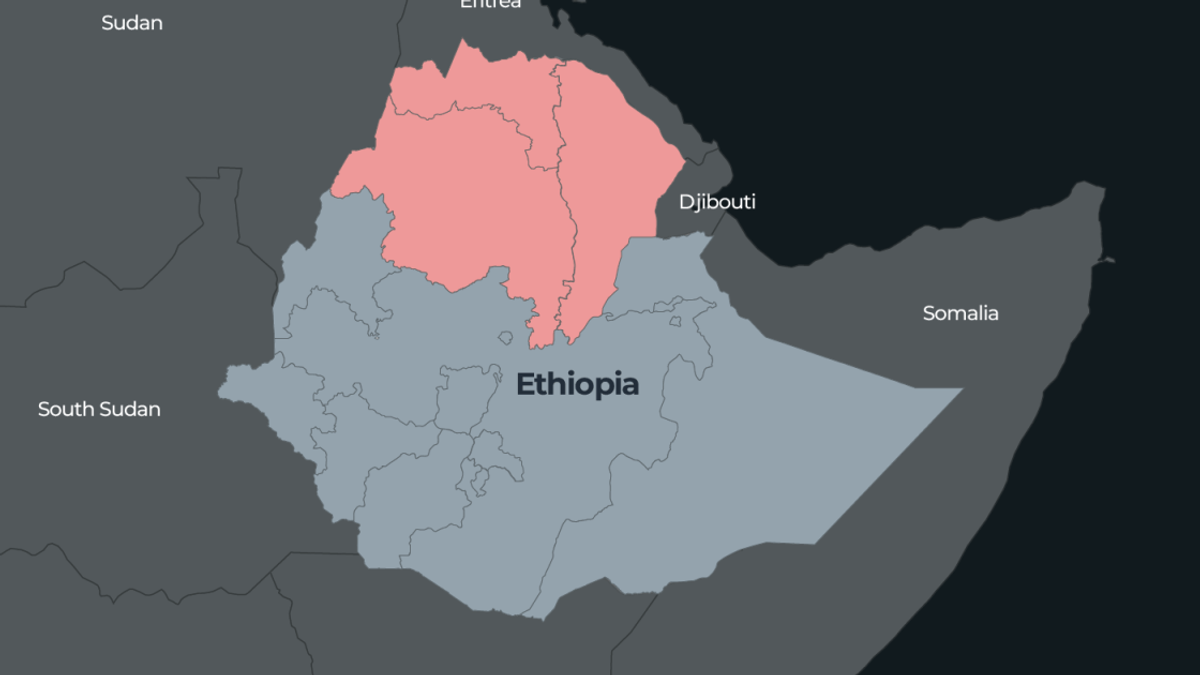
The fighting that once raged mainly in Tigray has erupted across three northern regions of Ethiopia – Tigray, Amhara and Afar – within weeks of a new alliance of rebel groups announcing a joint offensive. Government‑aligned forces claim to have seized the strategic supply hub of Alamata on September 28, while Tigrayan troops have pushed southward and eastward, striking airports and advancing toward the Semera‑Djibouti corridor. Telecommunications blackouts, drone strikes on schools and hospitals, and the suspension of commercial flights have left civilians isolated and humanitarian aid crippled.
The renewed violence is rooted in a tangled web of political survival, ethnic federalism and regional rivalry. After Abiy Ahmed dismantled the TPLF‑dominated power structure in 2018, the 2020‑2022 Tigray war left deep scars and unresolved border disputes, especially along the Tekeze River. The federal government’s reliance on ethnically based militia – notably the Amhara Fano movement – created a parallel power base that now feels threatened by any resurgence of Tigrayan strength. The newly declared Ethiopian Peoples’ Forces Alliance for Survival (EPFAS) bundles together the TPLF, Amhara Fano, the Oromo Liberation Army, the Afar Ugugumo, and splinter groups from the Ogaden and Benishangul regions, each seeking leverage against a central authority they view as increasingly authoritarian.
Strategically, control of Alamata offers a logistical lifeline: fuel, food and ammunition can be funneled from the Amhara heartland into contested Tigrayan districts. Simultaneously, the Tigrayan push toward the Semera‑Djibouti corridor threatens Ethiopia’s main import route, a pressure point that could force the federal government to negotiate or risk a broader economic collapse. The army chief’s accusations that Eritrea, Sudan’s army and Egypt back the rebels serve two purposes: they rally nationalist sentiment at home and signal to neighboring capitals that any escalation could spill over borders, potentially drawing in external actors who have their own water‑security and trade interests in the Horn of Africa.
The immediate human fallout is staggering. Over 1.2 million people have been forced to flee their homes in the three affected regions since early September, seeking shelter in overcrowded camps that lack clean water and medical supplies. The telecom blackout across most of Tigray has cut off families from one another, preventing coordination of relief and leaving many unaware of the safety of loved ones. Drone strikes that hit schools and a hospital in Alamata have not only killed civilians but also destroyed the few remaining health facilities capable of treating war injuries and disease outbreaks.
The suspension of commercial flights and the threat to the Semera‑Djibouti corridor jeopardize Ethiopia’s import‑export balance. Fuel shortages have already prompted long queues at petrol stations in Addis Ababa, while farmers in the highlands face delayed access to fertilizer, risking a collapse in the upcoming harvest. Inflation, already high, is projected to climb further as the government diverts scarce resources to the front lines, squeezing household budgets and pushing more people into poverty.
Both the federal forces and the rebel alliance have intensified forced mobilisation campaigns. Young men in Amhara villages are being conscripted into Fano militias, while Tigrayan authorities have reopened recruitment offices in Mekelle, often targeting teenagers. This practice deepens ethnic grievances, as communities see their sons sent to fight for causes that may not reflect local priorities, sowing long‑term resentment that can outlast the current battles.
While Eritrea, Sudan and Egypt publicly deny any involvement, intelligence reports suggest covert support ranging from arms shipments to advisory teams. By framing the conflict as an internal Ethiopian affair, these states avoid diplomatic fallout and keep their strategic options open, especially concerning the Grand Ethiopian Renaissance Dam and the Red Sea trade routes. The omission of these back‑channel dynamics from official statements downplays the risk of a broader Horn‑of‑Africa confrontation.
International coverage has largely focused on the geopolitical chessboard – alliances, border disputes, and the potential for a regional war – while the day‑to‑day reality of displaced families, school closures and health crises receives scant attention. Social‑media maps and charts, though visually compelling, often lack context about the humanitarian toll, allowing audiences to view the conflict as a series of shifting front lines rather than a crisis that is destroying livelihoods.
The EPFAS coalition is portrayed as a unified front, yet several member groups publicly dispute their participation. The Gumuz Peoples’ Democratic Movement denied having an armed wing, and the ONLF is split between factions that support and reject the alliance. This discord is downplayed in official rebel statements, which present a monolithic opposition to Abiy Ahmed. Understanding these fractures is crucial, as they may lead to rapid shifts in battlefield dynamics or open avenues for negotiated settlements.
The next weeks will reveal whether the federal government can re‑establish control over Alamata and secure the Semera‑Djibouti corridor, or whether the rebel alliance can force a stalemate that compels political concessions. Key indicators to monitor include: (1) any overt involvement of neighboring militaries, signalled by movements of troops or equipment across borders; (2) the status of humanitarian corridors – a reopening would suggest diplomatic openings, while continued closures could exacerbate famine risks; and (3) the cohesion of the EPFAS coalition, especially any public defections or internal disputes that could weaken the rebel offensive. Observers should also track the rhetoric of Abiy Ahmed and the army chief, as shifts from nationalist framing to negotiation language may hint at a strategic pivot.
Stakeholders from the diaspora, NGOs and regional powers would do well to watch these signals closely, as the outcome will shape Ethiopia’s political landscape for years and could redraw power balances across the Horn of Africa.
The expansion reflects the new rebel alliance’s strategy to pressure the federal government by opening multiple fronts, targeting supply routes and exploiting ethnic grievances that were left unresolved after the 2020‑2022 war.
While official statements deny involvement, covert support is likely as Eritrea, Sudan and Egypt have strategic interests in the region. Direct intervention would depend on how the conflict threatens their water, trade and security calculations.
Editor's Note: Analysis based on publicly available reports and conflict monitoring data; on‑the‑ground conditions may evolve rapidly.
Source referenced: ALJAZEERA
This brief was synthesized by our Editorial Engine and reviewed by The Ground Narrative team.