TRENDING

Wednesday, 21 October 2026
----------------------
10 Jumada Al-Awwal 1448 AH
US President Donald Trump's threat to destroy Iranian infrastructure in response to attacks on shipping in the Strait of Hormuz has escalated tensions in the region, raising concerns about global economic disruption and the potential for further conflict.
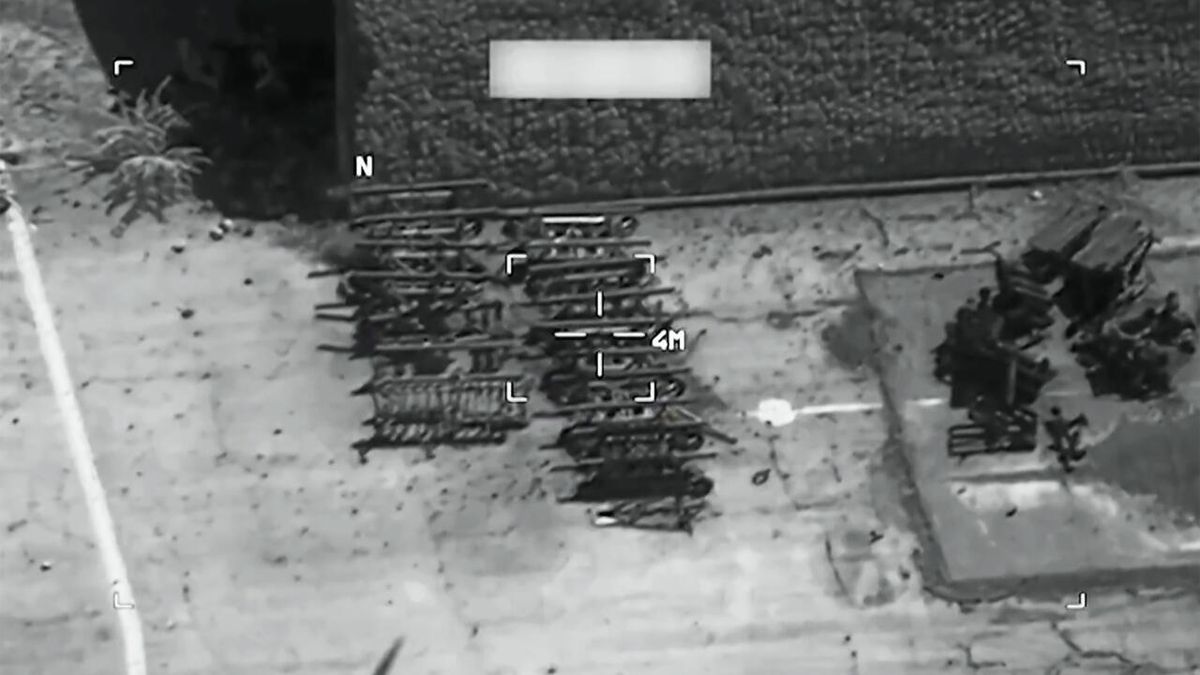
The ongoing conflict between the United States and Iran over the Strait of Hormuz has taken a dramatic turn with US President Donald Trump's threat to destroy Iranian infrastructure in response to attacks on shipping in the strait. This escalation has significant implications for regional stability, global energy markets, and the potential for further conflict.
The Strait of Hormuz is a critical waterway for global energy trade, with over 20% of the world's traded oil and gas passing through it. The strait has been a point of contention between Iran and the US, with Iran's Revolutionary Guard Corps (IRGC) launching attacks on shipping in the area in response to US sanctions and military strikes. The US has responded with its own military strikes, including precision attacks on Iranian military targets.
Trump's threat to destroy Iranian infrastructure is a clear attempt to exert pressure on Iran to cease its attacks on shipping in the strait. The US is seeking to maintain its dominance in the region and protect its interests in the global energy market. Iran, on the other hand, is seeking to assert its control over the strait and impose its own rules on shipping traffic.
The escalation of the conflict has significant implications for regional stability. The closure of the strait has already had a major impact on global energy markets, with oil prices rising to over $93 a barrel. The potential for further conflict and disruption to energy supplies has raised concerns among major oil consumers, including China and India.
The long-term consequences of the conflict are uncertain, but it is clear that the situation is deteriorating rapidly. The US and Iran are locked in a cycle of escalation, with each side seeking to gain the upper hand. The potential for miscalculation and further conflict is high, and the international community must take steps to prevent a wider war.
Despite the escalating tensions, diplomatic efforts are ongoing to resolve the conflict. The US and Iran have exchanged messages through mediators, including Pakistan and Turkey, but a breakthrough appears unlikely in the near term. The international community must continue to push for a peaceful resolution to the conflict, including the establishment of a UN-led peace process.
The conflict over the Strait of Hormuz is a critical test of regional stability and global energy security. The escalation of the conflict has significant implications for regional stability, global energy markets, and the potential for further conflict. The international community must take steps to prevent a wider war and promote a peaceful resolution to the conflict.
Source referenced: FRANCE24
This brief was synthesized by our Editorial Engine and reviewed by The Ground Narrative team.