TRENDING

Saturday, 3 October 2026
----------------------
22 Rabi' Al-Thani 1448 AH
Conflicting claims from Kyiv and Moscow over the control of Kostiantynivka highlight the intense strategic struggle and information warfare in Ukraine's eastern Donetsk region. The city's status remains a critical point of contention, reflecting broader geopolitical objectives.
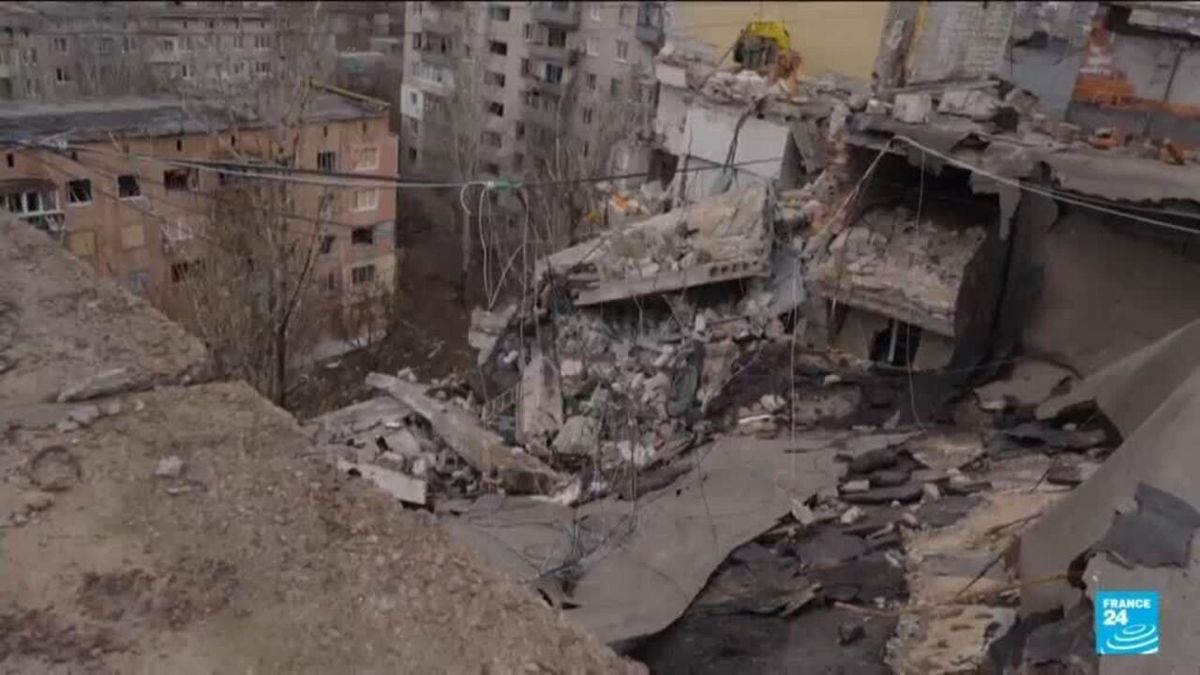
On Saturday, April 7, 2026, Ukrainian President Volodymyr Zelensky and the General Staff firmly denied Russian assertions that its forces had captured the strategically vital eastern city of Kostiantynivka. This rebuttal came swiftly after the Russian military informed President Vladimir Putin on Friday that it had secured control of the city, a long-sought objective in Moscow's ongoing advance through the Donetsk region. The stark contradiction underscores not only the fierce fighting on the ground but also the pervasive information warfare that characterizes the conflict in Ukraine.
Kostiantynivka, located in the Donetsk region, holds significant strategic value for both Ukrainian and Russian forces. For Ukraine, maintaining control of Kostiantynivka is crucial for several reasons. It likely serves as a key defensive stronghold, potentially anchoring a line of defense against Russian advances further west. Its position could also be vital for logistical supply routes, enabling the movement of troops, equipment, and humanitarian aid to other parts of the front line. A loss of Kostiantynivka would not only represent a territorial setback but could also expose new vulnerabilities in Ukraine's defensive posture in the Donbas.
For Russia, the capture of Kostiantynivka would be a significant step towards achieving its stated war aim of fully controlling the Donetsk region. Moscow has consistently prioritized the complete annexation of Donetsk and Luhansk, and advances in key urban centers like Kostiantynivka are presented as tangible progress towards this objective. The city's capture would likely facilitate further Russian military operations, potentially opening new avenues of advance towards other critical Ukrainian-held territories in the east. It would also allow Russia to consolidate its territorial gains and potentially improve its logistical networks within the occupied areas.
The conflicting claims surrounding Kostiantynivka are a prime example of the intense information warfare being waged alongside conventional military operations. Both Kyiv and Moscow understand the critical importance of controlling the narrative, both domestically and internationally. For Ukraine, denying the loss of a strategically important city is essential for maintaining national morale, demonstrating continued resistance, and reassuring international allies of its fighting capability. Acknowledging such a loss prematurely could be perceived as a sign of weakness and could undermine support.
Conversely, Russia's claim of capture, even if disputed, serves to project an image of military success and momentum. This narrative is crucial for bolstering domestic support for the war, justifying the ongoing military campaign, and potentially demoralizing Ukrainian forces and their international backers. In a conflict where public perception and political will play a significant role, the battle for factual accuracy on the ground is as important as the physical battle itself.
The status of Kostiantynivka is intrinsically linked to the broader geopolitical landscape of the conflict. Any significant territorial gain or loss in eastern Ukraine has ripple effects on international relations, diplomatic efforts, and military aid decisions. Should Russia genuinely secure Kostiantynivka, it would likely be framed by Moscow as evidence of its military superiority and an indicator of Ukraine's weakening defenses, potentially influencing the willingness of some international partners to continue robust support.
Conversely, if Ukraine successfully holds Kostiantynivka, it reinforces the narrative of resilient defense and effective utilization of Western military assistance, potentially galvanizing further international aid. The ongoing struggle for cities like Kostiantynivka underscores the protracted nature of the conflict and its profound impact on regional stability in Eastern Europe. The outcome of these localized battles contributes to the larger strategic calculus of global powers, influencing alliances, defense spending, and future security architectures.
As with many contested areas in active war zones, independent verification of the claims regarding Kostiantynivka's control remains challenging. The truth on the ground will eventually emerge through satellite imagery, independent reporting, or subsequent military developments. However, the immediate impact of these conflicting statements is felt in the psychological dimension of the war, influencing morale, strategic planning, and the global perception of the conflict's trajectory. The battle for Kostiantynivka, whether physical or informational, continues to be a critical barometer of the broader struggle for Ukraine's sovereignty and regional power dynamics.
Source referenced: FRANCE24
This brief was synthesized by our Editorial Engine and reviewed by The Ground Narrative team.