TRENDING

Wednesday, 11 November 2026
----------------------
1 Jumada Al-Thani 1448 AH
Voters have thrust corruption to the top of their concerns, giving Democrats a clear mandate. The next Congress will decide whether hearings, reforms, or political inertia shape the nation’s future.
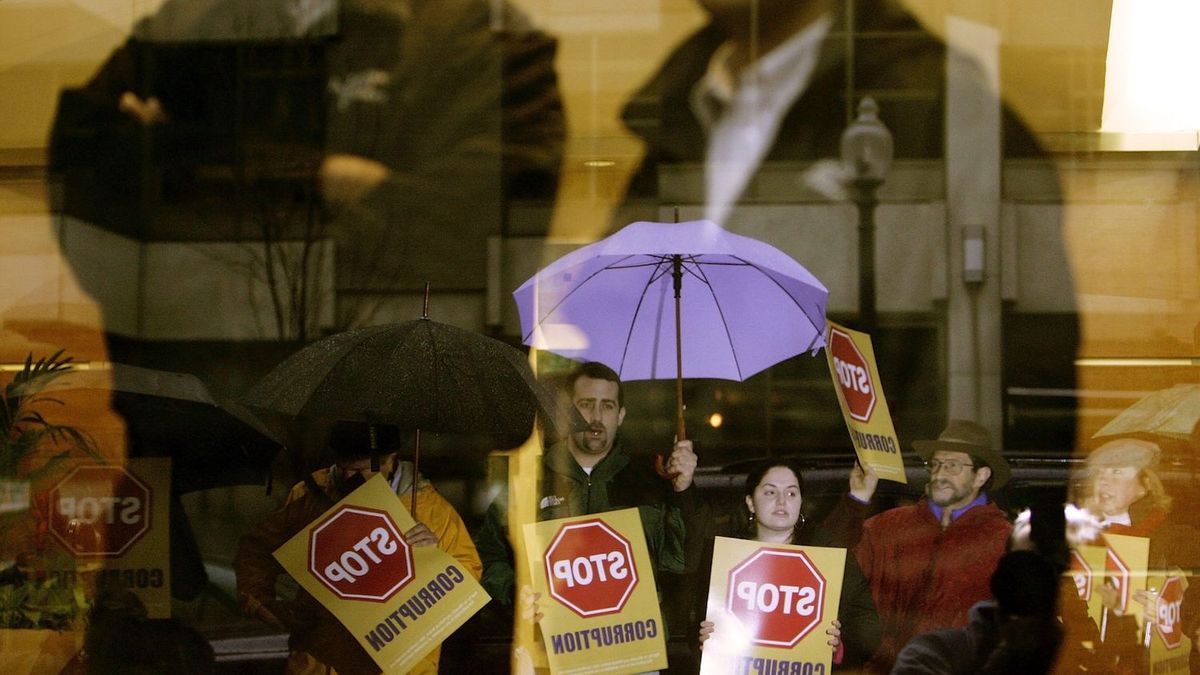
In the November 2026 midterm elections, voters placed corruption ahead of the economy, health care, and immigration as their primary worry. The result was a decisive defeat for the Republican‑controlled House and Senate, handing both chambers to the Democrats for the first time in a generation. The new majority entered Congress with a public promise to investigate the former administration’s financial entanglements and to overhaul the nation’s lax campaign‑finance regime.
The Democrats now control the chairmanships of every key oversight committee, from the House Oversight Committee to the Senate Banking Committee. This structural advantage translates into subpoena power, the ability to set hearing agendas, and the authority to draft legislation without needing bipartisan sponsorship. Yet the same mechanisms that empower them also create incentives for political survival. Committee chairs must balance the appetite for aggressive investigations with the risk of alienating moderate voters who fear a prolonged “witch‑hunt” narrative.
The corruption allegations span real‑estate deals, crypto investments from the United Arab Emirates, and covert financing linked to sanctioned Russian oligarchs. These flows are not isolated; they intersect with a broader web of lobbying firms that profit from ambiguous campaign‑finance rules. The current system allows unlimited corporate contributions, funnelled through shell companies that mask foreign benefactors. By targeting these financial arteries, the Democrats aim to cut the revenue streams that keep many lobbyists and their clients influential in Washington.
When the former administration turned the White House into a marketplace for foreign regimes, it altered the calculus of U.S. foreign policy. Iran, Russia, and Gulf autocracies gained informal access to policy‑making circles, often in exchange for lucrative contracts or political donations. Restoring the Foreign Corrupt Practices Act and re‑establishing a public shell‑company registry would not only tighten domestic rules but also signal to allies and adversaries that the United States is reclaiming its diplomatic integrity.
The most immediate victims of the alleged corruption are ordinary American taxpayers. Subsidized jet charters, luxury watches, and secretive crypto deals cost the federal budget billions in hidden subsidies and security risks. When foreign money influences policy, it can lead to weaker sanctions, delayed aid, or trade agreements that disadvantage U.S. manufacturers, ultimately lowering wages and job security for workers in the Midwest and South.
Sanctions intended to punish dictators have been selectively applied, often softened for regimes that offered personal benefits to the Trump family. Brazil’s anti‑corruption activists, for example, faced legal harassment when the administration used sanctions as a bargaining chip. The erosion of a consistent sanctions regime undermines the safety of civil‑society leaders in authoritarian states, increasing the likelihood of repression and human‑rights violations.
The surge of youth turnout in the midterms was driven by a perception that the political system is “bought.” When campaign‑finance loopholes allow foreign‑backed super‑PACs to flood elections, young voters lose faith that their votes matter. This disengagement threatens long‑term democratic participation, as the next generation may view politics as a closed club rather than a public arena.
While the media highlights high‑profile hearings, it rarely mentions that the Trump administration systematically defunded the Office of the Special Counsel and the Department of Justice’s anti‑money‑laundering unit. By shrinking these watchdogs, the administration created a vacuum that private interests filled, allowing illicit money to flow unchecked. Restoring funding is essential, but the broader narrative of institutional decay is often downplayed.
The article notes the role of shell companies, yet it omits how major U.S. banks and law firms have built entire service lines around creating and maintaining these opaque structures. Their lobbying efforts have successfully blocked legislation that would require public disclosure of beneficial owners. This symbiotic relationship between finance and politics is a cornerstone of the corruption ecosystem, yet it receives scant attention in official statements.
Official rhetoric frames sanctions as a moral tool, but the reality is that they are also leveraged for personal gain. The former administration’s willingness to “soften” sanctions for countries that offered gifts to the Trump family illustrates a hidden cost: the United States loses credibility as a consistent enforcer of international norms, emboldening authoritarian regimes to test the limits of U.S. resolve.
Watch for the introduction of the Anti‑Money‑Laundering Expansion Act, which seeks to bring crypto exchanges, law firms, and trusts under the same reporting standards as banks. Equally important is the Public Shell‑Company Registry Bill, which would make ownership data searchable by journalists and civil‑society groups.
The House Oversight Committee is slated to hold a series of hearings on the Trump family’s foreign financial ties, beginning with Donald Trump Jr.’s involvement in World Liberty Financial. The outcome of these subpoenas—whether witnesses comply or invoke executive privilege—will set the tone for the depth of the investigation.
If the Democrats succeed in delivering tangible reforms, they could solidify a coalition that extends beyond traditional base voters, attracting independents concerned about integrity. Conversely, a perceived overreach could fuel a backlash that the Republican Party may capitalize on in the 2028 presidential race. Monitoring public opinion polls on trust in government and campaign‑finance reform will be a key barometer.
Allied nations, especially those in the EU and Japan, have long criticized the United States for inconsistent enforcement of anti‑corruption standards. A robust reform agenda could restore confidence among these partners, leading to deeper security cooperation. Conversely, authoritarian states that benefited from the previous regime’s laxity may double down on covert influence operations, testing the resilience of the new anti‑corruption architecture.
In sum, the Democrats’ midterm mandate opens a narrow window to reshape the United States’ internal safeguards and its external credibility. The next year will reveal whether the promise of clean governance translates into concrete institutional change or remains a political slogan.
They plan to pass a public shell‑company registry, expand anti‑money‑laundering rules to crypto and trusts, and restore enforcement of the Foreign Corrupt Practices Act, all aimed at increasing transparency of political donations.
If the hearings expose foreign money influencing policy, the U.S. may tighten sanctions, rebuild credibility with allies, and reduce the ability of authoritarian regimes to buy access to Washington.
Secretive shell companies let foreign and domestic elites funnel money into elections without accountability, which can shape laws that affect wages, taxes, and public services for ordinary citizens.
Editor's Note: Analysis based on publicly available reporting and expert commentary; ongoing investigations may reveal additional details.
Source referenced: FOREIGNPOLICY
This brief was synthesized by our Editorial Engine and reviewed by The Ground Narrative team.