TRENDING

Monday, 21 September 2026
----------------------
10 Rabi' Al-Thani 1448 AH
US Treasury chief Scott Bessent and Chinese Vice‑Premier He Lifeng met in New York to lay groundwork for a Trump‑Xi summit, signaling a push to calm trade, AI and mineral tensions that affect factories and farms worldwide.
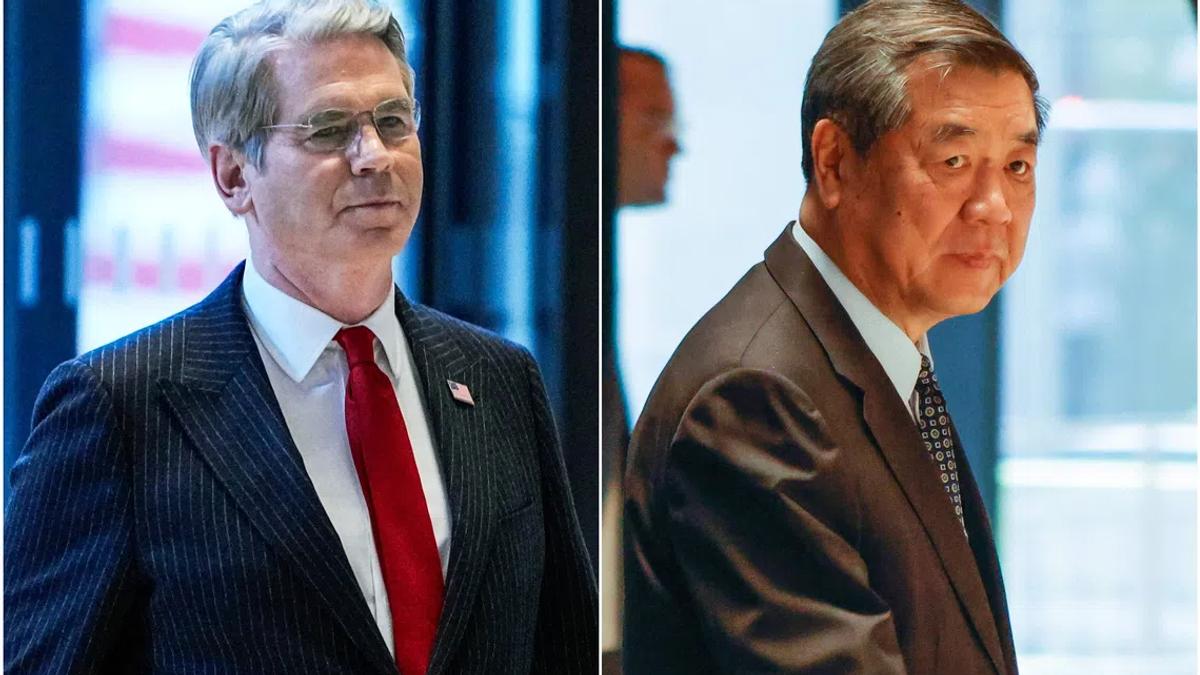
US Treasury Secretary Scott Bessent and Chinese Vice‑Premier He Lifeng convened on Sept 20 at JPMorgan Chase’s New York headquarters, joined by senior trade official Jamieson Greer. The all‑day talks were billed as a prelude to the Oct 24 White House summit between President Donald Trump and President Xi Jinping, with a focus on extending a looming trade truce, setting guardrails for artificial‑intelligence development, and securing the flow of rare‑earth magnets and other critical minerals.
Both governments are juggling domestic political survival and long‑term economic leverage. For Trump, a visible diplomatic win helps offset domestic criticism over inflation and supply‑chain disruptions; a renewed truce buys political cover before the 2026 mid‑term elections. For Xi, showcasing willingness to engage on AI and rare‑earths counters narratives of isolation and reinforces Beijing’s claim of being a responsible global power. The talks also serve as a bargaining chip in the broader U.S.‑China rivalry: the United States seeks to prevent a bifurcated tech ecosystem, while China aims to lock in market access for its state‑backed firms and keep Western pressure on Iran at bay. Behind the scenes, the rare‑earth agenda reflects a classic “resource leverage” game—Washington wants to diversify away from Chinese supply, while Beijing leverages its dominance to extract concessions on trade and technology standards.
The headline‑level negotiations mask a cascade of everyday impacts. American manufacturers that rely on rare‑earth magnets for electric‑vehicle motors and wind‑turbine generators face price volatility; a short‑term truce could keep factories humming, but any abrupt policy shift would ripple through wages and job security in the Midwest. Chinese workers in the mining regions of Inner Mongolia and Sichuan, where extraction conditions are hazardous, stand to gain little from high‑level talks that focus on export quotas rather than labor safety. Farmers on both sides of the Pacific are also on the line: earlier agreements promised Chinese purchases of U.S. soy, corn and pork, yet fulfillment has been uneven, leaving Midwestern growers uncertain about revenue streams. Finally, Iranian oil workers and the broader civilian population feel the indirect pressure of U.S. sanctions that China may temper or reinforce depending on how the summit reshapes bilateral leverage.
Official statements emphasize “constructive” dialogue, but they downplay the strategic use of AI governance as a bargaining chip. Both sides claim openness to “shared risk” frameworks, yet the underlying goal is to prevent the other from setting de‑facto standards that could lock out competitors. Moreover, the Iran factor receives only a footnote, even though Beijing’s oil purchases fund Tehran’s war machine and give China leverage over U.S. sanctions policy. By framing the talks as a trade‑only exercise, officials sidestep the reality that any concession on Iran could reshape regional security dynamics in the Middle East, affecting oil prices and, by extension, global inflation. Lastly, the venue—JPMorgan’s headquarters—signals the private‑sector’s role as an invisible power broker, where banks stand to profit from any easing of financial restrictions or from new financing deals tied to critical‑mineral supply chains.
Watch for three concrete signals after the New York meeting. First, the language of any draft agreement on AI guardrails—whether it references “co‑development” or “mutual oversight”—will reveal how far each side is willing to compromise on standards. Second, the timeline for extending the trade truce: a short‑term extension through November suggests a tactical pause, while a longer‑term deal would indicate deeper confidence in managing underlying frictions. Third, China’s stance on Iranian oil purchases in the weeks leading up to the APEC summit in Shenzhen; a public shift could foreshadow a broader realignment of Beijing’s Middle‑East policy. Together, these cues will show whether the upcoming Trump‑Xi summit will be a symbolic photo‑op or a genuine reset of the economic rivalry that shapes daily life for millions worldwide.
Source referenced: STRAITSTIMES
This brief was synthesized by our Editorial Engine and reviewed by The Ground Narrative team.


