TRENDING

Saturday, 24 October 2026
----------------------
13 Jumada Al-Awwal 1448 AH
A drone attack on a holiday camp in Russian-held Zaporizhzhia killed 11, including five children, according to Russian-installed authorities. The incident intensifies accusations of civilian targeting amidst the ongoing conflict and highlights the strategic importance of the region.
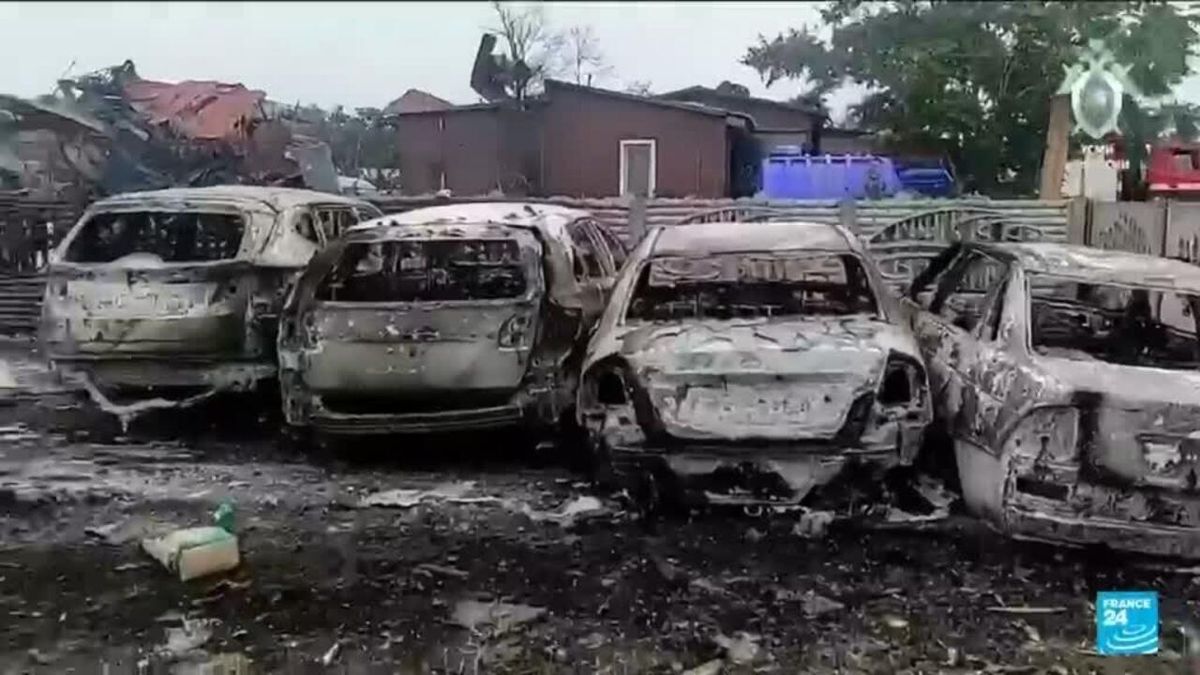
An overnight drone attack on a holiday camp in a Russian-occupied part of Ukraine's Zaporizhzhia region resulted in the deaths of at least 11 people, including five children. The incident, reported on Saturday, July 26, 2026, by Russian-installed local authorities, immediately sparked accusations that Ukraine deliberately targeted civilians. While the specific type of drone and its operational details were not immediately disclosed, the use of unmanned aerial vehicles (UAVs) underscores the evolving nature of warfare in the region, where drones are frequently employed for both reconnaissance and strike missions.
The location of the attack, a 'holiday camp,' raises critical questions regarding the nature of the target. In conflict zones, civilian infrastructure can sometimes be repurposed for military use, such as housing personnel or storing equipment. However, without independent verification, the precise status of the camp at the time of the attack remains contested. The immediate attribution of blame by Russian-installed officials serves to frame the narrative, portraying Ukrainian forces as perpetrators of war crimes against civilians, a common tactic in the ongoing information warfare between the belligerents.
The Zaporizhzhia region holds immense strategic importance in the broader conflict. Partially occupied by Russia since the early stages of the full-scale invasion, it forms a crucial segment of the land bridge connecting Russia to Crimea and is a key area for both Russian defensive lines and potential Ukrainian counter-offensives. Control over Zaporizhzhia is vital for Russia's logistical supply routes and its ambition to solidify its hold on southern Ukraine. Consequently, the region has been a hotbed of intense fighting, artillery duels, and drone operations.
Attacks within occupied territories, particularly those resulting in civilian casualties, carry significant geopolitical weight. They serve multiple purposes for the accusing party: to galvanize domestic support, to delegitimize the adversary on the international stage, and potentially to justify retaliatory actions. For Ukraine, any operation in occupied territories is typically framed as an effort to reclaim sovereign land and disrupt Russian military capabilities or occupation administration. However, the targeting of civilian sites, if proven deliberate, would constitute a serious violation of international humanitarian law.
The immediate and strong condemnation from Russian-installed authorities highlights the intense information warfare accompanying the kinetic conflict. Both sides routinely accuse the other of targeting civilians, often without providing verifiable evidence that can be independently assessed in the fog of war. Such incidents become potent tools in the propaganda battle, shaping public opinion both domestically and internationally.
From an international perspective, incidents involving significant civilian casualties in occupied territories often lead to calls for independent investigations. However, the practicalities of conducting such probes in active conflict zones, especially those under the control of one of the warring parties, are extremely challenging. The lack of an immediate, verifiable Ukrainian statement or denial regarding the incident further complicates the assessment of responsibility and intent.
The tragic loss of life, particularly that of children, underscores the devastating human cost of the protracted conflict. Civilians residing in occupied territories face immense risks, caught between warring factions and often subjected to the direct consequences of military operations. The incident serves as a stark reminder of the indiscriminate nature of modern warfare, where the lines between combatants and non-combatants can become blurred, and the use of advanced weaponry like drones can have unforeseen and tragic outcomes.
Looking ahead, this attack will likely be integrated into the broader narratives of both Russia and Ukraine. Russia will leverage it to reinforce its claims of Ukrainian aggression against its own population, while Ukraine may either deny responsibility, argue the target was legitimate, or remain silent. The incident could also contribute to an escalation of retaliatory strikes, further entrenching the cycle of violence and making any prospects for de-escalation or a diplomatic resolution even more remote. The ongoing conflict in Zaporizhzhia, punctuated by such deadly incidents, will continue to be a critical barometer of the broader geopolitical struggle in Eastern Europe.
Source referenced: FRANCE24
This brief was synthesized by our Editorial Engine and reviewed by The Ground Narrative team.


