TRENDING

Monday, 5 October 2026
----------------------
24 Rabi' Al-Thani 1448 AH
Two bomb explosions near French President Emmanuel Macron's hotel in Damascus highlight the persistent security challenges in Syria, directly impacting a landmark diplomatic visit aimed at repairing ties and fostering rehabilitation. The incident underscores the complex geopolitical landscape and the high stakes of re-engaging with the Syrian regime.
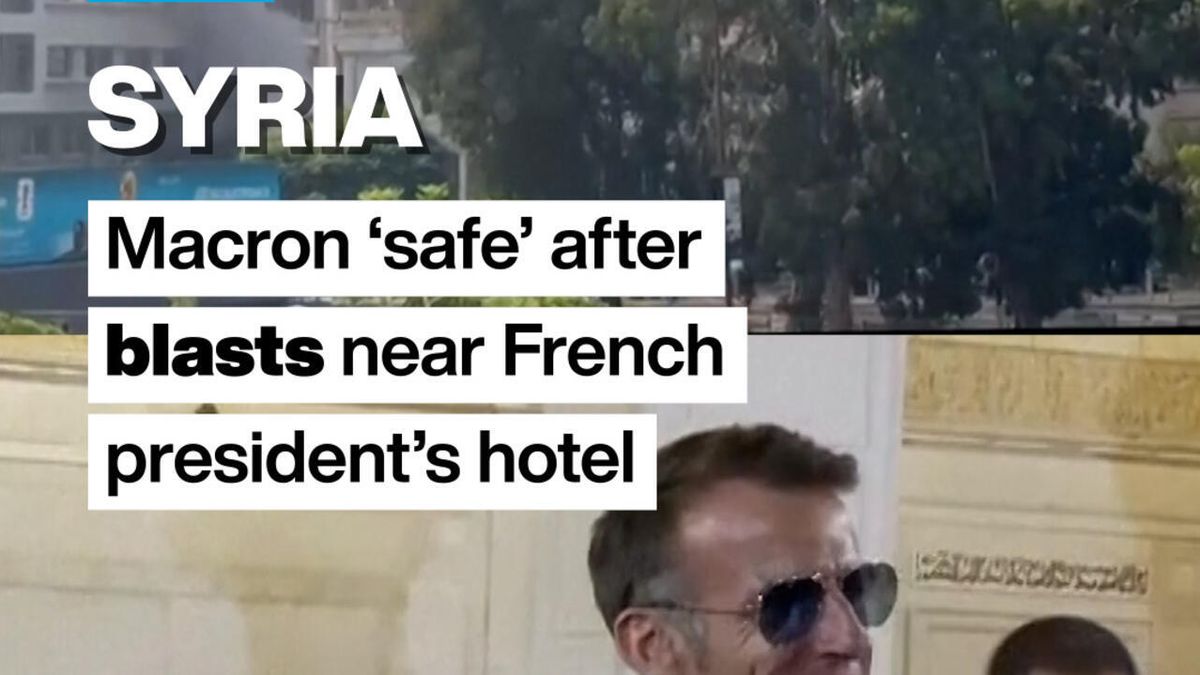
On Tuesday, July 7, 2026, two bomb explosions occurred in Damascus, Syria, in close proximity to the hotel where French President Emmanuel Macron was staying. The Élysée Palace swiftly confirmed President Macron's safety, noting his motorcade had departed the hotel prior to the blasts. This incident unfolded during what was described as a "landmark visit" by the French President, signaling a significant shift in European diplomatic engagement with Syria.
President Macron's visit was characterized by a stated intent to "repair ties" with Syria, with France positioned as potentially the "most enthusiastic in Europe" to pursue such a rapprochement. The broader objectives of this high-stakes diplomatic mission appeared to include challenging a perceived "business as usual" strategy and exploring avenues for Syria's rehabilitation, potentially attracting international investors. This initiative suggests a re-evaluation of Western policy towards the Syrian government, which has largely been isolated since the onset of the civil conflict.
The timing and location of the explosions carry significant geopolitical weight. Occurring during a visit by a major European head of state, the blasts served as a stark reminder of the enduring instability and security challenges that plague Syria. While the perpetrators remain unidentified, the incident's immediate effect was to directly undermine the narrative of a stabilizing Syria capable of attracting foreign investment and re-integrating into the international community.
The explosions can be interpreted as a deliberate attempt to disrupt the diplomatic momentum generated by Macron's visit. They send a clear message to any international actors considering re-engagement or investment in Syria: the security environment remains precarious. This directly challenges the capacity of the Syrian government, and figures like Al-Sharaa, to guarantee security across the country and the wider region, a prerequisite for any meaningful rehabilitation or economic recovery.
President Macron's visit itself represented a notable departure from the collective Western stance of isolating the Assad regime. France, with its historical ties to the Levant, appears to be exploring a path of pragmatic engagement, potentially driven by concerns over regional stability, the ongoing humanitarian crisis, or the desire to counter other external influences in Syria. The blasts, however, introduce a formidable obstacle to this strategy.
For France, the incident poses a critical test. It forces a re-evaluation of the security risks associated with high-level diplomatic engagement in Syria and could influence the pace and scope of future re-engagement efforts. While Macron's safety was confirmed, the direct targeting of an area near a visiting head of state's residence is a serious security breach with international ramifications.
For Syria, the explosions underscore the deep-seated challenges to its long-term stability and the prospects for attracting the necessary investment for reconstruction. The incident reinforces the perception that despite territorial gains by the government, various actors remain capable of executing disruptive and violent acts, making the country a high-risk environment for international partners and businesses. This persistent insecurity will likely deter the very investors and partners that Macron's visit sought to encourage.
Regionally, the events in Damascus highlight the continued volatility of the Syrian conflict, which remains a nexus for competing regional and international interests. Any attempt at a political or economic normalization of Syria will inevitably confront these entrenched security complexities and the diverse motivations of both state and non-state actors operating within its borders. The incident serves as a potent reminder that the path to a stable and rehabilitated Syria is fraught with significant dangers and requires navigating a highly intricate geopolitical landscape.
Source referenced: FRANCE24
This brief was synthesized by our Editorial Engine and reviewed by The Ground Narrative team.


