TRENDING

Saturday, 19 September 2026
----------------------
8 Rabi' Al-Thani 1448 AH
An informal Security Council poll shows former Costa Rican Vice President Rebeca Grynspan narrowly ahead in the race for the next UN secretary‑general, highlighting the behind‑the‑scenes power play among the five veto nations.
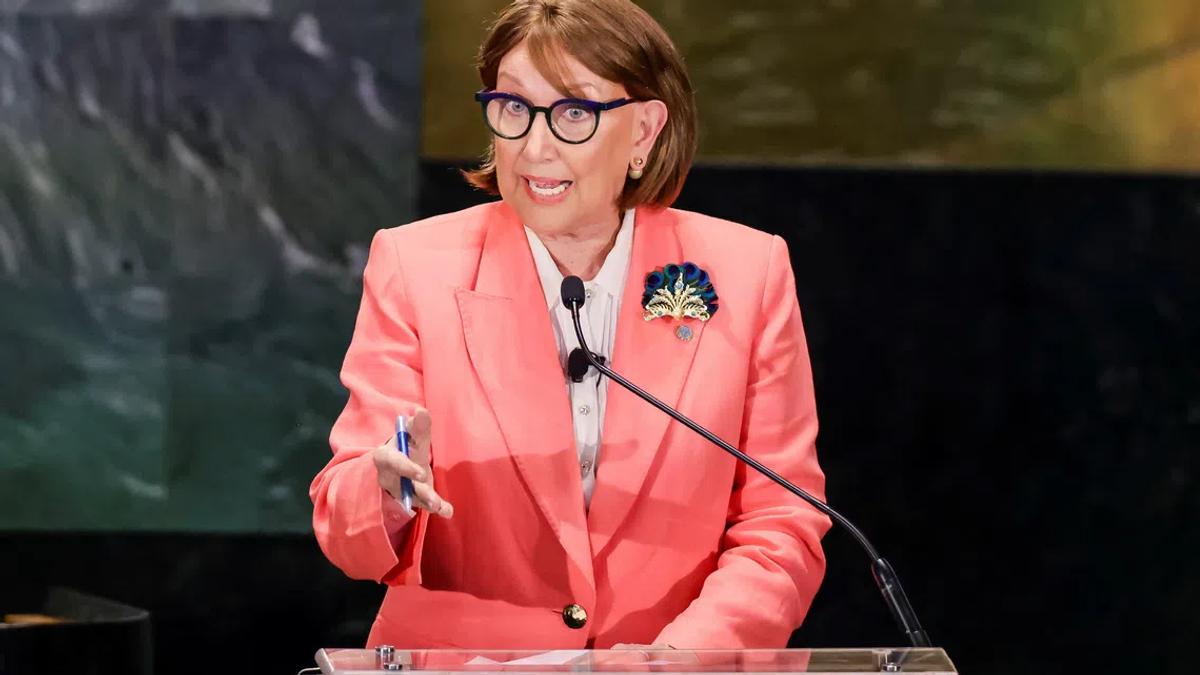
Former Costa Rican Vice President Rebeca Grynspan emerged as the narrow front‑runner in the latest informal straw poll of the 15‑member United Nations Security Council. The closed‑door vote, the third of its kind, recorded nine “encourage” votes for Grynspan against five “discourage” and one “no opinion,” putting her ahead of Guyana’s ambassador Carolyn Rodrigues Birkett and other contenders.
The UN secretary‑general is elected by the 193‑member General Assembly, but the real gatekeepers are the five permanent members of the Security Council—the United States, China, Russia, France and the United Kingdom. Their veto power means any candidate must secure a tacit or explicit nod from all five, turning the selection into a diplomatic chessboard. Grynspan’s rise reflects a confluence of interests: Latin American states rally behind a regional candidate to counterbalance European and Asian influence; the United States, seeking a leader who will keep peace‑keeping budgets intact and avoid a hard line on its foreign policy, sees a moderate Latin American as a safe bet; China, meanwhile, prefers a secretary‑general who will not challenge its growing role in UN peace‑keeping and infrastructure projects. Russia’s position remains opaque, but its historical preference for candidates less aligned with Western liberal agendas suggests it may tolerate Grynspan if other veto powers do not object. The poll also reveals the subtle bargaining over future reform agendas—climate finance, nuclear non‑proliferation, and the UN’s budget—each veto power leveraging its vote to extract concessions.
While diplomats trade favors, the stakes for ordinary people are concrete. Peace‑keeping troops and the civilians they protect depend on the secretary‑general’s ability to secure funding and political backing for missions in places like the Sahel, the Democratic Republic of Congo, and the South China Sea. Developing nations look to the UN for coordinated climate‑action support; a secretary‑general less sympathetic to climate finance could stall projects that protect vulnerable coastal communities. UN staff—many from low‑income countries—face budget cuts and job insecurity that hinge on the leader’s stance toward administrative reform. Finally, refugee populations awaiting humanitarian aid are indirectly affected by the secretary‑general’s capacity to mobilize donor contributions and negotiate access with host governments.
Official statements stress the “transparent” and “merit‑based” nature of the process, yet the reality is a quiet power‑play. The United States and China have been quietly coordinating behind the scenes, using bilateral meetings to gauge each other’s comfort level with Grynspan. Corporate lobbyists from the defense and energy sectors are also present, hoping a secretary‑general will maintain the status quo on procurement and climate policy. Moreover, the poll downplays the regional bloc dynamics: the African Union and the Caribbean Community have been lobbying for a candidate from their regions, but their influence is eclipsed by the permanent five’s veto calculus. The narrative of a “rubber‑stamp” General Assembly masks the fact that the real decision‑making occurs months before the formal vote, when candidates are already filtered out.
Watch for the next round of straw polls—they will reveal whether the permanent five are converging on a consensus or if a deadlock emerges, which could push the General Assembly into a more active role. Pay attention to bilateral statements from the United States and China in the coming weeks; any shift in tone may signal a change in support. Regional groups, especially the Latin American bloc (CELAC) and the African Union, will intensify lobbying as the deadline approaches. Finally, monitor budget negotiations for the UN’s 2027‑2028 cycle, as the secretary‑general’s platform on financing will become a bargaining chip in the final selection.
Source referenced: STRAITSTIMES
This brief was synthesized by our Editorial Engine and reviewed by The Ground Narrative team.


