TRENDING

Monday, 5 October 2026
----------------------
24 Rabi' Al-Thani 1448 AH
A FlyDubai flight bound for Tel Aviv was diverted after a co‑pilot stabbed the captain in an apparent sabotage attempt. The incident now fuels political narratives in Israel and raises security questions across the Gulf aviation network.
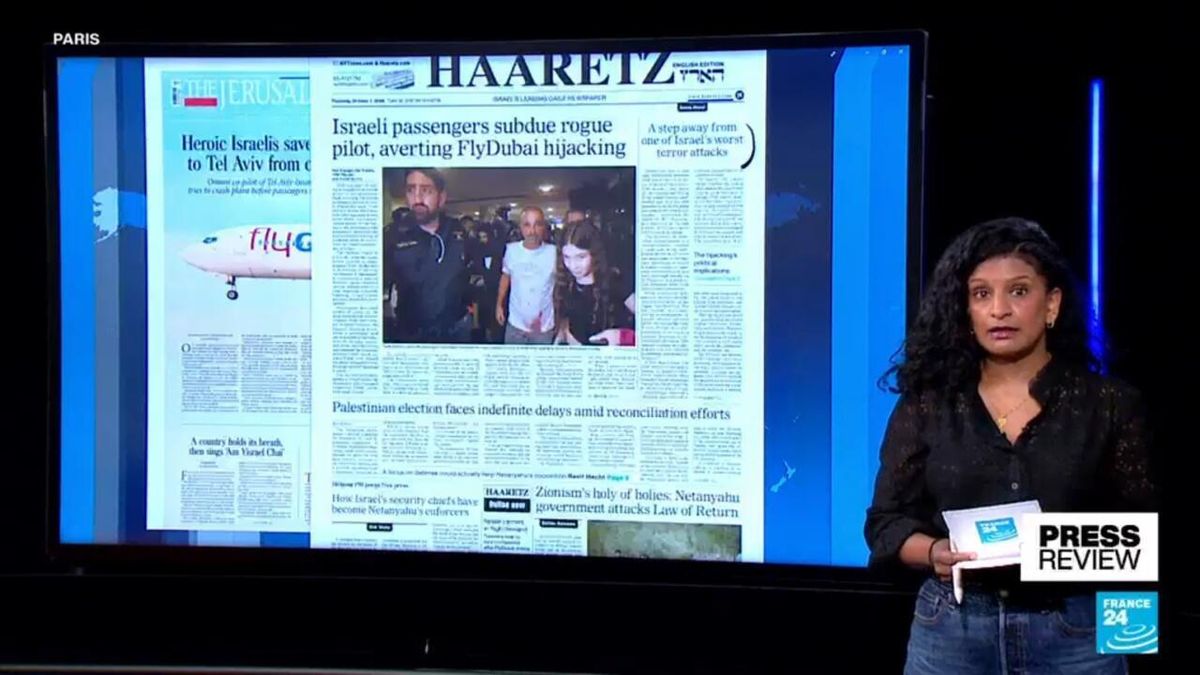
A FlyDubai Airbus en route from Dubai to Tel Aviv was forced to land in Saudi Arabia after the co‑pilot stabbed the captain, causing a brief nosedive. Passengers and off‑duty pilots restrained the attacker, allowing the plane to land safely. Israeli Prime Minister Benjamin Netanyahu publicly labeled the Omani national as a terrorist intent on crashing the aircraft.
The episode sits at the intersection of three overlapping power structures. First, Israel’s domestic politics: with national elections looming, the government can amplify a near‑miss as a rallying cry for security‑focused voters, positioning Netanyahu as the guardian against external threats. Second, regional aviation economics: FlyDubai, a UAE carrier, relies on seamless Gulf‑Israel routes that were only possible after the Abraham Accords; any security breach threatens the fragile commercial ties that airlines and tourism ministries have cultivated. Third, state security cooperation: Saudi Arabia’s decision to accept the emergency landing reflects a tacit alignment with Israeli security concerns, even as formal diplomatic ties remain absent. Each actor balances political survival, revenue streams, and the optics of cooperation against the risk of appearing soft on terrorism.
The captain’s injury, the psychological shock to passengers, and the trauma experienced by the off‑duty pilots who intervened are immediate human costs. Families of the crew face weeks of uncertainty while the airline grapples with staffing gaps. Beyond the aircraft, the incident ripples through the broader Israeli public, already living under a heightened sense of vulnerability; the narrative of a “missed 9/11” amplifies collective anxiety ahead of the vote. In the Gulf, FlyDubai pilots and ground staff confront heightened scrutiny, potentially jeopardizing jobs if airlines impose stricter vetting that could sideline workers from certain nationalities. The Omani co‑pilot, now detained, becomes a pawn in a larger political drama, his personal motives obscured by state narratives.
Official statements have focused on the attacker’s nationality and alleged terror intent, but several layers remain under‑reported. The security vetting process for crew members on routes that cross contested airspace is opaque; airlines have long relied on host‑nation certifications that may not account for radicalization risks. Moreover, the rapid involvement of passengers and off‑duty pilots hints at a lack of formal in‑flight security protocols, raising questions about why airlines have not invested in dedicated sky‑ward security teams. Finally, the diplomatic choreography that allowed a Saudi landing—without public acknowledgment of cooperation—suggests a quiet deepening of security ties that could reshape Gulf‑Israel relations, a shift largely absent from mainstream coverage.
Watch for the outcome of the joint investigation between UAE, Saudi, and Israeli authorities, especially any recommendations on crew vetting and in‑flight response procedures. Netanyahu’s campaign will likely reference the incident in upcoming rallies; monitor how the narrative evolves as election day approaches. In the aviation sector, FlyDubai has already suspended flights to Israel; any broader airline pull‑back could pressure the Abraham Accords’ commercial backbone. Finally, diplomatic signals from Oman—whether it issues a consular protest or cooperates in the investigation—will reveal how Gulf states balance national pride against the emerging security calculus of the post‑Accords era.
Source referenced: FRANCE24
This brief was synthesized by our Editorial Engine and reviewed by The Ground Narrative team.


