TRENDING

Monday, 26 October 2026
----------------------
15 Jumada Al-Awwal 1448 AH
Thirty years after President Bill Clinton signed the Personal Responsibility and Work Opportunity Reconciliation Act, this analysis examines its profound and lasting impact on the United States' social safety net. The legislation, which ended Aid to Families with Dependent Children, is explored for its role in reshaping U.S. domestic policy and influencing the trajectory of political discourse around government assistance.
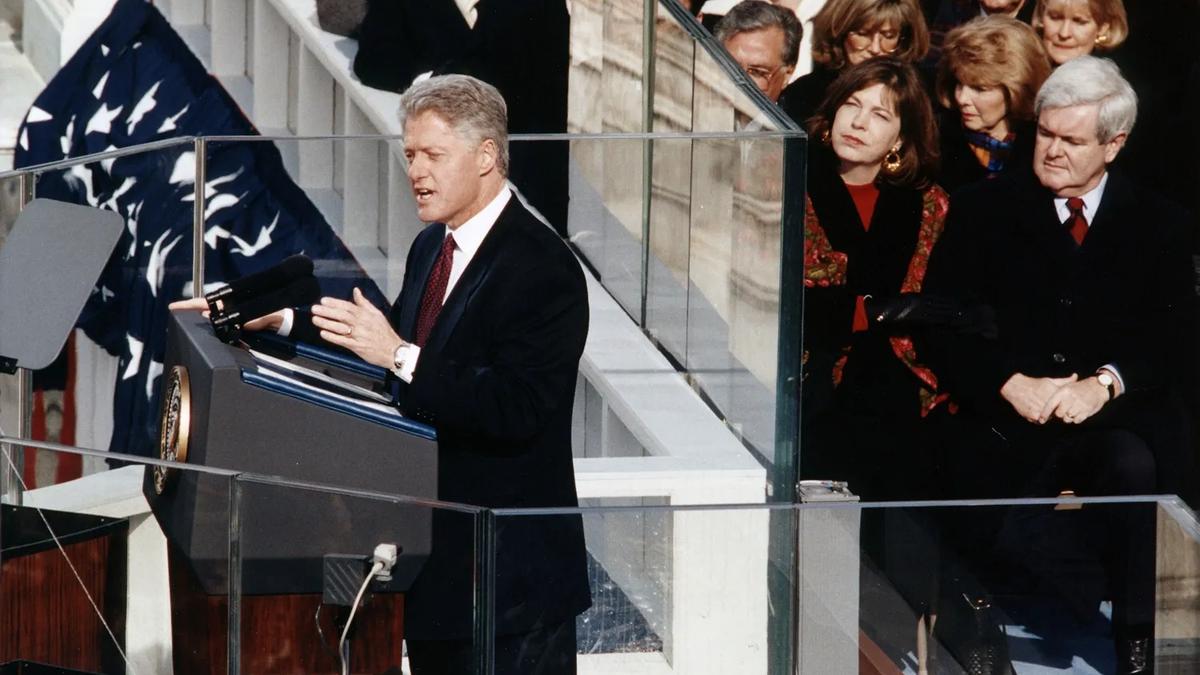
Thirty years ago, on July 27, 1996, President Bill Clinton signed the Personal Responsibility and Work Opportunity Reconciliation Act, declaring an end to "welfare as we know it." This landmark legislation marked a significant turning point in U.S. domestic policy, fundamentally altering the federal government's approach to income support for impoverished women and children. The act abolished Aid to Families with Dependent Children (AFDC), a program established during the New Deal era, replacing it with a system characterized by block grants to states, time limits on benefits, and mandatory work requirements. This analysis delves into the historical context, strategic motivations, and long-term implications of this reform, examining how it has shaped the U.S. political landscape and the future of its social safety net.
The roots of federal welfare policy in the United States trace back to President Franklin D. Roosevelt's New Deal in 1935. Amidst the Great Depression, AFDC was enacted as part of the Social Security Act, establishing a federal commitment to aid the poor, particularly children whose fathers were absent or unable to work. This program, jointly funded by federal and state governments, was means-tested and allowed states substantial control over eligibility, a feature that appeased Southern Democrats concerned about local race relations.
Over the decades, the scope of federal assistance expanded, notably with President Lyndon Johnson's War on Poverty in the 1960s, which placed federal provision to the needy at the center of the national agenda. However, this expansion also fueled a growing conservative backlash. Following the economic challenges of the 1970s and the political shifts after President Richard Nixon's resignation, conservatives increasingly targeted welfare programs. President Ronald Reagan, in particular, made welfare a central theme of his political attacks, portraying recipients as dependent and defrauding the system. While Reagan found more success in critiquing welfare than in dismantling it, his rhetoric laid significant groundwork for future reforms, popularizing concepts like "welfare dependency" and the idea that government assistance discouraged work.
In the wake of the Reagan era and a significant Democratic electoral defeat in 1988, a faction within the Democratic Party, including then-Arkansas Governor Bill Clinton and the Democratic Leadership Council (DLC), sought to move the party towards the political center. Their aim was to counter Republican accusations of being too liberal and to appeal to a broader base of mainstream voters. Welfare reform emerged as an attractive target for this strategy, as it did not directly affect most middle-class voters and many Democrats genuinely believed the system needed reform.
During his 1992 presidential campaign, Clinton promised to "end welfare as we know it." Upon taking office, his administration initially prioritized other issues. However, after Republicans gained control of Congress in the 1994 midterm elections, led by Speaker Newt Gingrich and his "Contract with America," welfare reform became an unavoidable political imperative. Despite initially vetoing a more punitive Republican bill, Clinton ultimately signed a revised version of the Personal Responsibility and Work Opportunity Reconciliation Act in 1996. This act fundamentally restructured welfare by:
* Abolishing AFDC: Replacing it with Temporary Assistance for Needy Families (TANF).
* Implementing Block Grants: Giving states greater flexibility but also more responsibility and less federal funding.
* Introducing Time Limits: Capping the duration for which individuals could receive federal assistance, typically at five years.
* Mandating Work Requirements: Requiring recipients to engage in work or work-related activities.
The 1996 welfare reform has had profound and enduring implications for the United States, extending beyond immediate policy changes to influence the nation's political trajectory and social fabric. The article argues that Clinton's attempt to strike a balance between New Deal liberalism and a centrist Democratic path on domestic policy ultimately proved difficult to sustain, particularly as the Republican Party continued its shift to the right.
One significant consequence is the erosion of the political center on social safety net issues. The bipartisan consensus that enabled the 1996 reform, driven by a desire for political triangulation, arguably legitimized a more conservative approach to government assistance. This, the article posits, created a precedent that subsequent conservative administrations could leverage for further rollbacks. The article, published in 2026, highlights this by referencing a hypothetical 2025 "big beautiful" act under a conservative Republican administration, which it claims further scaled back or eliminated healthcare and food stamp benefits for vulnerable populations.
From a geopolitical perspective, the internal stability and social cohesion of a major global power like the United States are intrinsically linked to its domestic policies. A weakening social safety net can exacerbate socioeconomic inequality, potentially leading to increased social stratification and internal tensions. While not a direct military or diplomatic issue, the long-term health and well-being of a significant portion of the population can impact national resilience, public trust in institutions, and the overall capacity for effective governance. The shift away from a federal commitment to income support for the poor also reflects a broader ideological battle over the role of government in society, a debate that continues to shape U.S. political identity and its global image.
The Personal Responsibility and Work Opportunity Reconciliation Act of 1996 stands as a pivotal moment in U.S. political history. While intended to reform a system perceived as flawed and to move the Democratic Party to the center, its legacy, as analyzed by the source, includes paving the way for a more conservative approach to social welfare. The act's provisions, particularly the shift to block grants, time limits, and work requirements, fundamentally redefined the relationship between the federal government and its most vulnerable citizens. Thirty years later, the debate over the appropriate scope and nature of the social safety net continues to be a central, often contentious, issue in American politics, underscoring the enduring impact of Clinton's landmark reform on the nation's domestic policy and political trajectory.
Editor's Note: The source article, published in 2026, includes projections about future policy actions by a specific U.S. administration. This analysis attributes these projections to the source to maintain neutrality.
Source referenced: FOREIGNPOLICY
This brief was synthesized by our Editorial Engine and reviewed by The Ground Narrative team.