TRENDING

Monday, 5 October 2026
----------------------
24 Rabi' Al-Thani 1448 AH
China's recent test-firing of a long-range ballistic missile from a nuclear submarine in the South Pacific has drawn sharp criticism from Australia, New Zealand, and Japan, escalating regional security tensions. The incident underscores growing concerns over Beijing's rapid military expansion and its implications for Indo-Pacific stability.
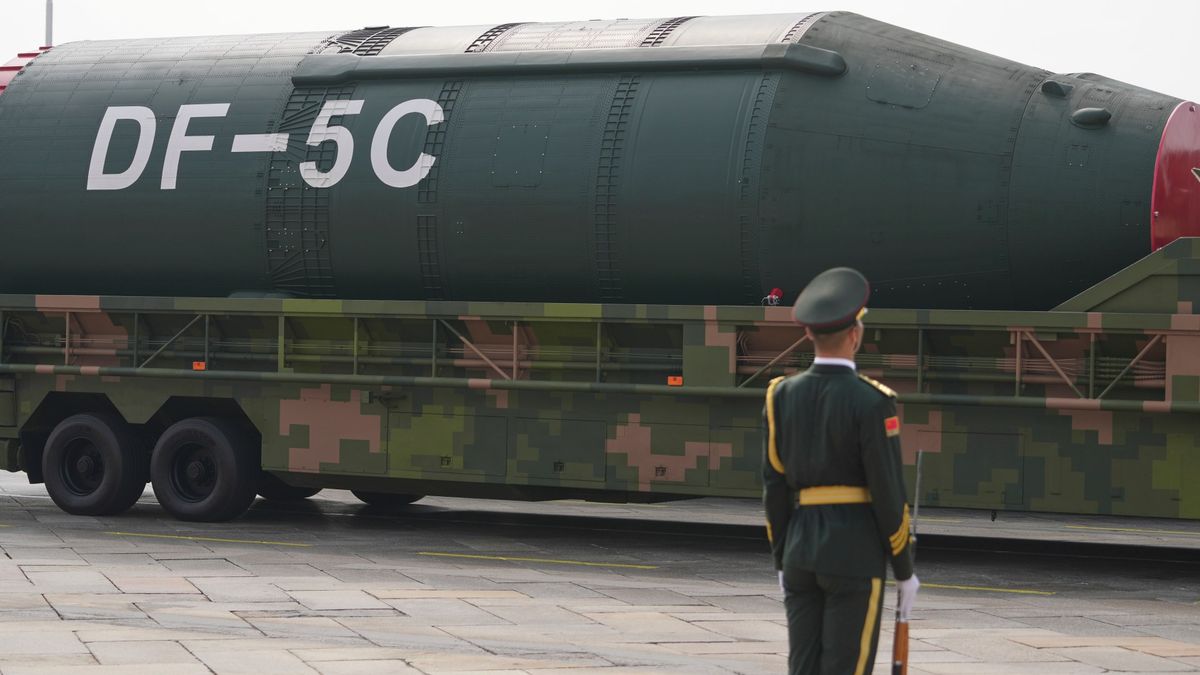
On Monday, July 6, 2026, at 12:01 pm (04:01 GMT), China's navy successfully test-launched a long-range ballistic missile from one of its nuclear-powered submarines. The missile reportedly landed in "designated waters" within the South Pacific, according to China's state news agency, Xinhua. Beijing characterized the test as a "routine arrangement" within its annual military training schedule, asserting it was not directed at any specific target. This event marks a significant demonstration of China's evolving strategic capabilities and its expanding naval reach.
The missile test immediately drew strong condemnation and expressions of concern from key regional powers: Australia, New Zealand, and Japan. Australian Foreign Minister Penny Wong confirmed that China had provided prior notification of the test but labeled the action as "destabilising" for the region. Wong emphasized that this test occurs amidst a "rapid military build-up by China, which is lacking in the transparency and reassurance as to intent that the region expects." Her remarks, delivered from Suva, Fiji, highlight the apprehension among Pacific nations regarding China's military posture.
Japan's government, also notified of the launch, urged China to reconsider such actions, expressing "grave concern over the Chinese military’s increased activity." Japan's coastguard had additionally been informed by Chinese authorities about potential falling space debris that could impact Japan's exclusive economic zone, adding another layer of concern regarding maritime safety and sovereignty. New Zealand's Foreign Minister Winston Peters echoed these sentiments, stating that his country considers the test an "unwelcome and concerning development." Peters articulated a clear regional sentiment: "We, like our neighbours in other Pacific countries, have no interest in China using the South Pacific as a testing site for missile capability."
China's decision to conduct a submarine-launched ballistic missile (SLBM) test in the South Pacific carries significant strategic weight. SLBMs are a critical component of a nation's second-strike nuclear capability, enhancing deterrence by ensuring that a retaliatory strike remains possible even if land-based assets are neutralized. This test demonstrates China's commitment to modernizing its strategic nuclear forces and projecting its naval power far beyond its immediate coastal waters. By conducting the test in the South Pacific, China signals its growing operational reach and its ability to operate in areas traditionally considered within the sphere of influence of Western powers, particularly the United States and its allies.
The timing and location of this test are also noteworthy. It occurs amid heightened geopolitical competition in the Indo-Pacific, characterized by increased military exercises, diplomatic engagements, and the formation of security pacts like AUKUS (Australia, UK, US). From Beijing's perspective, such a test could be seen as a demonstration of resolve and a counter-signal to perceived encirclement or containment efforts. It reinforces China's narrative of being a major global power with legitimate security interests that extend across the Pacific.
The criticisms from Australia, New Zealand, and Japan underscore a broader regional anxiety about China's military expansion and its implications for the existing security architecture. The lack of transparency cited by these nations fuels distrust and can lead to miscalculation, potentially increasing the risk of escalation. For smaller Pacific island nations, the use of their broader region as a testing ground for advanced weaponry by a major power is a concerning development, potentially drawing them into great power competition.
This missile test will likely prompt further discussions and potentially stronger coordinated responses among US allies in the Indo-Pacific. It could accelerate military modernization efforts in countries like Australia and Japan and intensify diplomatic efforts to reinforce regional security partnerships. The incident highlights the ongoing shift in the global balance of power and the increasing militarization of the Pacific, transforming it into a critical arena for strategic competition. The challenge for regional and global actors will be to manage these escalating tensions through diplomacy and confidence-building measures, even as military capabilities continue to advance rapidly.
Source referenced: ALJAZEERA
This brief was synthesized by our Editorial Engine and reviewed by The Ground Narrative team.


