TRENDING

Monday, 5 October 2026
----------------------
24 Rabi' Al-Thani 1448 AH
China's recent long-range ballistic missile test in the South Pacific, launched from a submarine, has sparked significant regional concern and diplomatic protests. This event underscores Beijing's assertive military modernization and its strategic signaling in a contested geopolitical arena.
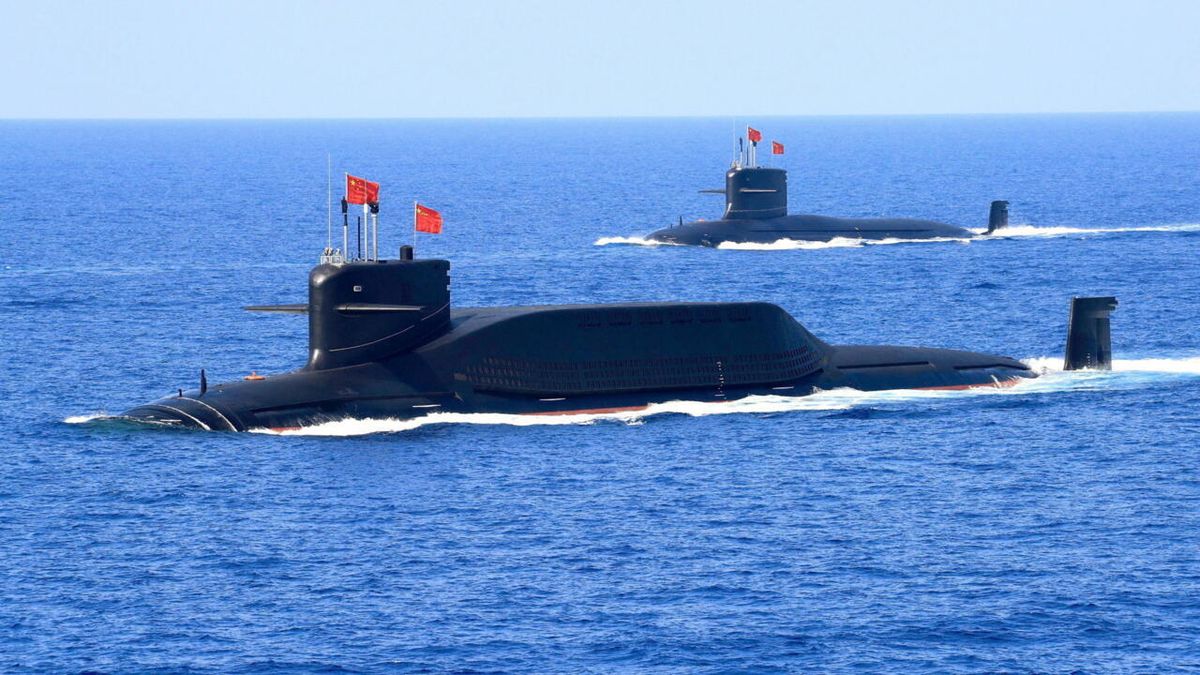
On Monday, July 6, 2026, China's military conducted a long-range ballistic missile test in the South Pacific, launching a dummy warhead from a nuclear-powered submarine. The test, which China described as routine annual training, immediately drew criticism from regional powers Australia and New Zealand, highlighting escalating geopolitical tensions and strategic competition in a crucial maritime domain. This event underscores China's ongoing military modernization and its assertive posture in projecting power beyond its immediate periphery, challenging existing regional security frameworks and diplomatic norms.
The missile was launched at 12:01 pm local time, originating from one of China's nuclear-powered submarines. According to China's official Xinhua News Agency, the test involved a dummy warhead and was part of "routine annual training," asserting compliance with international law and practice, and explicitly stating it was "not directed against any country or target." This official narrative aims to frame the exercise as a standard military activity, downplaying any aggressive intent. However, the choice of location and timing suggests a more complex strategic calculus. This marks China's second such missile test in the Pacific in two years, following a previous intercontinental ballistic missile (ICBM) test with a dummy warhead. The use of a submarine-launched ballistic missile (SLBM) capability is particularly significant, as it enhances a nation's second-strike nuclear deterrence, making its strategic arsenal more survivable and harder to track.
The test occurred within the South Pacific Nuclear Free Zone, established by the 1986 Treaty of Rarotonga, which prohibits nuclear weapons and testing in the region. China ratified protocols to this treaty in 1987, pledging not to test nuclear weapons within the zone or threaten signatories. While China's statement emphasized a dummy warhead and routine training, the act itself was perceived by some regional states as a violation of the spirit, if not the letter, of these commitments. New Zealand's Foreign Minister Winston Peters expressed concern, noting that China proceeded with the test "within hours of informing us," despite long-standing regional objections to such activities.
Australia's Foreign Minister Penny Wong, speaking from Fiji, unequivocally stated that Australia regards the test as "destabilising to the region." Her comments were particularly poignant as they coincided with the signing of a new mutual defense treaty between Australia and Fiji on the very same day. This treaty is widely seen as a strategic move by Australia to counter China's growing influence in the Pacific island nations, which have become a focal point of geopolitical competition between Beijing and Western allies.
The timing of China's missile test, coinciding with the Australia-Fiji defense pact, is unlikely to be coincidental. It can be interpreted as a deliberate strategic signal from Beijing. Firstly, it demonstrates China's advanced military capabilities, particularly its burgeoning SLBM technology, which is crucial for enhancing its nuclear deterrence posture and projecting power across vast maritime distances. Secondly, it serves as a clear message to regional actors and their Western partners that China views the South Pacific as an area of its strategic interest and is prepared to assert its presence, even in the face of diplomatic protests.
The South Pacific has emerged as a critical arena for geopolitical competition. China's increasing economic and security engagements with Pacific island nations have prompted a robust response from the United States, Australia, New Zealand, and other allies, who seek to reinforce their traditional influence and prevent the region from becoming overly reliant on Beijing. The Australia-Fiji defense treaty is a prime example of these efforts, aiming to bolster regional security cooperation and resilience. In this context, China's missile test can be seen as a counter-signal, asserting its military reach and challenging the narrative of a unified regional front against its expanding influence.
The missile test exacerbates existing tensions and raises questions about the future of regional stability and adherence to international norms. While China maintains its actions are lawful and routine, the perception of destabilization among its neighbors is a significant factor. The incident highlights the ongoing challenge of managing military transparency and de-escalation in a region where major powers are increasingly vying for strategic advantage. For smaller Pacific island nations, caught between competing geopolitical interests, such displays of military power underscore the delicate balance they must strike in their foreign relations. The event will likely spur further diplomatic efforts by Australia, New Zealand, and their allies to strengthen regional security architectures and deepen engagements with Pacific island states, potentially leading to an intensified cycle of strategic competition and counter-moves in the Indo-Pacific.
Source referenced: FRANCE24
This brief was synthesized by our Editorial Engine and reviewed by The Ground Narrative team.