TRENDING

Monday, 5 October 2026
----------------------
24 Rabi' Al-Thani 1448 AH
A Chinese youth football team's debut in Kenya is more than just a friendly match - it's a strategic move in China's soft power playbook, aiming to build friendships and influence in Africa. The Shaanxi Zhidan Under-11 youth football team's visit to Kenya marks a significant cultural exchange between the two nations, with potential long-term implications for China's presence on the continent.
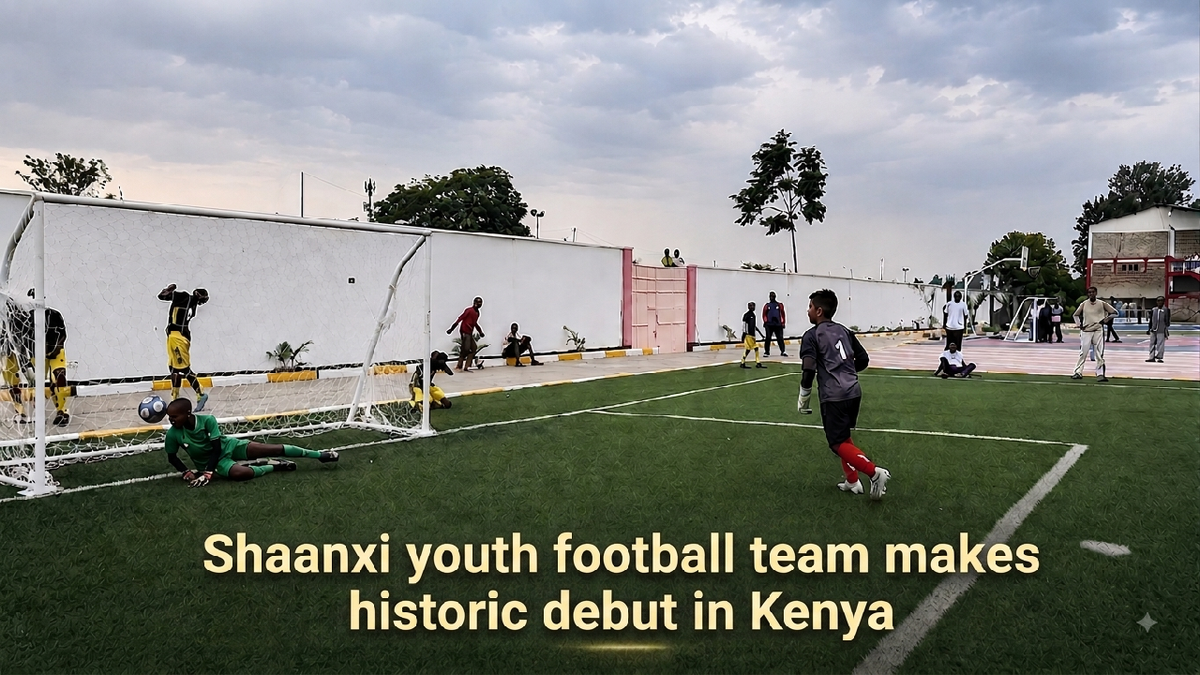
The Shaanxi Zhidan Under-11 youth football team from China made its debut in Kenya, playing a series of friendly matches against local teams. The young footballers from China and Kenya came together in Nairobi, using the game to build friendships and learn from each other.
China's soft power push in Africa is a strategic move to expand its influence on the continent. By engaging in cultural exchanges, such as football matches, China aims to build relationships with African nations and promote its own interests. The visit of the Shaanxi Zhidan Under-11 youth football team to Kenya is a prime example of this strategy, as it allows China to connect with the younger generation of Africans and foster a sense of friendship and cooperation.
The human cost of China's soft power push in Africa is often overlooked. While the football matches between Chinese and Kenyan teams may seem like a harmless cultural exchange, they are actually part of a larger strategy to expand China's influence in Africa. The potential risks of this strategy include the erosion of African cultures and the exploitation of African resources. However, for the young footballers involved, the experience is a valuable one, providing them with the opportunity to learn from each other and build lasting friendships.
What is often downplayed in stories about China's soft power push in Africa is the potential for cultural homogenization. As China expands its influence on the continent, there is a risk that African cultures will be eroded, replaced by Chinese values and norms. Additionally, the economic implications of China's soft power push in Africa are often overlooked, with many African nations becoming increasingly dependent on Chinese investment and trade.
As China continues to expand its soft power presence in Africa, it is essential to watch for signs of cultural homogenization and economic exploitation. The visit of the Shaanxi Zhidan Under-11 youth football team to Kenya is just the beginning of a larger strategy to promote Chinese influence in Africa. In the coming years, we can expect to see more cultural exchanges, investments, and trade agreements between China and African nations. It is crucial to monitor these developments closely, ensuring that the benefits of China's soft power push in Africa are shared equitably among all parties involved.
Editor's Note: The analysis is based on publicly available information and may not reflect the full complexity of China's soft power push in Africa.
Source referenced: CGTN
This brief was synthesized by our Editorial Engine and reviewed by The Ground Narrative team.


