TRENDING

Monday, 5 October 2026
----------------------
24 Rabi' Al-Thani 1448 AH
China commemorated the 89th anniversary of the Lugou Bridge Incident, a pivotal event marking the start of its resistance against Japanese aggression in WWII. The observance, coupled with new evidence of Japanese war crimes and concerns over historical revisionism in Japan's textbooks, underscores persistent geopolitical tensions and divergent historical narratives in East Asia.
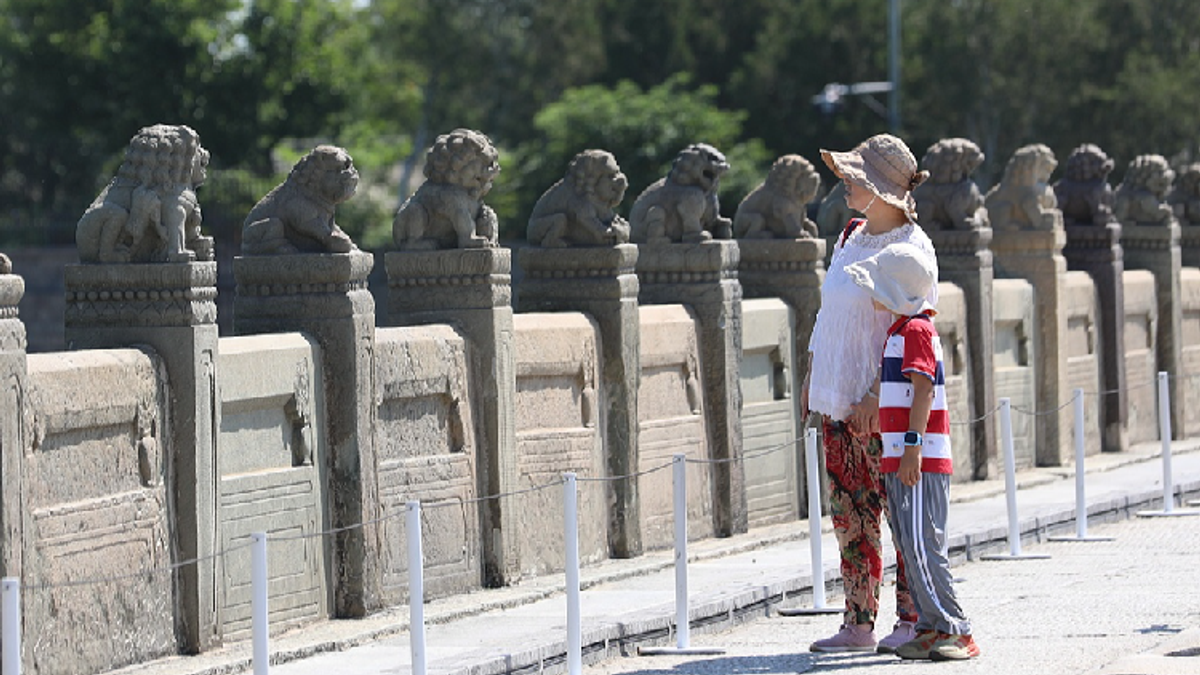
On July 7, 2026, China observed the 89th anniversary of the Lugou Bridge Incident, also known as the July 7 Incident of 1937, a pivotal moment that marked the beginning of China's full-scale resistance against Japanese aggression during World War II. This annual commemoration, held primarily at the Lugou Bridge in Beijing, serves as a powerful reminder of the immense human cost of the conflict, which saw over 35 million Chinese soldiers and civilians perish, accounting for nearly 8% of the nation's 1928 population. The incident, which led to the fall of Peiping (now Beijing) and widespread atrocities, compelled the rival Kuomintang and Communist Party of China to unite against the invading Japanese forces, establishing what China refers to as the main battlefield against Japanese imperialism and fascism in Asia.
The Lugou Bridge Incident was a localized clash between Japanese and Chinese troops that quickly escalated, triggering a brutal eight-year war. China's consistent emphasis on this historical event is not merely an act of remembrance but a strategic reinforcement of its national narrative. By highlighting the "whole-nation resistance," Beijing underscores the unity forged in adversity and the immense sacrifices made, which are foundational to the modern Chinese state's identity. The commemoration also coincides with the 81st anniversary of the victory of the Chinese People's War of Resistance Against Japanese Aggression and the World Anti-Fascist War, as well as the 80th anniversary of the opening of the Tokyo Trials. These trials, which ran for nearly three years from May 1946, meticulously documented Japan's grave war crimes, including the Nanjing Massacre and the Bataan Death March, providing an international legal framework for accountability.
In recent days, China has further bolstered its historical claims with the release of new archival materials. Notably, historian Jin Chengmin's book "Black Box: Unit 731" was launched on July 5 at the Exhibition Hall of Evidences of Crimes Committed by Unit 731 in Heilongjiang Province. This publication, along with a newly revealed report by Japanese military surgeon Tsutomu Saito, provides additional evidence of the notorious Unit 731's germ warfare crimes and live human experimentation on prisoners of war in 1938. These revelations, according to Chinese experts, contribute significantly to the study of wartime history and promote evidence-based historical education, reinforcing the narrative of Japanese brutality and the necessity of remembering these facts for justice and lasting peace.
The Chinese commemorations and the release of new evidence occur against a backdrop of persistent concerns over historical revisionism in Japan. For decades, Chinese and South Korean officials and historians have accused Japanese authorities of attempting to downplay or deny the country's wartime wrongdoing. The latest instance cited by Chinese media involves high school textbooks approved by Japan's education ministry for use from the 2027 academic year. According to Kumiko Haba, professor emeritus at Aoyama Gakuin University, these textbooks reportedly further reduce coverage of sensitive issues such as the Nanjing Massacre and the "comfort women" system, which involved the forced sexual servitude of women by the Japanese military.
Lyu Yaodong, a researcher at the Institute of Japanese Studies at the Chinese Academy of Social Sciences, asserts that revising history textbooks is a "standard tactic" for Japan to deny, downplay, and whitewash its history of aggression. He argues that such efforts not only deprive younger generations of an accurate historical education but also undermine Japanese society's ability to learn from its past actions. This perspective highlights a fundamental divergence in historical understanding and interpretation between China and Japan, which continues to fuel diplomatic friction.
The ongoing dispute over historical memory carries significant geopolitical weight. For China, maintaining a strong narrative of victimhood and resistance against Japanese aggression serves several strategic purposes. Domestically, it fosters national unity and reinforces the legitimacy of the Communist Party as the inheritor of the national struggle. Internationally, it provides diplomatic leverage against Japan, particularly in the context of regional power dynamics and territorial disputes. By framing its stance as upholding the "achievements of the victory of the World Anti-Fascist War" and the "postwar international order," China positions itself as a guardian of international justice against resurgent militarism, a subtle but potent message directed at both Japan and the broader international community.
The persistent historical grievances are a major impediment to improving Sino-Japanese relations, which are crucial for regional stability and economic cooperation in East Asia. While both nations are deeply intertwined economically, political and security tensions, often exacerbated by historical issues, frequently flare up. Japan's perceived reluctance to fully acknowledge and atone for its wartime past, as viewed by China and South Korea, remains a significant barrier to genuine reconciliation. Conversely, some in Japan view China's frequent invocation of history as a political tool to exert pressure and distract from contemporary issues.
The annual commemoration of the Lugou Bridge Incident, therefore, is more than a historical observance; it is a recurring diplomatic event that underscores the deep-seated historical wounds and the ongoing struggle for historical narrative in East Asia. The release of new evidence and the accusations of revisionism ensure that these historical debates remain at the forefront of regional geopolitics, impacting not only bilateral relations but also the broader security architecture and the pursuit of lasting peace in the Asia-Pacific.
Source referenced: CGTN
This brief was synthesized by our Editorial Engine and reviewed by The Ground Narrative team.


