TRENDING

Monday, 5 October 2026
----------------------
24 Rabi' Al-Thani 1448 AH
Moroccan police arrested 111 migrants attempting to enter Spain's Ceuta enclave, highlighting the human cost of a growing migration crisis. As Europe tightens its borders, thousands of migrants are left stranded, facing an uncertain future. The situation has sparked tensions within the EU and fueled anti-immigration rhetoric, with far-right parties calling for stricter controls.
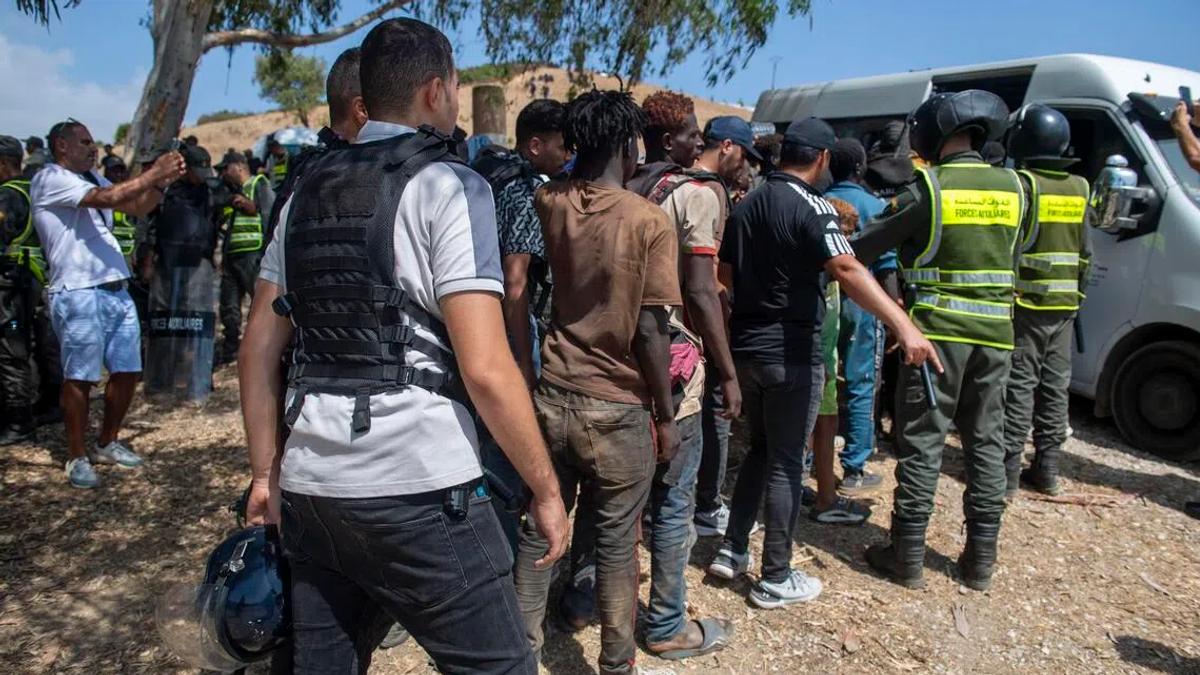
Moroccan security forces arrested 111 migrants near the Spanish enclave of Ceuta, following a social media call for a mass crossing. This incident occurred two weeks after over 72,000 migrants surged into Ceuta, resulting in at least 96 deaths. The attempted crossing was met with tightened security on both sides of the border, including the use of tear gas to disperse migrant groups.
The migration crisis in Ceuta is a complex issue, driven by a combination of factors including poverty, conflict, and climate change. European countries, particularly Spain, are under pressure to manage their borders and prevent irregular entries. The Spanish government has deployed over 1,600 police officers to Ceuta and installed a maritime barrier to prevent further crossings. Morocco, on the other hand, is under pressure to control its borders and prevent migrants from reaching Ceuta. The country has stepped up security measures, including monitoring social media and preventing groups from boarding trains and buses to northern Morocco.
The human cost of the migration crisis in Ceuta is devastating. Thousands of migrants, mostly from sub-Saharan Africa, are stranded in the enclave, facing harsh conditions and an uncertain future. Many have risked their lives to reach European soil, only to find themselves trapped in a limbo, without access to basic necessities like food, water, and shelter. The migrants who were arrested by Moroccan police will likely be returned to Morocco, where they will face an uncertain future. The situation is further complicated by the fact that many migrants are fleeing conflict, persecution, or poverty, and have limited options for seeking protection or asylum.
What is often downplayed in the migration crisis is the role of European countries in creating the conditions that drive migration. The EU's migration policies, which prioritize border control over human rights, have created a situation where migrants are forced to take risks to reach European soil. The lack of safe and legal migration channels has led to a thriving smuggling industry, which preys on vulnerable migrants. Furthermore, the EU's externalization of border control to countries like Morocco has created a situation where migrants are trapped in transit countries, without access to basic rights or protection.
As the situation in Ceuta continues to unfold, it is essential to watch for the following developments: the Spanish government's plans to manage the migration crisis, including the potential deployment of additional security forces or the creation of new migration policies. The Moroccan government's response to the crisis, including its efforts to control its borders and prevent migrants from reaching Ceuta. The EU's role in addressing the migration crisis, including its efforts to create safe and legal migration channels and provide support to countries like Morocco and Spain. The humanitarian situation in Ceuta, including the conditions faced by migrants and the provision of basic necessities like food, water, and shelter.
Editor's Note: The situation in Ceuta is complex and rapidly evolving, with multiple factors at play. This analysis is based on current information and may be subject to change as new developments emerge.
Source referenced: STRAITSTIMES
This brief was synthesized by our Editorial Engine and reviewed by The Ground Narrative team.


