TRENDING

Friday, 18 September 2026
----------------------
7 Rabi' Al-Thani 1448 AH
Spanish police used batons and fired warning shots as they moved thousands of migrants to a new camp in Ceuta, exposing the power play between Madrid, the EU, and Morocco while ordinary people bear the brunt.
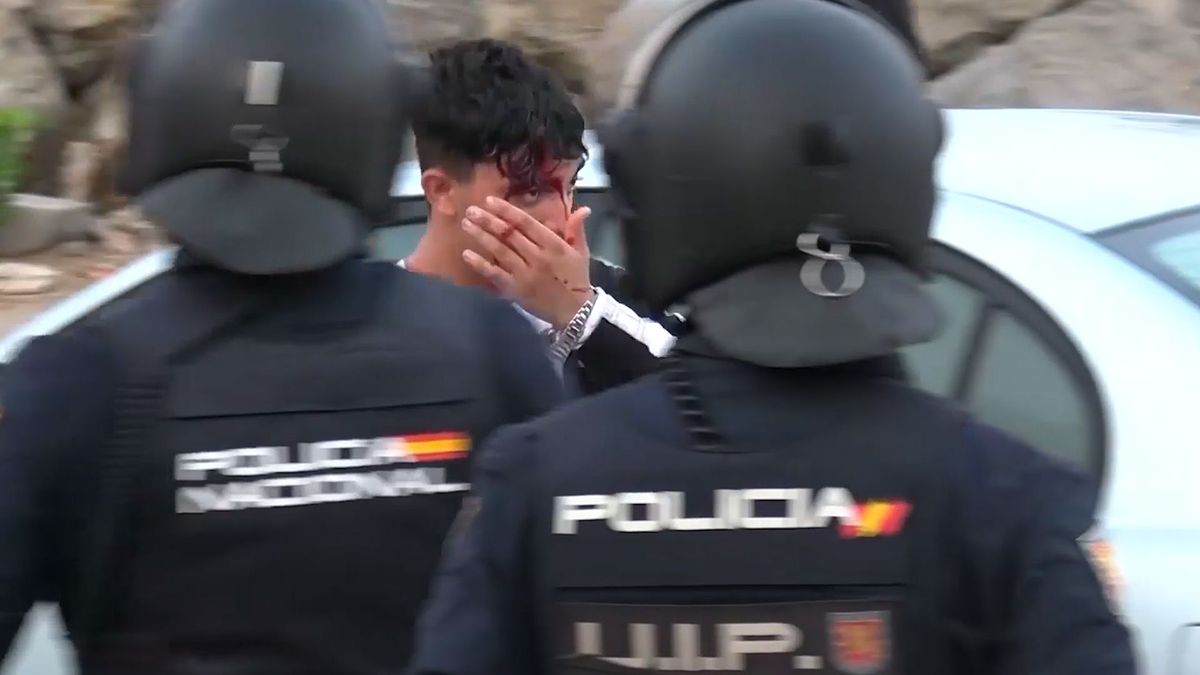
Police in the Spanish enclave of Ceuta brandished batons and fired shots into the air on September 18 as they began transferring migrants from a beach‑side encampment to a newly built detention site. The operation came weeks after a record surge of more than 72,000 people crossed from Morocco, leaving nearly 10,000 still housed in makeshift facilities.
The scene in Ceuta is the latest flashpoint in a layered enforcement system that stretches from local police to EU border agencies. Madrid faces mounting pressure from the far‑right Vox party and a public weary of nightly arrivals; the government’s response is calibrated to signal control without provoking a diplomatic rupture with Morocco, whose border forces have been paid to stem the flow. At the European level, Frontex channels funding and technical support to Spanish authorities, framing the operation as part of a broader “external border protection” agenda. This funding creates a feedback loop: more resources enable harsher crowd‑control tactics, which in turn generate media coverage that justifies further budget allocations. Meanwhile, smuggling networks profit from the volatility, adjusting routes and fees in response to each crackdown, while the EU’s externalization strategy pushes the cost of containment onto peripheral territories like Ceuta.
The migrants—many of them families, children, and seasonal workers—face a cascade of hardships. The sudden relocation disrupted already fragile shelter arrangements, exposing them to cold nights, limited sanitation, and the psychological trauma of police violence. Local NGOs report shortages of medical supplies and language interpreters, forcing migrants to navigate bureaucratic hurdles alone. The surrounding Spanish neighborhoods also feel the strain: informal economies that once relied on migrant labor see sudden gaps, while local residents confront heightened security measures that limit movement along the narrow coastal streets.
Official statements emphasize “orderly relocation” and “public safety,” but they omit the financial architecture that underpins the operation. EU border funds, earmarked for “migration management,” are funneled through contracts awarded to private security firms, whose profit motives are rarely disclosed. Morocco’s role is similarly downplayed; behind the scenes, Rabat receives cash payments and trade concessions in exchange for tightening its own border controls, a quid‑pro‑quo that shifts responsibility away from Europe. Finally, the legal shield granted to police under Spain’s “state of emergency” provisions is rarely mentioned, allowing the use of force with limited accountability.
Watch for three converging developments. First, Spain’s upcoming general election will test whether parties can capitalize on the migration narrative without alienating moderate voters. Second, the European Commission is slated to review Frontex’s budget in early 2027, a process that could reshape funding criteria and expose the cost‑benefit calculus of frontier enforcement. Third, Morocco’s domestic politics—particularly the upcoming parliamentary elections—may alter its willingness to cooperate, especially if public opinion turns against the perceived “sale” of border control. Each of these variables will influence whether Ceuta’s camps become a permanent fixture or a temporary flashpoint that forces a recalibration of Europe’s migration architecture.
Source referenced: ALJAZEERA
This brief was synthesized by our Editorial Engine and reviewed by The Ground Narrative team.


