TRENDING

Wednesday, 14 October 2026
----------------------
3 Jumada Al-Awwal 1448 AH
Smoke from Canadian wildfires has covered much of the northeastern US, causing unhealthy air and health alerts ahead of the World Cup final in New York. A cold front and rain expected over the weekend will clear the smoke, improving air quality by the time of the World Cup final match.
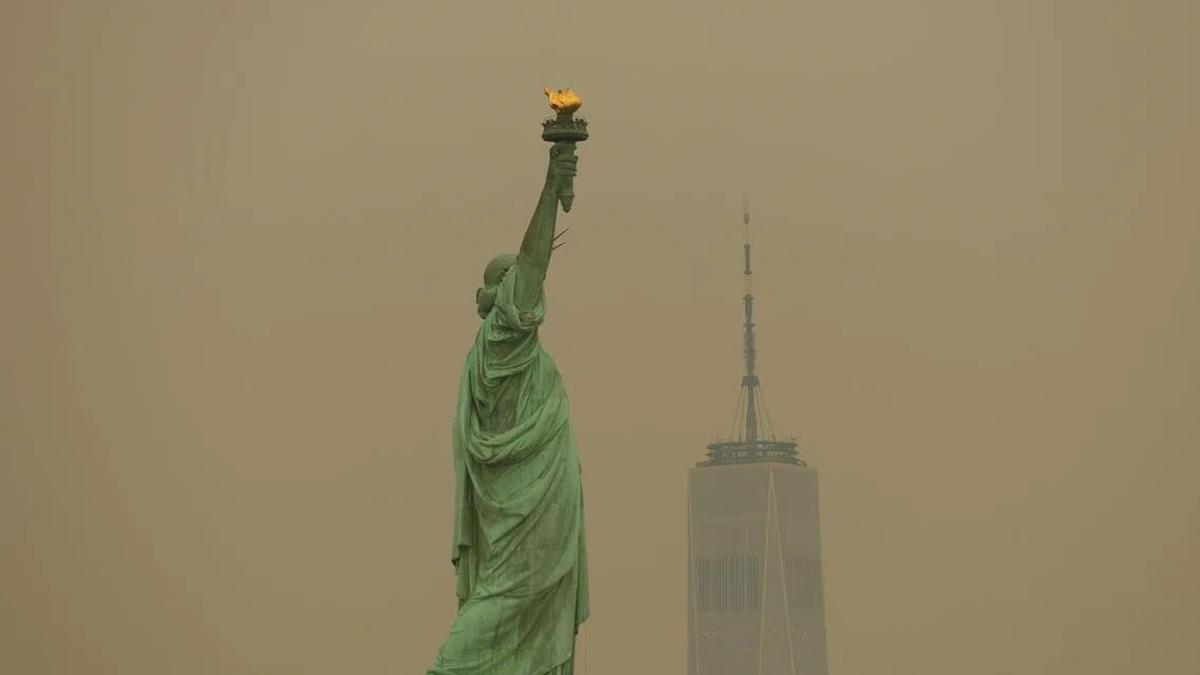
The recent blanket of smoke from Canadian wildfires over the northeastern United States has raised concerns about air quality and public health, particularly in the lead-up to the World Cup final in New York on July 19. This phenomenon is not a new occurrence, as wildfire smoke from northern Canada has been a common summer occurrence across wide swathes of the United States in recent years.
The smoke has affected not only New York City but also the surrounding areas, including New Jersey, where the World Cup final is scheduled to take place. Over 80,000 people are expected to attend the match at the open-air New York-New Jersey stadium, while another 50,000 are expected to watch the game from Central Park in Manhattan.
The air quality in New Jersey was rated as "unhealthy for sensitive groups" on July 16, prompting authorities to urge residents to reduce strenuous outdoor activity and take extra breaks if they are outside. Those who may be more sensitive or have respiratory issues are advised to stay indoors for as long as possible.
The Canadian wildfire smoke blanketing New York ahead of the World Cup final highlights the growing concern about air quality and public health in the region. The increasing frequency and severity of wildfires in Canada and the United States are a result of climate change, which is expected to worsen in the coming years.
A cold front and rain expected over the weekend will clear the smoke, improving air quality by the time of the World Cup final match. According to AccuWeather meteorologist Alex DaSilva, the rain on Saturday will dissipate a lot of the smoke, and the cold front on Sunday morning will kick out any remaining smoke.
The Canadian wildfire smoke blanketing New York is a symptom of a larger issue – the growing threat of climate change. The increasing frequency and severity of wildfires in Canada and the United States are a result of rising temperatures and changing precipitation patterns. This has significant implications for regional stability, economic development, and public health.
The long-term consequences of climate change will be far-reaching and devastating. Rising temperatures and changing precipitation patterns will lead to more frequent and severe wildfires, droughts, and extreme weather events. This will have significant impacts on regional stability, economic development, and public health.
The Canadian wildfire smoke blanketing New York is a wake-up call for global policymakers to take action on climate change. The increasing frequency and severity of wildfires in Canada and the United States are a result of climate change, which is expected to worsen in the coming years. Policymakers must work together to reduce greenhouse gas emissions, invest in climate resilience, and support climate change adaptation efforts.
The Canadian wildfire smoke blanketing New York ahead of the World Cup final is a stark reminder of the growing threat of climate change. The increasing frequency and severity of wildfires in Canada and the United States are a result of rising temperatures and changing precipitation patterns. This has significant implications for regional stability, economic development, and public health. Global policymakers must take action to reduce greenhouse gas emissions, invest in climate resilience, and support climate change adaptation efforts to mitigate the long-term consequences of climate change.
Editor's Note: While the short-term relief from the cold front and rain is expected to improve air quality, the long-term consequences of climate change will continue to pose significant challenges for regional stability, economic development, and public health.
Source referenced: STRAITSTIMES
This brief was synthesized by our Editorial Engine and reviewed by The Ground Narrative team.