TRENDING

Wednesday, 11 November 2026
----------------------
1 Jumada Al-Thani 1448 AH
California voters have rejected a proposed tax on billionaires, a decision that leaves $100 billion unfunded for critical public programs. This analysis delves into the power dynamics, human costs, and the untold stories behind the vote.
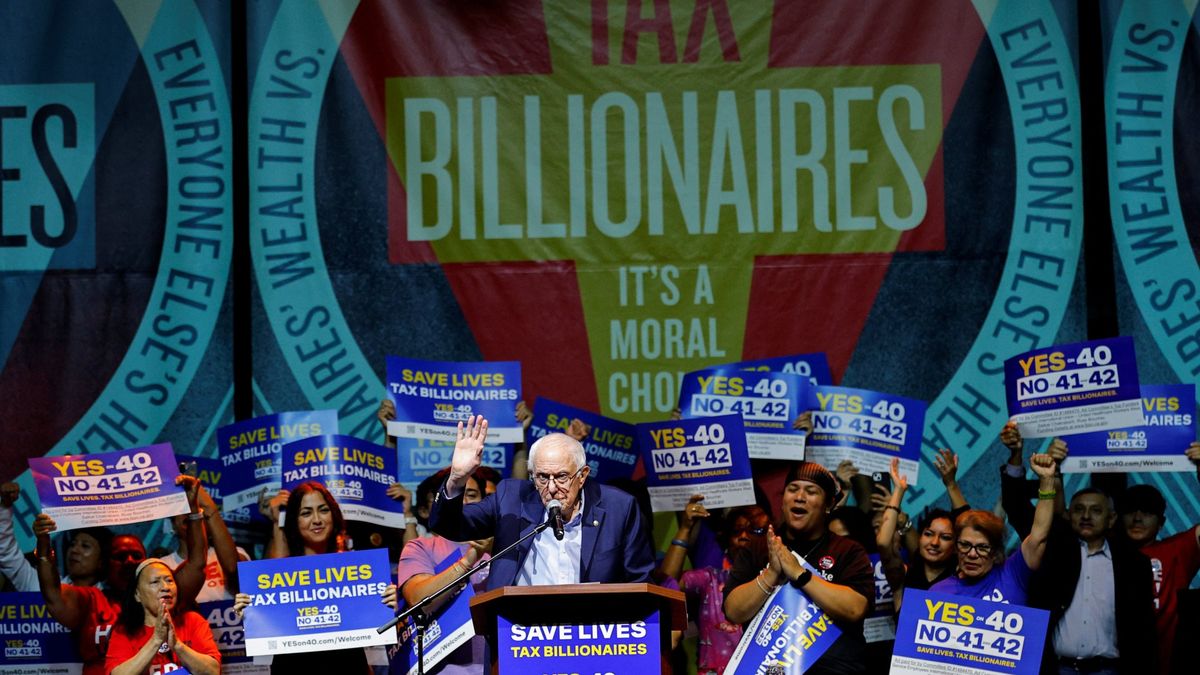
Voters in California decisively rejected Proposition 40, a ballot measure that sought to impose a one-time 5 percent tax on the net worth of individuals exceeding $1 billion. With approximately 60 percent of votes counted, the "no" vote led by a significant margin of 55.6 percent to 44.4 percent. The proposed tax, championed by progressive figures like US Senator Bernie Sanders, aimed to generate an estimated $100 billion primarily for crucial healthcare, education, and food assistance programs, partly to offset federal funding cuts.
The defeat of Proposition 40 in California is a stark illustration of how concentrated financial power can directly influence democratic outcomes, shaping public policy in its own interest. This was not merely a vote on a tax; it was a battle over the very definition of economic fairness and the role of the state in addressing wealth disparities, where the scales were heavily tipped by well-resourced opposition.
At the heart of the "no" campaign was a formidable coalition of Californian billionaires and high-tech entrepreneurs, who collectively poured more than $250 million into defeating the measure. This immense financial outlay funded extensive advertising and sophisticated messaging designed to sway public opinion. Their argument centered on the claim that the tax would prompt the ultra-wealthy to flee California, taking their substantial income tax payments and job-producing enterprises with them. This "exit threat" is a potent political weapon, leveraging the fear of economic disruption and job losses to mobilize voters against policies perceived as hostile to business. It frames the wealthy's departure not as a personal choice, but an inevitable consequence harming the broader economy, shifting the perceived burden to ordinary citizens.
Adding another layer of complexity was the opposition from outgoing California Governor Gavin Newsom, a prominent Democrat widely seen as a potential candidate for the 2028 Democratic Party presidential nomination. Newsom's stance, along with divisions among other party leaders and labor unions, significantly eroded initial public support for the measure. His opposition signals a strategic political calculation: while progressive policies like a wealth tax might energize a segment of the Democratic Party's base, they can also alienate centrist voters and powerful business interests crucial for broader electoral success, particularly on a national stage. For a politician with national ambitions, avoiding policies that could be painted as anti-business or fiscally irresponsible is often prioritized over championing a cause, however popular it might be with the party's left wing. This division within the Democratic Party underscores its internal struggle over economic identity and inequality.
Economically, the vote highlights the intense competition among states and even nations for capital and high-net-worth individuals. Governments are often wary of implementing aggressive wealth taxes for fear of driving away the very taxpayers whose contributions they seek to capture. This creates a powerful leverage point for the wealthy, allowing them to exert influence not just through direct campaign spending, but also through the implicit threat of capital flight. The narrative that the wealthy are "job creators" and essential for prosperity is deeply ingrained, making it difficult for voters to support challenging this perceived symbiosis. The argument that the tax was a "gateway to more aggressive taxation for all Californians" also played on a broader anti-tax sentiment, successfully reframing a tax on the ultra-rich as a precursor to taxes on the middle class, thereby broadening opposition.
The structural forces at play here extend beyond mere electoral politics. They touch upon fundamental questions of economic philosophy: whether wealth should be primarily accumulated and managed by private individuals, with the expectation of trickle-down benefits, or if a significant portion should be redistributed through public mechanisms to fund collective goods and services. The outcome in California suggests that, for now, the narrative favoring private wealth accumulation and the avoidance of direct wealth taxation has prevailed, largely due to the effective deployment of financial and political power by those who stood to lose.
The rejection of Proposition 40 carries a tangible human cost, primarily borne by the ordinary citizens of California who rely on robust public services. The $100 billion that would have been generated was earmarked for critical programs in healthcare, education, and food assistance – areas that directly impact the well-being and future prospects of millions.
Without this substantial funding, California's healthcare system, already strained, will continue to face significant challenges. This means potentially longer wait times for appointments, reduced access to specialized care, and a slower expansion of preventative health initiatives. For low-income families, the uninsured, and those with chronic conditions, the absence of these funds can translate into delayed diagnoses, untreated illnesses, and increased medical debt. The promise of offsetting federal funding cuts, often disproportionately affecting vulnerable populations, now remains unfulfilled.
California's public education system, from K-12 schools to community colleges and universities, would have seen a much-needed injection of capital. This could have meant smaller class sizes, better resources for teachers, updated technology, and expanded programs for students with special needs. Instead, schools will continue to grapple with budget constraints, potentially leading to cuts in extracurricular activities, fewer counselors, and a slower pace of infrastructure improvements. The long-term impact affects the state's future workforce and innovation capacity, perpetuating cycles of disadvantage. Children from less affluent backgrounds, who depend most heavily on public education for upward mobility, are particularly affected.
Food assistance programs are a lifeline for many Californians, particularly in a state with a high cost of living. The proposed funds would have strengthened these networks, ensuring more families have access to nutritious meals. The rejection means that efforts to combat food insecurity will continue to rely on existing, often insufficient, resources. This directly impacts children, the elderly, and working-poor families who struggle to put food on the table, exacerbating health issues and hindering overall community well-being. The social safety net, already stretched, misses crucial reinforcement.
While opponents argued the tax would lead to job losses, the absence of $100 billion in public investment also has economic consequences. Public spending on healthcare, education, and infrastructure creates jobs and stimulates local economies. When these programs are underfunded, it can lead to a less educated workforce, a less healthy population, and a less competitive economy in the long run. The promise of jobs leaving California remains largely a hypothetical threat, whereas the impact of underfunded public services is a concrete reality for many. The human cost extends beyond direct funding to the erosion of the public commons and increasing individual burden for basic necessities.
The narrative surrounding the rejection of Proposition 40 was heavily shaped by powerful interests, and in doing so, several critical aspects were either downplayed, reframed, or entirely omitted from public discourse. Understanding these omissions is crucial for grasping the true mechanics of power at play.
The most potent argument against the wealth tax was the claim that billionaires would simply leave California, taking their wealth, businesses, and tax contributions with them. While the threat of capital flight is a real concern for policymakers, the extent to which California's ultra-wealthy would *actually* relocate en masse is often exaggerated for political effect. For many billionaires, their businesses, social networks, and personal infrastructure are deeply embedded in California. Moving involves significant logistical challenges, disruption to operations, and potential loss of influence. Furthermore, other states or countries might offer lower taxes, but they rarely match California's unique combination of innovation ecosystems, talent pools, cultural amenities, and global market access. The "exit threat" functions more as a powerful deterrent and bargaining chip than an inevitable outcome. By focusing on this potential exodus, opponents successfully shifted the conversation from the benefits of the tax to the perceived risks, effectively holding the state's public services hostage to the preferences of its wealthiest residents.
The public debate largely focused on the immediate financial implications of the tax, but it rarely delved into the deeper, systemic costs of extreme wealth concentration itself. When wealth is highly concentrated, it often translates into concentrated political power, as demonstrated by the $250 million spent to defeat Proposition 40. This allows a small elite to influence legislation, regulatory frameworks, and public opinion in ways that primarily benefit their own interests, often at the expense of broader public welfare. The untold story here is that the democratic process itself can be distorted when financial resources become the dominant factor in political campaigns. Beyond politics, extreme inequality can lead to social unrest, reduced social mobility, and declining public trust, more insidious costs than a hypothetical loss of wealthy residents.
Opponents frequently portrayed billionaires as "job creators" whose wealth, if taxed, would reduce their capacity to invest and generate employment. This narrative downplays the fact that public investment in education, infrastructure, and healthcare also creates jobs and stimulates economic activity. A $100 billion investment in public programs would have generated significant demand for labor in various sectors, from construction to healthcare services and teaching. The framing of the wealthy as the *sole* or *primary* engine of job creation ignores the multiplier effect of public spending and the fundamental role of a healthy, educated workforce and robust infrastructure in fostering a dynamic economy. The choice was framed as "tax the rich and lose jobs" versus "don't tax the rich and keep jobs," rather than "tax the rich for public investment and create jobs."
While Governor Newsom's opposition was highly visible, the nuanced reasons for division among labor unions and other Democratic Party leaders were less explored. Labor unions, while often advocating for progressive policies, can also be influenced by the economic health of industries where their members work. Some unions might have feared that a wealth tax could negatively impact the tech sector or other industries that employ their members, leading to a cautious or even opposing stance. This internal fragmentation within typically progressive blocs highlights the complex interplay of economic interests, political ambition, and ideological commitments that often remain hidden beneath the surface of public statements. The anti-tax campaign's unified front obscured these internal debates.
By understanding what was left unsaid or strategically reframed, citizens can better discern the true motivations behind political campaigns and the underlying power structures that shape policy outcomes. The defeat of Proposition 40 is not just about a tax, but about the ongoing battle for narrative control and the influence of concentrated wealth in a democratic society.
The rejection of Proposition 40 in California is far from the final word on wealth taxation in the United States or globally. Its outcome sets the stage for several critical developments that observers should closely monitor.
First, despite this setback, the broader movement to tax the ultra-wealthy is unlikely to recede. Incoming US Senate Finance Committee Chairman Ron Wyden's swift statement reaffirming the Democratic Party's commitment to ensuring billionaires "pay their fair share" indicates that the issue remains a central policy goal at the federal level. Watch for new proposals, potentially more nuanced or targeted, to emerge from Congress. These might include adjustments to capital gains taxes, reforms to estate taxes, or new mechanisms to address tax avoidance by the ultra-rich, rather than a direct wealth tax. The debate will shape the Democratic Party's platform and internal ideological struggles.
Second, observe the actual behavior of California's ultra-wealthy. Now that the "exit threat" has served its political purpose, will there be a measurable exodus of billionaires from the state? Or will their deep roots in California's innovation economy, cultural landscape, and social networks prove too strong to sever over tax policy? Any significant movement, or lack thereof, will provide crucial data for future wealth taxation debates, validating or discrediting the primary argument against Proposition 40. The response of the tech industry, a major employer and wealth generator in the state, will be particularly telling.
Third, pay close attention to how California addresses the $100 billion funding gap for its public services. Without the proposed wealth tax, the state will need to find alternative revenue streams or make difficult cuts to healthcare, education, and food assistance programs. This could lead to renewed calls for other forms of taxation, bond measures, or a re-evaluation of state spending priorities. Decisions made will directly impact millions of Californians and reveal the true cost of rejecting the wealth tax.
Finally, the political trajectory of figures like Governor Gavin Newsom will be worth watching. His opposition to Proposition 40 was a calculated move, potentially aimed at broadening his appeal for a future presidential bid. How this decision is perceived by both the progressive wing of his party and more centrist voters will influence his standing and the broader direction of the Democratic Party as it navigates the complexities of economic inequality and fiscal policy in the lead-up to the 2028 elections. The California vote is a microcosm of a larger national and global debate, and its aftermath will offer significant insights into the ongoing struggle between concentrated wealth and public need.
Proposition 40 was a ballot measure proposing a one-time 5% tax on the net worth of Californians exceeding $1 billion. It aimed to raise $100 billion for healthcare, education, and food assistance programs.
Voters rejected the tax largely due to a well-funded opposition campaign by billionaires and high-tech entrepreneurs. Opponents argued it would cause the ultra-wealthy and their job-producing enterprises to leave California, and Governor Gavin Newsom also opposed it.
The failure means California will not receive $100 billion for critical public services, potentially leading to continued underfunding in healthcare, education, and food assistance. It also highlights the significant influence of concentrated wealth in political outcomes.
Editor's Note: The analysis is based on the provided intelligence and general geopolitical context.
Source referenced: ALJAZEERA
This brief was synthesized by our Editorial Engine and reviewed by The Ground Narrative team.