TRENDING

Monday, 5 October 2026
----------------------
24 Rabi' Al-Thani 1448 AH
Brazilian President Lula da Silva is making defense spending a central pillar of his re-election campaign, a stark departure from his party's traditional stance. This pivot, framed around national sovereignty and re-industrialization, comes amidst perceived U.S. pressure and a regional shift in power dynamics.
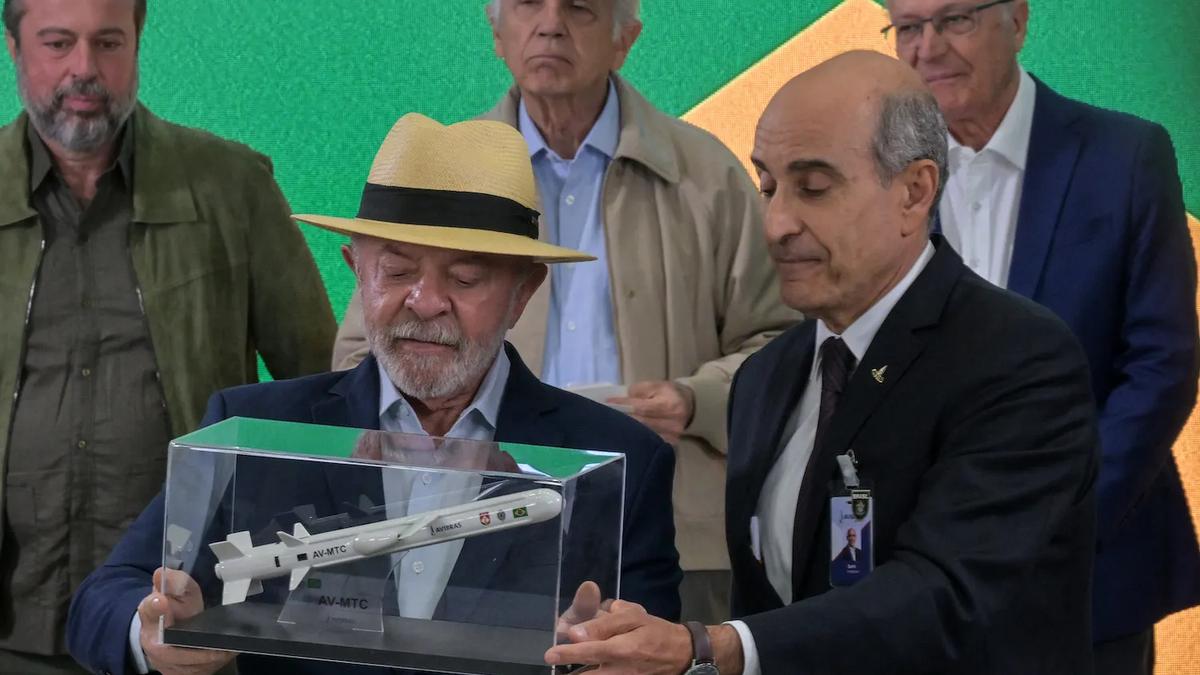
Brazilian President Luiz Inácio Lula da Silva has unexpectedly placed defense spending and industrial policy at the heart of his re-election campaign. This marks a significant shift for the leftist leader, who has historically avoided emphasizing military matters. Lula's new platform frames increased defense investment as crucial for protecting Brazil's vast borders, the Amazon, and its immense natural resources, all under the banner of "sovereignty." This unprecedented focus, highlighted by his direct appeal to his Workers' Party to "stop this nonsense of thinking that we don’t have to worry about defense," signals a profound reorientation of national priorities.
Lula's pivot is a calculated maneuver, addressing multiple power dynamics simultaneously. Domestically, it aims to neutralize the right-wing's traditional association with the military, particularly after former President Jair Bolsonaro's attempts to involve the armed forces in his political machinations. By reframing defense as a matter of national sovereignty and economic development—rather than "national security" which evokes the trauma of military dictatorship for the left—Lula seeks to bridge an ideological divide within his own coalition and appeal to a broader nationalist sentiment. The proposed $155 billion, 15-year defense investment, which would boost the annual defense budget by 40%, also serves as a powerful economic stimulus, promising re-industrialization, technological autonomy, and skilled employment through the military-industrial complex.
Externally, U.S. foreign policy under President Trump has provided Lula with a potent rallying cry. The "Trump Corollary" to the Monroe Doctrine, pledging U.S. preeminence in the Western Hemisphere, and the subsequent "Shield of the Americas" initiative—a U.S.-led military coalition for counternarcotics that excluded Brazil and Mexico—are perceived by Brasília as direct challenges to Brazilian sovereignty. Coupled with U.S. sanctions and tariffs targeting Brazil, often tied to disputes involving the Bolsonaro family, these actions create a tangible external threat that Lula can leverage to justify his defense agenda. This allows Lula to position Brazil as a bulwark against perceived superpower overreach, aligning with his broader geopolitical stance at the UN General Assembly: "Brazil does not fit in anyone’s backyard."
While Lula champions sovereignty and industrial growth, the human cost of this strategic pivot often remains in the shadows. A significant increase in defense spending, potentially 40% over current levels, will likely mean a diversion of public funds from other critical sectors like education, healthcare, or social welfare programs, impacting ordinary Brazilians who rely on these services. Historically, defense-led industrial strategies in Brazil have often underdelivered on their economic promises due to budgetary inconsistencies and political instability, leaving taxpayers to bear the cost without the promised benefits.
Furthermore, the U.S. "Shield of the Americas" initiative, with its military-first approach to counternarcotics, risks exacerbating violence and instability in border regions shared with countries like Venezuela. While framed as combating cartels, such militarized interventions often lead to increased civilian casualties, displacement, and human rights abuses, disproportionately affecting vulnerable communities along these vast, porous borders. The broader impact of U.S. sanctions and tariffs, while aimed at specific political targets, can ripple through the economy, affecting livelihoods and contributing to economic uncertainty for everyday citizens.
What is often downplayed by powerful actors is the extent to which Lula's defense pivot is a strategic political calculation for his re-election and consolidation of power, rather than solely a long-term strategic shift. While the rhetoric emphasizes national sovereignty, the immediate benefit for Lula is a powerful campaign platform that simultaneously appeals to nationalist sentiments, addresses economic concerns through industrial policy, and potentially neutralizes the military as a political force for the right. Governments and official statements rarely acknowledge the inherent political opportunism in such shifts.
Moreover, the historical track record of defense industrial policy in Brazil, as noted by academics, suggests a pattern of unfulfilled promises regarding technology transfer and sustained economic growth. The narrative of defense spending as a guaranteed engine for re-industrialization often omits the challenges of budgetary consistency, bureaucratic inefficiencies, and the actual long-term sustainability of such projects. The U.S. too, frames its "Shield of the Americas" as a pure counternarcotics effort, downplaying its broader strategic objective of reasserting regional preeminence and potentially influencing political outcomes in Latin American nations that do not align with Washington's agenda. The capture of Venezuelan President Nicolás Maduro, which served as a significant trigger for Brazil's defense review, highlights the potential for direct intervention that goes beyond mere "counternarcotics."
The immediate focus will be on the outcome of Brazil's upcoming election. A Lula victory would likely solidify this new defense trajectory, but the real test will be in the implementation and financing of the ambitious $155 billion plan. Watch for how the proposed 40% budget increase is funded—whether through new taxes, reallocation from other sectors, or external financing—and its actual impact on Brazil's economy and social programs.
Regionally, observe how the "Trump Corollary" and "Shield of the Americas" evolve, particularly if Trump secures another term. Will U.S. military engagement in Latin America intensify, and how will other regional powers, especially those excluded from the U.S. coalition, react? Finally, track the performance of Brazil's defense industry. Will it genuinely deliver on the promises of re-industrialization, technological autonomy, and job creation, or will it fall prey to the historical budgetary inconsistencies and political instability that have plagued past efforts? The answers will reveal whether Lula's gamble truly secures Brazil's future or merely shifts the burden.
Source referenced: FOREIGNPOLICY
This brief was synthesized by our Editorial Engine and reviewed by The Ground Narrative team.


