TRENDING

Monday, 5 October 2026
----------------------
24 Rabi' Al-Thani 1448 AH
Brazil stands at a critical juncture as voters prepare to choose between two starkly different visions for the nation's future: the left-wing incumbent, President Luiz Inácio Lula da Silva, and the right-wing challenger, Senator Flávio Bolsonaro. This election is a test of democratic institutions, economic direction, and Brazil's place in a shifting global order.
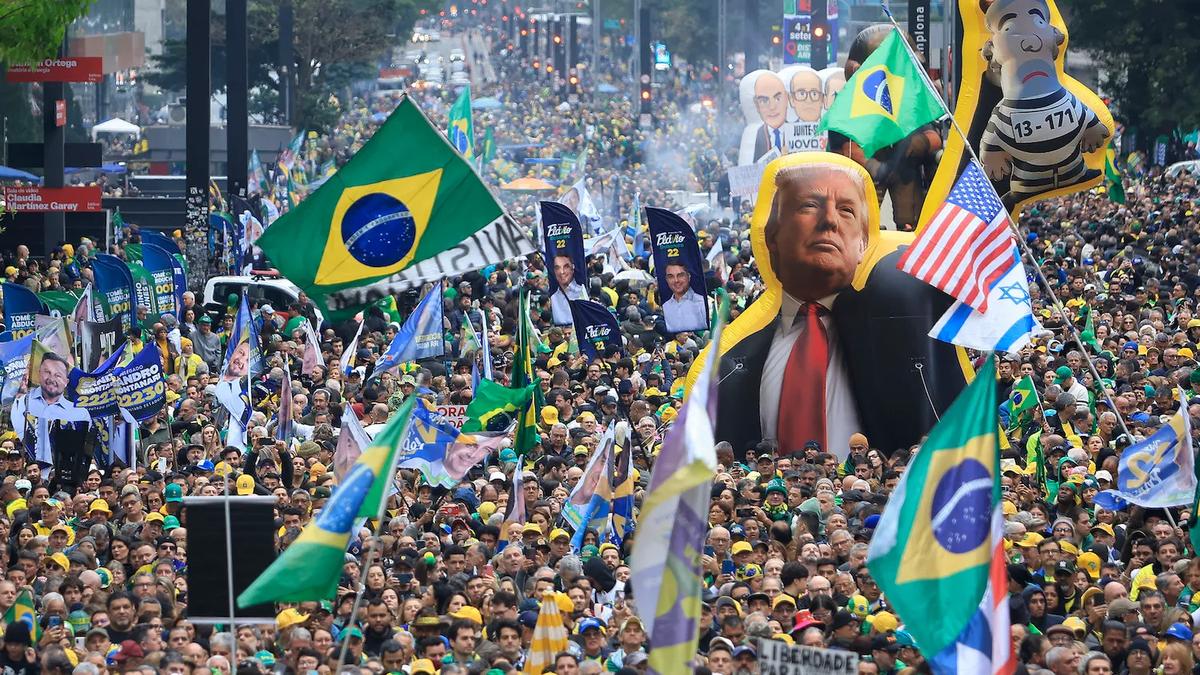
Brazil is on the cusp of a pivotal general election, with the nation's political landscape dominated by a fiercely contested race between incumbent President Luiz Inácio Lula da Silva and Senator Flávio Bolsonaro. Polls indicate an exceptionally tight contest, making a runoff election highly probable if neither candidate secures over 50 percent of the vote. The outcome will not only determine Brazil's domestic trajectory but also its stance on international relations, environmental policy, and the resilience of its democratic framework.
This election is a complex interplay of domestic pressures and external forces, reflecting deep structural power dynamics that extend far beyond the ballot box. The contest is shaped by the legacy of the previous Bolsonaro administration, the military's enduring influence, economic anxieties, and the intensifying global competition between major powers.
Flávio Bolsonaro's campaign is inextricably linked to his father, former President Jair Bolsonaro, who remains under house arrest for allegedly plotting a coup after his 2022 election loss. Flávio's explicit pledge to pardon his father is a direct challenge to the rule of law and a potent signal to the military, a constituency that historically favored Jair Bolsonaro and saw some of its members implicated in the failed coup. This promise seeks to consolidate the loyalty of a powerful, armed segment of the state, placing it above judicial accountability.
Conversely, Lula, for the first time in his seven presidential campaigns, has made strengthening Brazil's defense sector a central campaign promise. He frames this increased military spending as a means to bolster national sovereignty against perceived U.S. aggression in the Western Hemisphere. This strategic pivot by Lula is less about ideological alignment and more a pragmatic attempt to neutralize a potentially hostile military and win over a critical institutional bloc, ensuring stability and preventing future challenges to democratic processes. The military, therefore, finds itself in a unique position, courted by both sides, its institutional power amplified by the political divide.
Brazil's substantial national debt looms large over the election, making economic policy a key battleground. The financial sector, traditionally inclined towards right-wing candidates, is not monolithic. In 2022, influential former central bankers publicly endorsed Lula, citing the risks of authoritarianism to Brazil's future stability and economic predictability. This highlights a critical tension: while capital generally seeks fiscal conservatism, it also demands institutional stability and a predictable legal framework, which authoritarian tendencies can undermine.
Flávio Bolsonaro's pledge to slash the deficit, while appealing to some in the financial sector, lacks detailed economic plans. His advisor's praise for Argentine President Javier Milei's radical austerity policies signals a potential path that could trigger significant economic restructuring. However, implementing such reforms in Brazil's fractured legislature is notoriously difficult, raising questions about the feasibility and true intent behind these promises. The power of the financial markets to reward or punish perceived fiscal irresponsibility remains a potent force, influencing policy choices and public discourse.
The Liberal Party (PL), Bolsonaro's political vehicle, has made a concerted effort to improve its standing with female voters, a demographic often critical for electoral success. This strategy centers on elevating the profile of Michelle Bolsonaro, the former first lady, who is running for a Senate seat. Her campaign employs the language of
The primary contenders are the incumbent left-wing President Luiz Inácio Lula da Silva and right-wing Senator Flávio Bolsonaro, son of former President Jair Bolsonaro. They represent dramatically different visions for Brazil's future.
Key issues include civil-military relations, Brazil's national debt and economic policy, the role of women voters, and the country's foreign policy stance amidst U.S. and Chinese influence in Latin America. The integrity of democratic institutions is also a major concern.
Both the United States and China exert significant influence. The U.S. uses sanctions and security initiatives, while China's trade policies, particularly concerning agricultural exports, impact Brazil's economy. Brazil's leaders must navigate these external pressures, making the election a proxy battleground for regional dominance.
Source referenced: FOREIGNPOLICY
This brief was synthesized by our Editorial Engine and reviewed by The Ground Narrative team.


