TRENDING

Friday, 23 October 2026
----------------------
12 Jumada Al-Awwal 1448 AH
After more than 70 years of severed diplomatic ties, Bolivia and Chile have embarked on a historic rapprochement, driven by the global scramble for critical minerals. This thawing of relations aims to unlock Bolivia's vast lithium reserves, fundamentally reshaping a century-old territorial grievance.
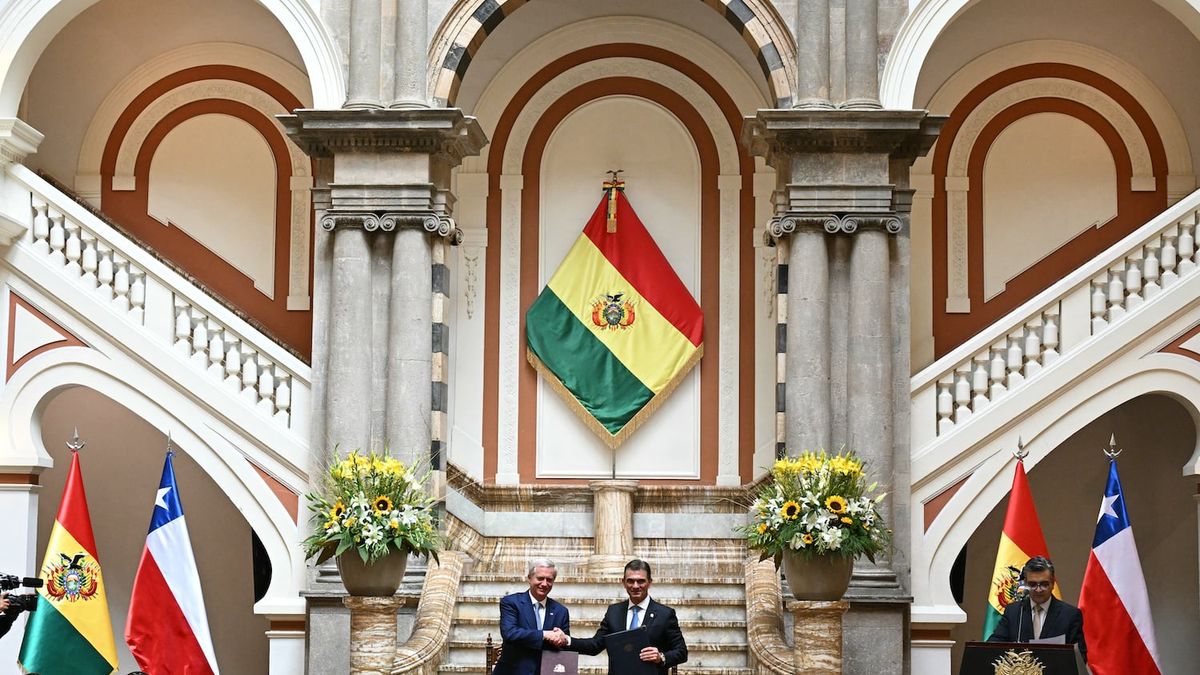
In a historic diplomatic breakthrough, Chilean President José Antonio Kast and Bolivian President Rodrigo Paz met in La Paz on October 16, signing multiple agreements that signal a full normalization of relations between their nations. This marks the first state visit between the two countries in over 70 years, effectively ending a long-standing diplomatic freeze rooted in the 19th-century War of the Pacific. The core of this new cooperation centers on economic integration, particularly in mining and infrastructure, with a clear eye on Bolivia's significant lithium reserves.
The rapprochement between Bolivia and Chile is a stark illustration of how shifting global economic demands can override entrenched historical grievances and ideological divides. For over a century, Bolivia's landlocked status, a direct consequence of its defeat in the War of the Pacific (1879-1884), has been a defining feature of its national identity and its foreign policy towards Chile. The loss of its Pacific coastline, including the rich nitrate deposits of the Atacama Desert, has fueled a deep-seated demand for sovereign ocean access, often making any meaningful diplomatic engagement with Chile fraught with political peril.
However, the 21st century has introduced a new, powerful variable: lithium. This critical mineral, essential for electric vehicle batteries and renewable energy storage, has become a cornerstone of the global energy transition. Bolivia possesses some of the world's largest, largely untapped lithium reserves, primarily concentrated in its vast salt flats like Salar de Uyuni. Meanwhile, Chile is a global mining powerhouse with decades of experience in large-scale extraction, established infrastructure, and direct access to Pacific ports.
This creates a powerful, mutual economic imperative. For Bolivia, cooperation with Chile offers a direct pathway to monetize its lithium wealth, gaining access to Chilean technical expertise, investment, and crucial export routes. For Chile, it means securing a vital supply chain for a strategic mineral, potentially cementing its role as a regional leader in critical mineral exports, even if it's processing Bolivian raw materials. The agreements to connect an underground fiber-optic cable, link electricity grids, exchange mining information, and accelerate trade talks are not merely gestures of goodwill; they are strategic investments in a future where lithium dictates regional economic power.
The current political landscape in both countries has significantly smoothed the path for this rapprochement. Both Bolivia's Rodrigo Paz and Chile's José Antonio Kast represent right-wing governments. This ideological symmetry reduces internal political resistance to cooperation, particularly when contrasted with previous administrations. The raw intelligence notes that earlier attempts at thawing relations under Bolivia's moderate-left Luis Arce and Chile's leftist Gabriel Boric had begun, but the current alignment makes deeper engagement easier. This highlights how shared political perspectives, even when pragmatic economic interests are the primary driver, can accelerate diplomatic breakthroughs that might otherwise be stalled by ideological friction or nationalist rhetoric.
The plans to expand shipping through border crossings and railroads, including building out the Capricorn Bioceanic Corridor, underscore a broader vision of regional economic integration. This corridor, designed to link a Pacific port in Chile to an Atlantic one in Brazil, would transform South America's trade routes, benefiting multiple nations. Furthermore, the pledge by Argentina, Bolivia, Chile, and Peru—the so-called lithium triangle—to work together on critical minerals signals a nascent regional strategy to leverage their collective resource power on the global stage. This collective approach could give these nations greater bargaining power against international corporations and consuming nations, allowing them to dictate terms rather than merely react to global demand.
While the rapprochement between Bolivia and Chile promises economic benefits, the human cost of this new era of cooperation, particularly concerning lithium extraction, demands scrutiny. For generations, Bolivia's landlocked status has been more than a geographical fact; it has been a profound psychological and economic burden. The
They fought the War of the Pacific in the late 19th century, resulting in Bolivia losing its coastline and access to the Pacific Ocean. This grievance has defined their relationship for over a century, leading to severed diplomatic ties.
The primary driver is the global demand for lithium, a critical mineral for electric vehicle batteries. Bolivia has vast, largely untapped lithium reserves, while Chile possesses significant mining expertise and Pacific ports, creating a mutual economic incentive for cooperation.
The 'lithium triangle' refers to the region in the Andes shared by Argentina, Bolivia, and Chile, which holds the world's largest known lithium reserves. Peru is also sometimes included due to its potential, highlighting the region's strategic importance for critical minerals.
Source referenced: FOREIGNPOLICY
This brief was synthesized by our Editorial Engine and reviewed by The Ground Narrative team.