TRENDING

Monday, 5 October 2026
----------------------
24 Rabi' Al-Thani 1448 AH
Beijing is hosting an international forum to showcase its 'Swift Response to Public Complaints' system, highlighting its digital urban governance model. This initiative aims to address citizen grievances rapidly, but also serves as a sophisticated tool for social stability and state control.
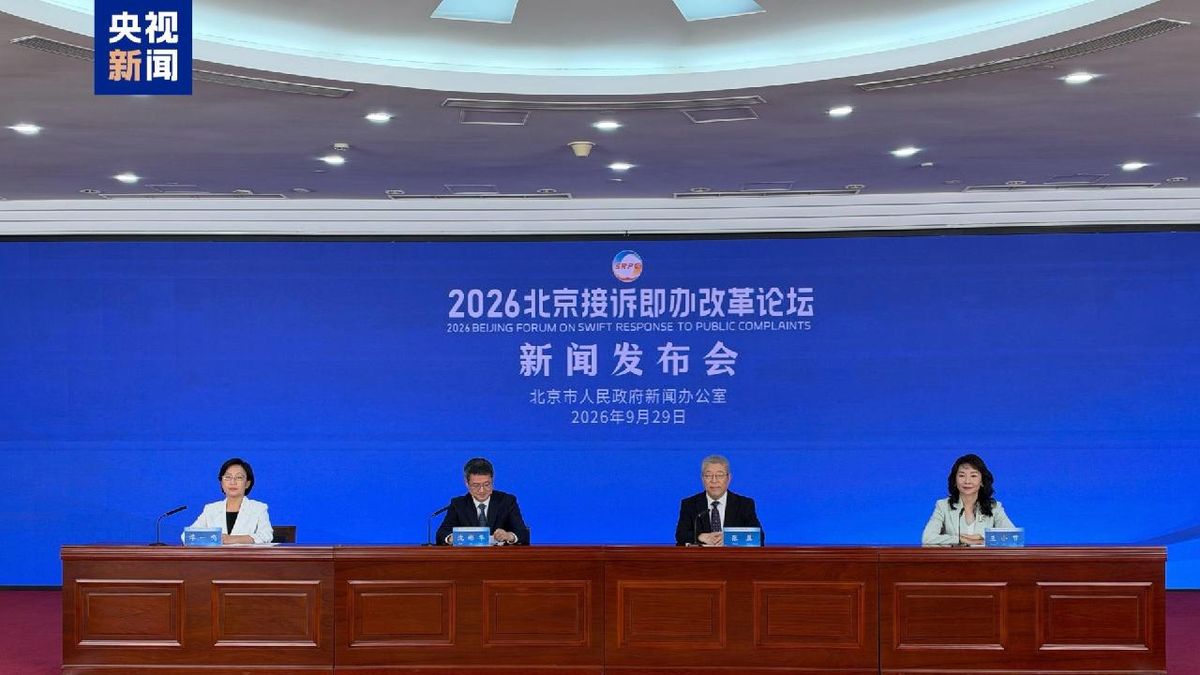
Beijing, the capital of China, is set to host the 2026 Forum on Swift Response to Public Complaints from October 12-13 at the China National Convention Center. Co-hosted by the Chinese Academy of Social Sciences, China Media Group, the Beijing Municipal Committee of the Communist Party of China, and the Beijing municipal government, the event operates under the theme of "People's City, Better Life." The forum will feature six parallel sessions, extending discussions into communities and frontline governance settings, and will include visits to Beijing's 12345 citizen service hotline center. Over 3,200 participants, including more than 240 international guests from over 70 countries and regions, are expected to attend. The forum aims to release research findings, evaluation reports on city hotlines, and exemplary cases in global urban governance, along with an English-language book and a special academic journal issue on the "Swift Response" model.
This forum is more than a mere conference; it is a meticulously orchestrated display of China's approach to governance, designed to project both efficiency and a unique model of state-citizen interaction. At its core, the "Swift Response" system, epitomized by the 12345 citizen service hotline, is a sophisticated mechanism for the Chinese Communist Party (CCP) to maintain its legitimacy and social stability. The CCP derives its authority not from electoral mandates, but from its perceived ability to deliver economic prosperity, social order, and effective public services. By rapidly addressing citizen complaints, the system aims to preempt the aggregation of grievances that could otherwise escalate into collective dissent, thereby neutralizing potential threats to the Party's rule.
The emphasis on digital and intelligent technologies is crucial. China is a global leader in digital governance, leveraging big data, artificial intelligence, and ubiquitous connectivity to manage its vast population. The 12345 hotline acts as a central nervous system, collecting an immense volume of data on public sentiment, recurring issues, and the performance of local officials. This data allows the central government to identify patterns, allocate resources, and hold local cadres accountable, ensuring that the Party's directives are implemented effectively at the grassroots level. It creates a feedback loop that strengthens central control while giving the appearance of responsiveness.
Moreover, the international dimension of the forum is a clear soft power play. By inviting hundreds of international guests and promoting English-language publications, Beijing is actively exporting its model of urban governance. This isn't just about sharing best practices; it's about positioning China as a thought leader in a critical area of modern statecraft, offering an alternative to Western democratic models. For many developing nations grappling with rapid urbanization and governance challenges, China's emphasis on stability, efficiency, and technological solutions can appear highly attractive. The forum subtly suggests that China's authoritarian system can deliver a
Source referenced: CGTN
This brief was synthesized by our Editorial Engine and reviewed by The Ground Narrative team.


