TRENDING

Monday, 5 October 2026
----------------------
24 Rabi' Al-Thani 1448 AH
A small plane crash into Beijing's CITIC Tower has ignited questions about the integrity of China's highly restricted airspace and the potential for elite privilege to circumvent stringent security protocols. The incident challenges the narrative of an impenetrable security apparatus and highlights internal governance complexities.
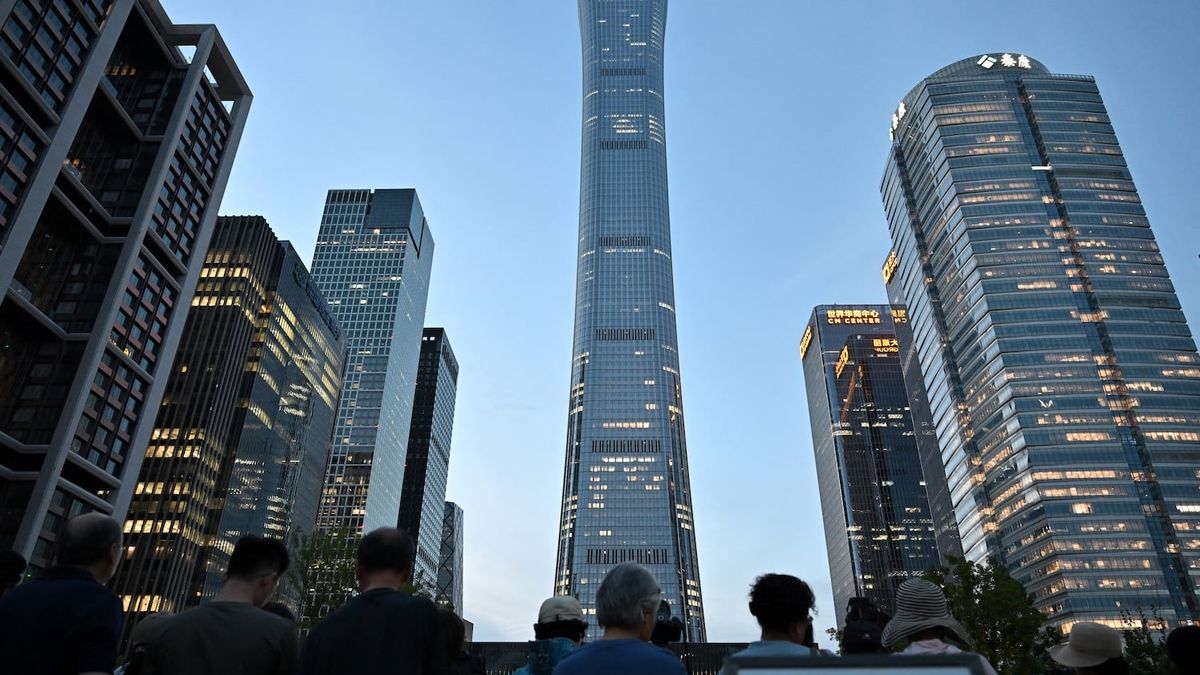
On June 26, 2026, a small private aircraft struck the CITIC Tower, Beijing's tallest skyscraper and the headquarters of the state-owned CITIC Group. The incident, which tragically killed the pilot and injured 13 others, immediately triggered profound questions regarding the efficacy of China's formidable security state. The crash occurred in one of the world's most heavily controlled airspaces, mere miles from Zhongnanhai, the highly sensitive compound housing the Chinese Communist Party (CCP) leadership. This proximity amplifies concerns, as even the construction of the CITIC Tower had previously raised official worries about potential surveillance from its observation deck.
China's airspace is notoriously restrictive, with over 70 percent under direct military control. The capital's skies are particularly sacrosanct, making the unauthorized presence of a private aircraft an extraordinary security lapse. The Chinese government acknowledged the crash and confirmed the pilot's death, yet official media coverage has been conspicuously absent, and state censors have actively scrubbed discussions of the incident from social media platforms. This swift and comprehensive information control underscores the sensitivity of the event and the CCP's imperative to manage public perception, particularly when state authority or security is perceived to be compromised.
The lack of transparent official information has fueled speculation regarding the cause of the crash. One grave possibility considered by Beijing is a deliberate attack. China has experienced isolated acts of suicidal violence, even in its heavily policed capital, such as a bulldozer attack on a market this year or the 2013 car attack in Tiananmen Square. Historical precedents also include a 1994 shooting spree by a People's Liberation Army (PLA) lieutenant and the 2001 self-immolation incident by Falun Gong members in Tiananmen Square, both of which were accompanied by competing official and dissident narratives. However, the nature of this incident, involving a private plane, leans away from the typical patterns of public protest seen in China.
A more probable explanation, as suggested by initial analysis, points towards a confluence of elite privilege and potential corruption. Private aviation remains rare in China compared to Western nations, and those who operate such aircraft are often exceptionally well-connected. In authoritarian systems, status is frequently demonstrated by an ability to circumvent rules. The article draws parallels to the past phenomenon of wealthy elites flouting bans on large dogs in Beijing, signaling their immunity from enforcement. This 'privilege' could extend to airspace, with the possibility that a well-connected individual might have obtained unauthorized permission to fly over Beijing, potentially facilitated by endemic military corruption, before a mechanical failure or pilot error led to the crash. While the image of an aircraft striking a building inevitably evokes the memory of the 9/11 attacks, the vast majority of such incidents are accidental.
Regardless of the precise cause, the incident carries significant geopolitical and internal implications for China. At its core, the crash represents a profound test for China's security state. The ability of a private aircraft to penetrate such highly restricted airspace, especially near critical government infrastructure and leadership compounds, exposes potential vulnerabilities that the CCP will be keen to address. This lapse could trigger a comprehensive review of airspace management protocols, particularly those governing civilian and military interactions.
Internally, the fallout is likely to be substantial. If the investigation confirms that the crash resulted from a combination of privilege and rule-bending, the political consequences for those who facilitated such access will be severe. This could ignite an internal political struggle within Beijing's city leadership and the broader security apparatus over accountability. President Xi Jinping's long-standing anti-corruption campaign has targeted such abuses of power, and this incident could provide new impetus for further purges or disciplinary actions, particularly if military personnel are implicated in allowing unauthorized flights. The immediate grounding of private flights of light fixed-wing aircraft signals an impending era of tighter restrictions for China's nascent private aviation industry.
Ultimately, this incident challenges the carefully cultivated image of an infallible and tightly controlled state. While not an international incident in the traditional sense, it reflects on China's internal governance capabilities and the persistent tension between centralized control and the influence of powerful elites. The CCP's response, characterized by swift censorship and an opaque investigation, underscores its priority of maintaining stability and controlling narratives, even as it grapples with a significant breach of its domestic security perimeter.
Source referenced: FOREIGNPOLICY
This brief was synthesized by our Editorial Engine and reviewed by The Ground Narrative team.


