TRENDING

Friday, 2 October 2026
----------------------
21 Rabi' Al-Thani 1448 AH
A Spanish soldier has died fighting a massive wildfire in Aragon, as the region battles its largest fire in history, fueled by climate change and threatening historic monasteries. The fire has burned over 16,600 hectares, forced over 1,000 evacuations, and prompted a massive firefighting deployment, including French reinforcements.
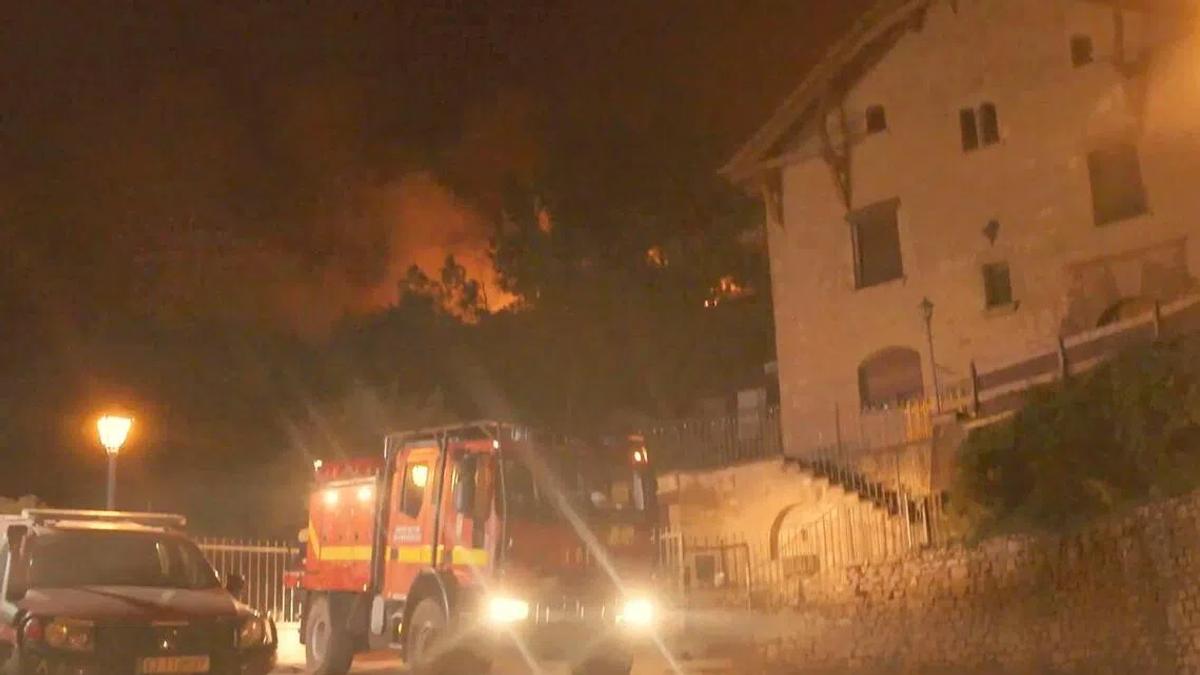
A Spanish soldier died on August 16 while helping to extinguish a major wildfire in Aragon, a region in northeastern Spain. The fire, which broke out on August 10, has burned over 16,600 hectares, forced the evacuation of more than 1,000 people, and threatened historic monasteries linked to Aragon's medieval heritage.
The Aragon wildfire is not an isolated incident, but rather part of a larger pattern of extreme weather events fueled by climate change. Scientists have warned that climate change is increasing the length, frequency, and intensity of such events, which have devastating consequences for local communities and ecosystems. The Spanish government has responded to the crisis by deploying its largest firefighting force ever, including French reinforcements and 1,000 firefighters. However, this response also highlights the economic and political trade-offs involved in addressing climate change, as the government must balance the need to protect its citizens and environment with the costs of deploying significant resources to combat the fire.
The people of Aragon are bearing the human cost of the wildfire, with many forced to evacuate their homes and livelihoods threatened. The fire has also put the region's historic monasteries, including the 10th-century San Juan de la Pena, at risk. These monasteries are not just cultural treasures, but also symbols of the region's identity and heritage. The death of the Spanish soldier is a tragic reminder of the risks faced by those fighting to protect their communities and environment.
What is being downplayed in the official statements is the role of climate change in fueling the wildfire. While the Spanish government has acknowledged the link between climate change and the fire, more needs to be done to address the root causes of these extreme weather events. The government's response to the crisis has been focused on deploying firefighting resources, but long-term solutions to mitigate the effects of climate change are needed to prevent such disasters in the future.
As the situation in Aragon continues to unfold, readers should watch for updates on the fire's containment and the government's response to the crisis. Additionally, the international community's response to the wildfire will be crucial, as climate change is a global problem that requires a coordinated effort to address. The Spanish government's ability to balance its response to the immediate crisis with long-term strategies to mitigate the effects of climate change will be a key factor in determining the outcome of this disaster.
Editor's Note: The analysis is based on publicly available information and may not reflect the full complexity of the situation on the ground.
Source referenced: STRAITSTIMES
This brief was synthesized by our Editorial Engine and reviewed by The Ground Narrative team.