TRENDING

Monday, 19 October 2026
----------------------
8 Jumada Al-Awwal 1448 AH
Andy Burnham has been appointed the UK's new Prime Minister, inheriting a nation grappling with a severe cost-of-living crisis and political instability. His leadership faces immediate domestic challenges and external pressures from a volatile global landscape, including the US-Iran war.
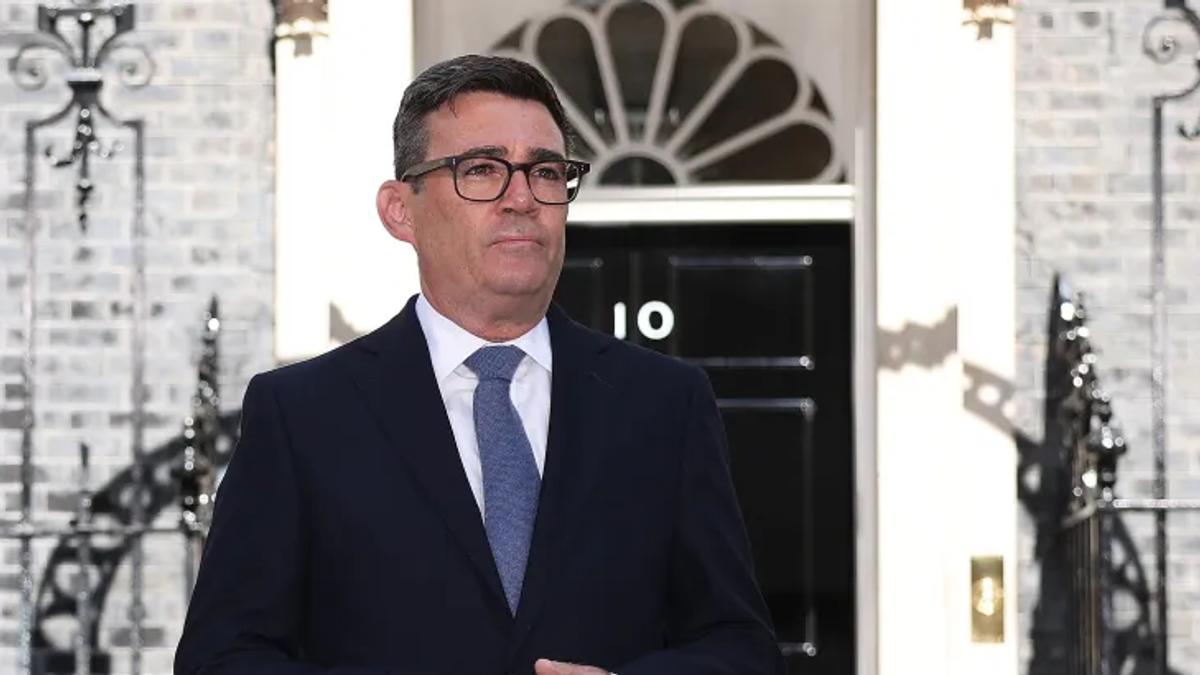
The United Kingdom has entered another period of political transition with the appointment of Andy Burnham as its seventh Prime Minister in a decade. Taking office on July 20, 2026, Burnham, formerly the Mayor of Greater Manchester, assumes leadership of the Labour Party and the government following the unexpected resignation of Keir Starmer. Starmer, who led Labour to a landslide victory in July 2024 after 14 years of Conservative rule, stepped down amidst a series of "scandals, missteps, and policy U-turns," just two years into his premiership. King Charles III formally invited Burnham to form a new government, marking a pivotal moment for a nation grappling with persistent domestic challenges and increasing global instability.
Prime Minister Burnham inherits an "in-tray overflowing with challenges" that have proven formidable for his predecessors. Domestically, the UK faces a tepid economy, a persistent cost-of-living crisis, high government borrowing costs, and a ballooning welfare bill. These economic headwinds are compounded by a significant social and political issue: irregular migration, which has fueled the rise of Nigel Farage's anti-immigration Reform UK party. The Labour Party's decision to "parachute in" Burnham, often dubbed the "King of the North," reflects a strategic move to counter Reform UK's growing influence and restore public confidence. His background as a regional mayor is seen as an asset, offering a perspective beyond London's centralized government.
Burnham's initial pronouncements and actions signal a departure from some of his predecessor's policies. His team has indicated that his first speech will outline "priorities for restoring confidence in government and giving Britain more breathing room." Key themes are expected to include delivering economic growth and devolving power to regional communities, aligning with his stated ambition to "radically rewrite an over-centralised political system and an economic model that had put vested interests ahead of ordinary people." A tangible early move was the immediate scrapping of Starmer's flagship nationwide digital ID scheme, a policy estimated to cost £1.8 billion over three years and designed to tackle irregular migration, but which had been criticized as a "fiasco" by a cross-party committee. This decision underscores Burnham's intent to differentiate his leadership and potentially address public concerns about government overreach or ineffective spending.
Beyond the domestic sphere, Burnham's premiership will be significantly buffeted by a volatile international landscape. The article specifically highlights unpredictable energy prices due to the US-Iran war and the presence of a "volatile American president in Donald Trump." These external factors introduce considerable uncertainty and risk to the UK's economic stability and foreign policy. The US-Iran conflict, by impacting global energy markets, directly exacerbates the UK's cost-of-living crisis and inflation, limiting the new government's fiscal flexibility. Furthermore, the prospect of a "volatile" US presidency under Donald Trump suggests potential shifts in transatlantic relations, trade dynamics, and collective security arrangements, which could necessitate a re-evaluation of the UK's diplomatic and strategic priorities. Navigating these complex geopolitical currents while simultaneously addressing pressing domestic issues will be a defining challenge for the new Prime Minister.
Burnham's ascent to power marks a continuation of a turbulent period in British politics, characterized by frequent changes in leadership and a struggle to find stable governance since the Brexit referendum. His appointment as the seventh Prime Minister in a decade underscores the profound challenges facing the UK political system. Despite leading Labour to a significant victory just two years prior, Starmer's rapid downfall highlights the immense pressure on modern British leaders to deliver tangible results amidst high public expectations and a demanding media environment.
With only three years until the next general election, expected in 2029, Burnham faces an immediate imperative to demonstrate effective leadership and policy implementation. The article notes that Reform UK is "tipped in polls to win the next general election," indicating the scale of the task ahead for Labour. Burnham's promise of a "plan" and his focus on "giving ordinary people security in work, security in their home, a home they can afford and live in a community that they can feel proud of" reflect an attempt to reconnect with a disillusioned electorate. His future decisions on critical areas such as taxation, spending, oil and gas policy, and the potential for stronger public control over underperforming utilities like Thames Water, will be closely scrutinized. The success or failure of these policies will not only determine the fate of his premiership but also shape the future trajectory of the Labour Party and the broader political landscape of the United Kingdom.
Andy Burnham's premiership begins at a critical juncture for the United Kingdom, defined by a confluence of deep-seated domestic problems and an increasingly unpredictable global environment. His mandate is clear: to restore confidence, stabilize the economy, and address the social fissures that have contributed to political instability. The "swift coronation" of Burnham, a figure with a strong regional mandate, represents Labour's "last chance" to solidify its position and counter the populist surge. How he navigates the tight fiscal constraints, the demands for regional empowerment, and the significant geopolitical headwinds will determine whether he can break the cycle of short-lived premierships and steer the UK towards a more stable and prosperous future.
Source referenced: FRANCE24
This brief was synthesized by our Editorial Engine and reviewed by The Ground Narrative team.


