TRENDING

Monday, 19 October 2026
----------------------
8 Jumada Al-Awwal 1448 AH
Andy Burnham has taken office as the new Prime Minister of the United Kingdom, replacing Keir Starmer and immediately initiating a cabinet reshuffle and a pledge for a leftward policy shift. His ascension comes at a critical juncture, with the UK facing significant domestic challenges and a complex international landscape.
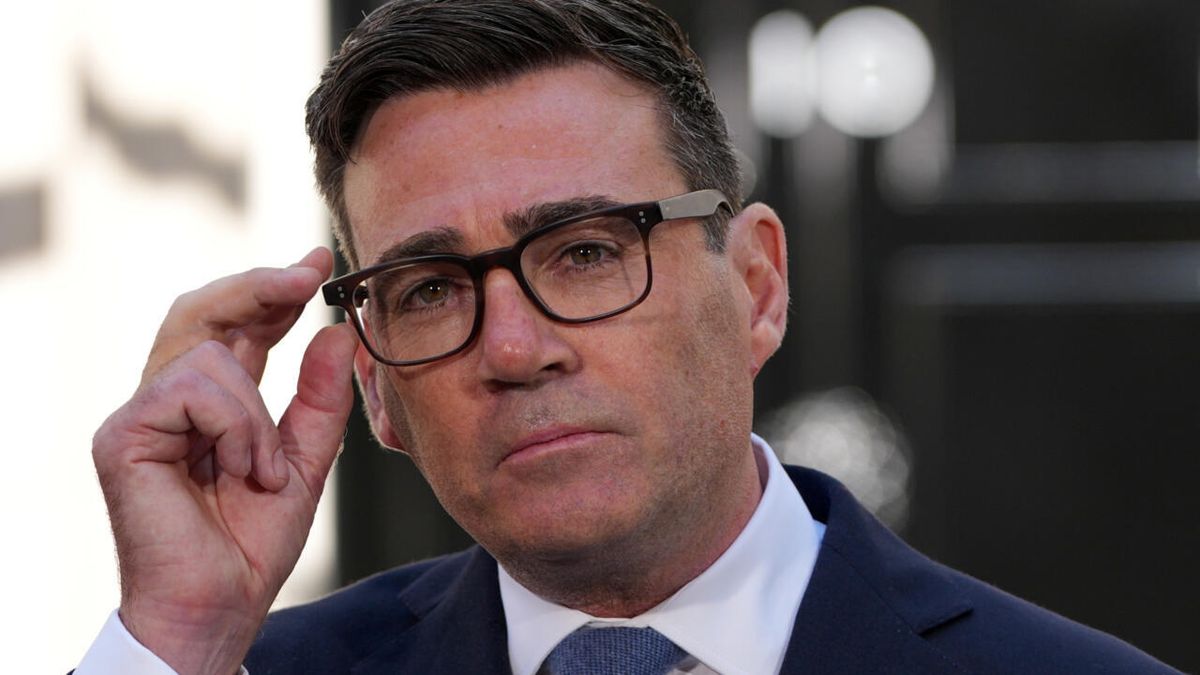
Andy Burnham officially assumed the role of Prime Minister of the United Kingdom on July 20, 2026, marking a significant leadership transition following the departure of his predecessor, Keir Starmer. This change, which saw Burnham swiftly installed without a leadership contest due to Labour's parliamentary majority, signals a notable shift in the UK's domestic and international policy trajectory. Burnham, 56, immediately set about forming his new government, appointing John Healey as Finance Minister, Ed Miliband as Foreign Minister, and Wes Streeting as Defence Minister, while purging loyalists of the previous administration.
Burnham's initial pronouncements indicate a clear ideological pivot to the left, promising a "new political model" and a "new economy." His flagship initiative is a 10-year plan aimed at alleviating persistent cost-of-living pressures, a central concern for the British populace. Key policy pledges include a commitment to re-industrialize Britain through public procurement, decentralize power away from Westminster, build more public housing, and place "life's essentials back under stronger public control to make them affordable." He also vowed to end rough sleeping, a policy he previously championed as Mayor of Greater Manchester. These proposals suggest a departure from the more centrist approach of the Starmer era and a potential re-evaluation of economic policies that have shaped Britain since the 1980s, as hinted by Burnham's critique of "wrong turns" taken during that decade. This domestic agenda aims to address deep-seated economic inequalities and regional disparities, but will face the immediate challenge of a tepid economy, high government borrowing costs, and a ballooning welfare bill.
Upon taking office, Prime Minister Burnham swiftly engaged with key international partners, underscoring the UK's commitment to existing alliances while also seeking to inject new momentum into certain relationships. He held separate calls with US President Donald Trump and Ukrainian leader Volodymyr Zelensky. In his conversation with President Trump, Burnham reaffirmed the UK's "commitment to defence and security," with discussions reportedly covering trade, military cooperation, and the critical issue of demining the Strait of Hormuz. This interaction highlights the enduring "special relationship" between the UK and the US, even amidst a complex global security environment, including the ongoing US-Iran war mentioned in the article's broader context. The focus on the Strait of Hormuz underscores the UK's strategic interest in global maritime security and energy supply routes.
Concurrently, Burnham reiterated Britain's "resolute commitment" to Ukraine in its defense against Russia's invasion during his call with President Zelensky. This continuity in support for Kyiv is a crucial element of European security and reinforces the UK's role as a steadfast ally in countering Russian aggression. Furthermore, French President Emmanuel Macron extended congratulations, urging Burnham to "give new momentum to the partnership" with the European Union. This overture suggests a potential for improved post-Brexit relations, particularly given Burnham's left-leaning platform, which may be perceived as more amenable to closer cooperation with the EU than previous Conservative or even Starmer-led Labour governments.
Burnham inherits a nation grappling with significant internal and external pressures. Domestically, beyond the economic woes, the issue of irregular migration continues to fuel support for the hard-right Reform UK party, led by Nigel Farage, which played a role in Starmer's downfall. The manner of Burnham's "coronation" without a public leadership contest, despite Labour's large parliamentary majority, has also raised questions about his mandate and prompted calls for a snap general election from opposition politicians. This political instability, with Burnham being Britain's seventh Prime Minister in just over a decade and King Charles III's fourth since 2022, underscores a period of profound flux in British governance.
Globally, the UK's foreign policy will be shaped by an unpredictable international landscape, including volatile energy prices exacerbated by the US-Iran war and potentially shifting dynamics with Washington under the Trump administration. Burnham's pledge to "regain stability" for the country will be tested by these multifaceted challenges, requiring a delicate balance between addressing pressing domestic needs and navigating complex geopolitical realities. His premiership marks a pivotal moment for the UK, with the potential to redefine its internal social contract and its standing on the global stage.
Source referenced: FRANCE24
This brief was synthesized by our Editorial Engine and reviewed by The Ground Narrative team.


