WHAT HAPPENED
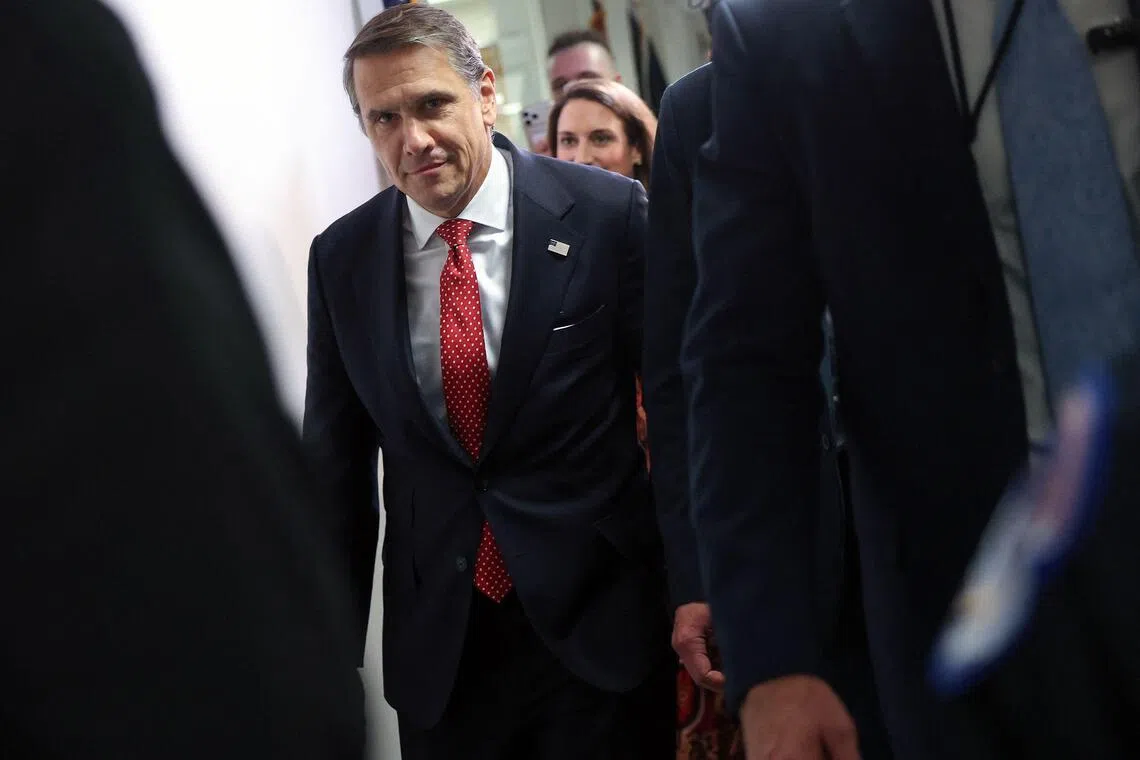
The confirmation vote for Attorney General nominee Todd Blanche was postponed in the US Senate. Key Republican senators withheld their support, demanding written assurances from the Department of Justice (DOJ) regarding the formal termination of a controversial $1.776 billion "weaponization" fund and clarification on a related tax immunity agreement benefiting former President Donald Trump and his associates.
The Justice Department's Political Price Tag
The delay in confirming America's top law enforcement official exposes the raw mechanics of power within Washington, where the Department of Justice, ideally an apolitical institution, becomes a battleground for political debts and leverage. At its core, this isn't merely about a nominee's qualifications but about the lingering influence of a former president and the willingness of powerful actors to use the justice system as a bargaining chip. The "weaponization" fund, ostensibly for victims of government abuse, emerged from a settlement between Trump and his administration over a $10 billion lawsuit against the IRS. Its alleged purpose has been questioned, particularly given the possibility of it benefiting individuals involved in the January 6 Capitol riot. For senators like John Cornyn, withholding support for Blanche is a strategic move, either to distance themselves from the more controversial aspects of Trump's legacy or to assert legislative oversight over the executive branch's agreements. Trump's public dismissal of Cornyn's concerns, linking it to a past endorsement snub, further illustrates how personal political scores intersect with institutional appointments, blurring the lines between governance and personal vendetta. The power dynamic is clear: the Senate holds the ultimate confirmation authority, and individual senators can wield significant influence, even against the wishes of their party's de facto leader, when the stakes involve the integrity and perceived impartiality of a critical government institution.
The People Who Weren't in the Room
While senators and presidential nominees negotiate behind closed doors, the real cost of this political maneuvering is borne by the public and the foundational principles of the American justice system. When the confirmation of an Attorney General is held hostage by demands related to a fund that could compensate individuals who assaulted police officers, or a tax immunity deal for a former president, it erodes public trust in the rule of law. Ordinary citizens, who face strict tax laws and legal accountability, witness a system where powerful figures can seemingly negotiate special privileges. The $1.776 billion fund, if indeed used to compensate individuals involved in the January 6 riot, would be taxpayer money effectively subsidizing actions against the government, sending a deeply confusing message about justice and accountability. The perception that the Justice Department, meant to be blind, is instead a tool for political settlements or personal retribution, undermines the very legitimacy of its rulings and investigations, leaving ordinary Americans to wonder if justice is truly equal for all.
The Part No One Is Talking About
What is consistently downplayed or omitted in official statements is the profound implication of a justice system that can be leveraged for political ends. The "weaponization" fund, while framed by some as a legitimate response to government overreach, is more accurately understood as a political maneuver designed to placate allies and potentially reward those who supported a former president's agenda, even when that agenda included challenging democratic processes. The tax immunity agreement for Trump and his associates is an even starker example. Such broad immunity from IRS audits is an extraordinary privilege, one that no ordinary taxpayer could ever expect. The silence around the full scope and justification for this immunity, beyond vague references to a "settlement agreement," is deafening. Governments and nominees focus on the procedural aspects—"written assurances," "formal termination"—while sidestepping the fundamental question of how such arrangements were allowed to materialize within the Department of Justice in the first place. This omission suggests an unwillingness to confront the extent to which political power can bend the rules of justice, creating a two-tiered system where accountability is selectively applied.
The Next Turning Points
The immediate focus will be on whether Todd Blanche can provide the "sufficiently responsive" written assurances demanded by senators like Cornyn. The content of these assurances will be crucial: will they merely be a symbolic gesture, or will they genuinely dismantle the fund and clarify the tax immunity in a way that restores public confidence? Beyond Blanche's confirmation, the broader implications for the Department of Justice are significant. Will this episode set a precedent for future political appointments to be held up by demands for specific policy reversals or concessions? Watch for ongoing debates about the independence of the DOJ and the IRS, particularly as the US approaches future election cycles. The outcome of this particular battle will signal how much sway a former president still holds over his party and, more importantly, how much the integrity of America's institutions can be compromised by the demands of political power.