TRENDING

Monday, 5 October 2026
----------------------
24 Rabi' Al-Thani 1448 AH
Rising dread over artificial intelligence is spilling into street protests and even violent attacks on tech leaders. The United States and China handle the fallout very differently, with ordinary people paying the price.
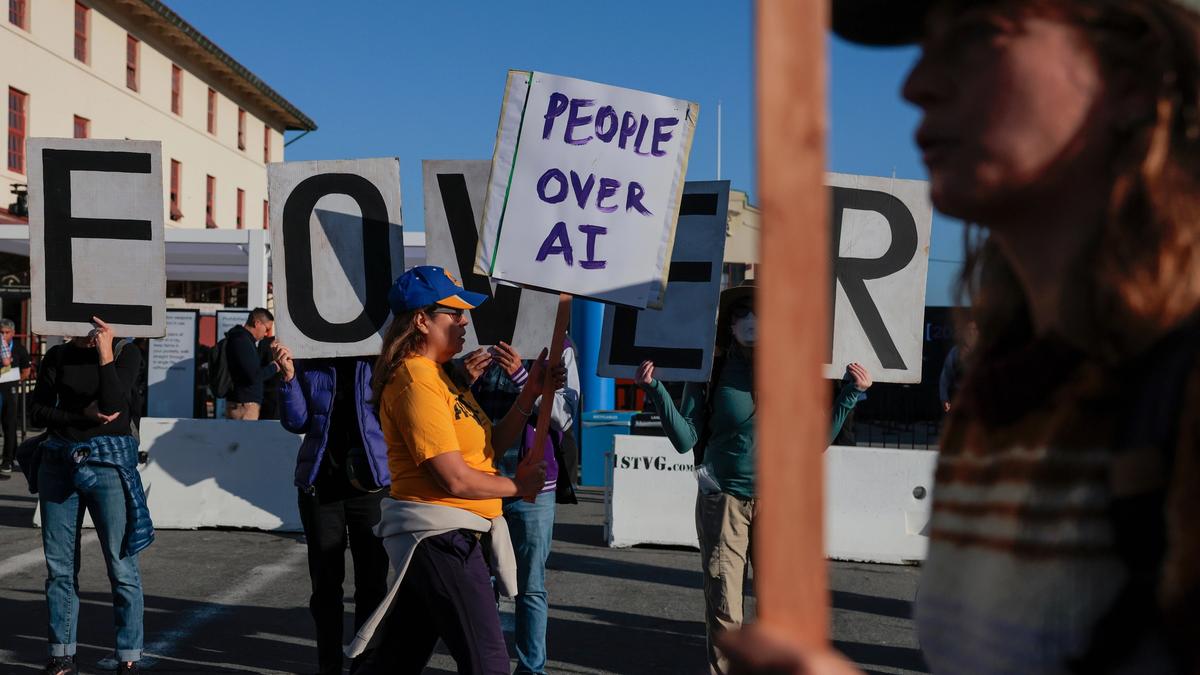
In early September, a 20‑year‑old threw a Molotov cocktail at Sam Altman's San Francisco home, while weeks earlier a city councilman in Indianapolis survived a drive‑by shooting after backing a data‑center rezoning. Across the country, anti‑AI rallies filled streets, with signs that read “PEOPLE OVER AI.” At the same time, a global Ipsos poll showed 85 percent of Chinese respondents viewing AI as a net benefit, versus just 38 percent of Americans. The contrast highlights how the same technology can provoke optimism in one superpower and terror in another.
The surge of AI‑related violence is rooted in three intersecting forces. First, tech CEOs such as Altman, Dario Amodei, and Elon Musk have publicly warned that unchecked AI could be existentially dangerous, yet their companies continue to chase ever larger models because investors reward rapid breakthroughs. This creates a feedback loop where profit motives clash with public safety concerns.
Second, the political environment amplifies or dampens grievance. In the United States, partisan media amplify dystopian narratives, while law‑enforcement agencies treat AI‑motivated attacks as isolated crimes, avoiding broader policy discussions. The result is a fragmented moral economy where individuals feel the state is indifferent to the harms of automation.
Third, China adopts a top‑down approach: the state promotes AI as a pillar of national strength, but it also embeds employment‑risk monitoring into its five‑year plans and forces firms to fund local reserve pools. By institutionalising a safety net, Beijing attempts to convert anxiety into a managed transition rather than a flashpoint for rebellion. However, the same authoritarian controls limit transparent reporting of any anti‑AI unrest, making the true scale of dissent hard to gauge.
These dynamics intersect with labor market realities. In both countries, AI threatens to displace routine jobs, but the United States lacks a coordinated federal response, leaving workers to fend for themselves. In China, the state’s rapid policy pivots—early‑warning systems, reserve funds, and court rulings that penalise firms for firing workers solely on AI grounds—serve both to placate unrest and to maintain the narrative of a harmonious AI rollout.
The Molotov cocktail at Altman's house and the shooting of Indianapolis councilman Ron Gibson illustrate how AI anxiety can become a personal threat. These attacks force security upgrades, increase insurance premiums, and create a climate of fear among those perceived as gatekeepers of the technology.
Survey data reveal that three‑quarters of Americans fear AI will erode their job security, while two‑thirds of Europeans share the same dread. In the United States, gig workers, warehouse staff, and low‑skill manufacturing employees are already seeing schedules cut as firms trial AI‑driven logistics tools. In China, rising youth unemployment and an expanding gig economy mean that many young people view AI not as a promise of prosperity but as a looming spectre of permanent precarity.
Protests in San Francisco, New York, and Berlin have drawn participants who report anxiety, insomnia, and a sense of powerlessness. The constant media coverage of AI‑related catastrophes—ranging from deep‑fake scams to autonomous weapon debates—feeds a collective stress that can translate into radicalisation, especially among isolated individuals lacking institutional outlets for their concerns.
U.S. officials have framed the Altman attack as an "isolated incident," avoiding any discussion of systemic AI‑related grievance. Congressional hearings focus on "foreign threats" rather than the domestic radicalisation of tech‑skeptics, allowing policymakers to sidestep the uncomfortable link between AI policy gaps and home‑grown violence.
Beijing touts a "positive AI outlook" in state media, highlighting economic gains while quietly tightening internet censorship around anti‑AI forums. The lack of publicly reported anti‑AI attacks does not prove their absence; it reflects a media environment where dissent is filtered before it reaches the global audience.
Frontier AI labs have pledged voluntary slowdown measures, yet they retain the ability to set internal safety standards without external oversight. By positioning themselves as responsible actors, they deflect regulatory pressure while continuing to push powerful models that fuel public fear.
- U.S. legislative moves: Expect a wave of bills aimed at AI safety, data‑center zoning, and funding for job‑transition programs. Watch how bipartisan negotiations either bridge or widen the gap between tech interests and worker protections.
- Chinese policy roll‑outs: Monitor the implementation of employment‑risk reserve funds and court rulings that hold firms accountable for AI‑driven layoffs. Their effectiveness will indicate whether Beijing can contain unrest without resorting to overt repression.
- Online radicalisation: Platforms that host fringe anti‑AI communities are likely to see increased recruitment efforts, especially after high‑profile attacks. Tracking hashtag trends and encrypted chat groups will reveal whether the violence remains sporadic or coalesces into organised movements.
- Corporate safety pledges: Scrutinise the gap between public statements from OpenAI, Anthropic, and SpaceXAI and the actual speed of model releases. Any divergence could reignite public outrage and provide fresh fodder for extremist narratives.
- International cooperation: While a grand AI bargain between the United States and China appears unlikely, joint research on AI‑induced labor displacement could emerge in multilateral forums. Such cooperation would signal a shift from competition to shared risk management.
Staying alert to these developments will help citizens understand whether AI anxiety remains a fleeting media cycle or solidifies into a persistent source of social fracture.
In September, a Molotov cocktail was thrown at Sam Altman's home and a city councilman in Indianapolis survived a drive‑by shooting after supporting a data‑center rezoning. Both attacks were motivated by anti‑AI sentiment.
The United States treats AI‑motivated attacks as isolated crimes and lacks a coordinated federal response, while China embeds AI employment‑risk monitoring into national policy, creates reserve funds, and uses courts to penalise firms that fire workers solely for AI automation.
Source referenced: FOREIGNPOLICY
This brief was synthesized by our Editorial Engine and reviewed by The Ground Narrative team.


