TRENDING

Wednesday, 7 October 2026
----------------------
26 Rabi' Al-Thani 1448 AH
The Yunnan-Xizang Highway, completed 50 years ago, has revolutionized transportation and trade in southwest China, connecting remote communities, markets, and industries.
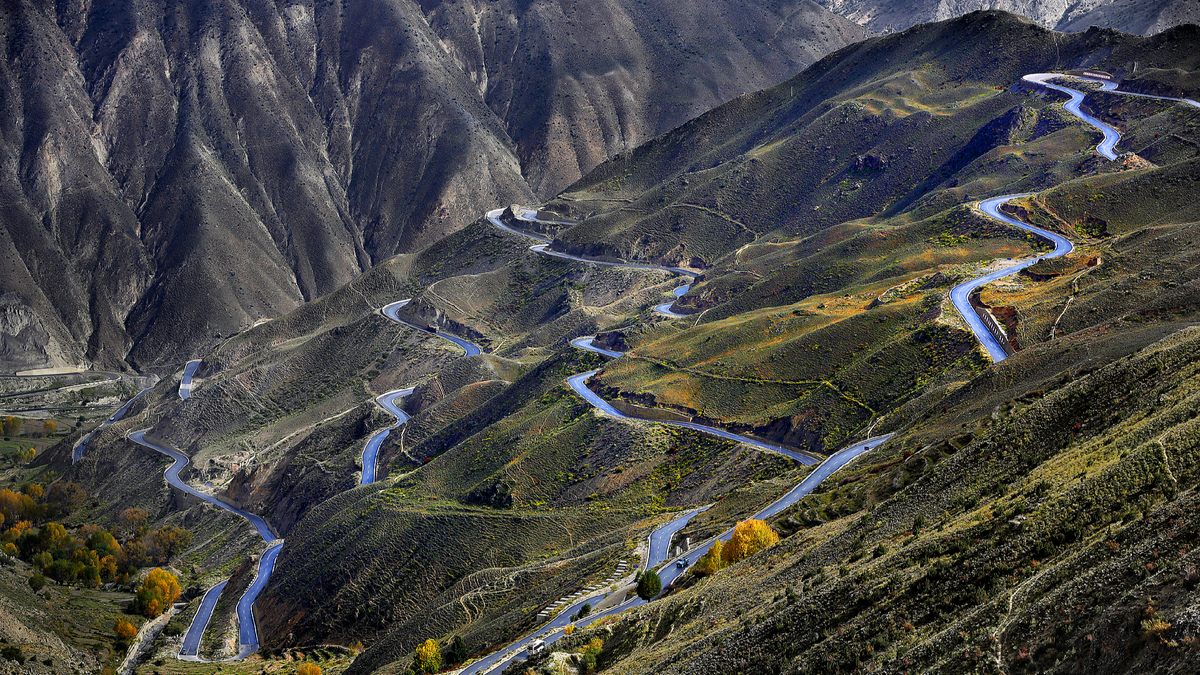
The Yunnan-Xizang Highway, stretching over 700 kilometers from Dali in Yunnan Province to Markam in Xizang Autonomous Region, has been a vital artery for travel, trade, and exchanges across the Hengduan Mountains for the past five decades. Completed on July 6, 1976, this major highway has undergone significant transformations, evolving from a caravan trail to a modern road that has revolutionized the region's connectivity.
Prior to the construction of the Yunnan-Xizang Highway, travel and trade in southwest China relied on the ancient Tea Horse Road network. For centuries, mule caravans carried tea, salt, and other goods along routes connecting Yunnan, Sichuan, and Xizang. The trade routes facilitated cultural, religious, and intellectual exchanges between communities living along the plateau and mountain regions. The arrival of modern roads transformed those connections, reducing travel times from weeks to days and integrating remote communities into broader economic and social networks.
The impact of the Yunnan-Xizang Highway is most visible in the daily movement of goods. Along the route, markets receive agricultural products, consumer goods, and construction materials transported from neighboring provinces. Improved road conditions and logistics networks have made it easier for products to move between Yunnan and Xizang, supporting commercial exchanges and reducing transportation costs. The road has also helped local specialties reach wider markets, with products from the plateau and surrounding mountain regions being sold beyond their places of origin.
While the highway was built half a century ago, its role continues to evolve. One of the most visible changes in recent years has been the emergence of new forms of mobility and logistics along the route. The launch of a full battery-swap network in January 2026 has made long-distance electric vehicle travel increasingly practical in high-altitude areas. Electric passenger cars, delivery vans, and freight trucks are becoming an increasingly common sight on a route once dominated by diesel-powered trucks and buses. This shift reflects broader changes in China's transportation landscape, with the highway now supporting tourism, e-commerce logistics, regional supply chains, and cross-regional mobility.
The Yunnan-Xizang Highway has become part of a wider network linking markets, industries, and communities. Its function has expanded beyond serving as a transport route, now supporting tourism, e-commerce logistics, regional supply chains, and cross-regional mobility. The highway's impact extends beyond the region, with its connectivity and transformation having far-reaching consequences for China's economic development and global trade.
The Yunnan-Xizang Highway's significance extends beyond its role as a transportation artery. It has facilitated the growth of local economies, supported the development of tourism, and promoted cultural exchanges between communities. As the highway continues to evolve, its impact will be felt across the region, with potential consequences for regional stability, economic growth, and environmental sustainability. The highway's transformation also reflects broader trends in China's transportation landscape, with a shift towards low-carbon travel and the integration of remote communities into wider economic and social networks.
The Yunnan-Xizang Highway has come a long way since its completion 50 years ago. From a caravan trail to a modern road, it has revolutionized transportation and trade in southwest China, connecting remote communities, markets, and industries. As the highway continues to evolve, its impact will be felt across the region, with potential consequences for regional stability, economic growth, and environmental sustainability.
Editor's Note: The analysis is based on publicly available information and does not contain any uncertain or speculative elements.
Source referenced: CGTN
This brief was synthesized by our Editorial Engine and reviewed by The Ground Narrative team.