TRENDING

Tuesday, 6 October 2026
----------------------
25 Rabi' Al-Thani 1448 AH
The International Monetary Fund has downgraded its 2026 global growth forecast, citing the persistent energy shock from the US-Israel war on Iran and renewed military escalation in the Strait of Hormuz. This economic revision underscores the profound global impact of Middle East instability on energy markets and international trade.
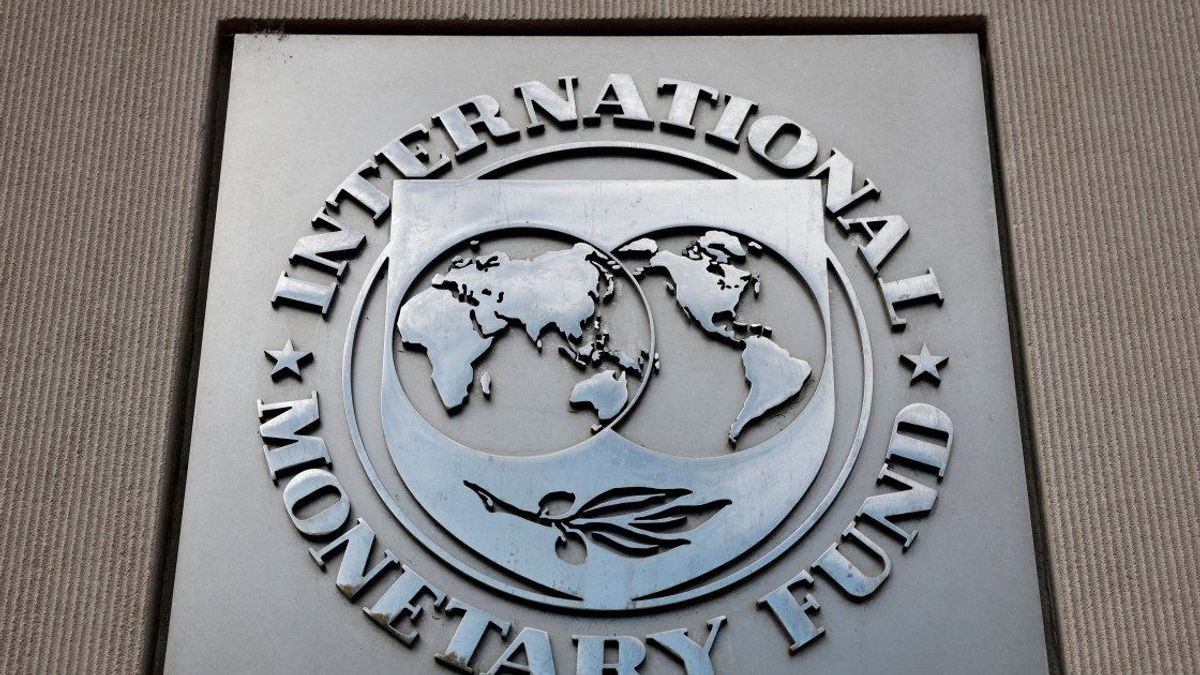
The International Monetary Fund (IMF) has once again revised downwards its 2026 global growth forecast, attributing the adjustment primarily to the "lingering effects" of the energy shock stemming from the US-Israel war on Iran. This marks the second such downgrade this year, highlighting the profound and persistent economic repercussions of geopolitical instability in the Middle East. The global economy is now projected to expand by 3 percent in 2026, a modest reduction from the 3.1 percent forecast in April, as detailed in the IMF's latest outlook released on Wednesday, July 9, 2026.
While an AI-driven investment boom offers a partial offset, the dominant force shaping the global economic outlook remains the volatility in energy markets. Global inflation is also anticipated to rise, reaching 4.7 percent this year, up from 4.1 percent in 2025, before a projected easing to 3.9 percent in 2027. These figures underscore the interconnectedness of geopolitical events, energy security, and global economic stability.
The IMF's latest downgrade closely followed a significant re-escalation of tensions in the Middle East. On Tuesday, July 8, 2026, the United States renewed military strikes on Iran, responding to reported attacks on three commercial ships in the strategically vital Strait of Hormuz. This was succeeded by a second round of bombing raids on Iranian targets by US forces on Wednesday. US President Donald Trump's declaration that the US-Iran ceasefire was "over" further amplified concerns, signaling a potential shift towards more direct and sustained confrontation.
This renewed military action immediately impacted global energy markets. Oil prices, which had briefly eased to pre-war levels, surged dramatically. Brent crude, the international benchmark, rose by as much as 7 percent, topping $79 a barrel following Trump's remarks and the latest strikes. This volatility underscores the fragility of any de-escalation efforts and the immediate market reaction to perceived increases in geopolitical risk.
At the heart of the energy shock is the Strait of Hormuz, a narrow maritime chokepoint that is indispensable for global energy trade. Before the conflict, approximately one-fifth of the world's oil and liquefied natural gas (LNG) transited through this strait. The ongoing threat of Iranian attacks has severely constrained shipping, with maritime intelligence platform Kpler reporting only 41 verified transits on Tuesday, a stark contrast to the roughly 130 daily crossings observed before the war.
The disruption of this vital waterway directly translates into higher shipping costs, insurance premiums, and ultimately, elevated energy prices for consumers and industries worldwide. The IMF's forecast for 2026 growth is predicated on the assumption that the Strait of Hormuz will begin reopening by mid-July, with conditions returning to a "pre-war state" by March 2027. This assumption, however, is subject to considerable uncertainty given the recent military escalations and the unpredictable nature of the conflict.
The re-escalation of tensions highlights the precarious balance of power and the inherent risks in the Middle East. The earlier "high-level MOU" for a US-Iran ceasefire, which market analysts like Fabien Yip of IG noted was based on "little more than a high-level MOU," proved to be exceptionally fragile. This demonstrates the challenges in achieving durable diplomatic solutions amidst deep-seated regional rivalries and security concerns.
Economically, the impact is not uniform. The IMF projects the United States to record the fastest growth among major advanced economies this year, at 2.3 percent, significantly outpacing the Eurozone (0.9 percent), the United Kingdom (1 percent), Canada (1.1 percent), and Japan (0.6 percent). China, an emerging economy, is forecast to grow 4.6 percent. While the US economy shows relative resilience, the global slowdown driven by energy shocks will inevitably create headwinds for all nations, particularly those heavily reliant on imported energy.
In conclusion, the IMF's revised outlook serves as a critical reminder of how regional conflicts, particularly those involving major energy producers and transit routes, can ripple across the global economy. The interplay between persistent geopolitical instability and the potential for technological advancement will continue to define the trajectory of global growth and inflation in the coming years, with the Middle East remaining a focal point of international concern.
Source referenced: ALJAZEERA
This brief was synthesized by our Editorial Engine and reviewed by The Ground Narrative team.