TRENDING

Friday, 16 October 2026
----------------------
5 Jumada Al-Awwal 1448 AH
The Chinese city of Yiwu supplies nearly 70% of the world's World Cup merchandise, underscoring its critical role in global supply chains and China's enduring manufacturing dominance. This phenomenon highlights the efficiency of its industrial clusters and the broader geopolitical implications of global economic interdependence.
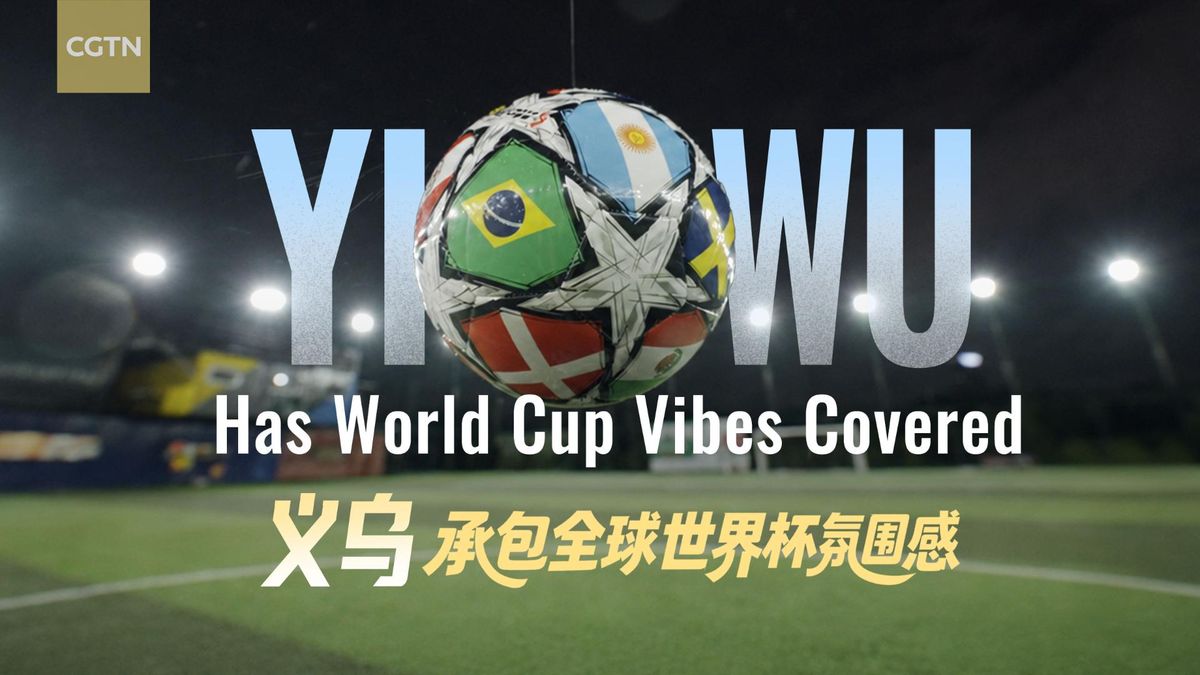
As the global fervor for the World Cup reaches its crescendo, an often-overlooked but strategically vital city in China, Yiwu, stands as the silent architect behind much of the tournament's tangible excitement. Responsible for supplying an astonishing nearly 70% of the world's World Cup merchandise, Yiwu's role transcends mere commerce, offering a compelling case study in global manufacturing, supply chain efficiency, and China's entrenched position in the international economic order.
Since the 2002 Korea-Japan World Cup, Yiwu has consistently been the primary source for football-related paraphernalia, a testament to its sustained dominance over two decades. This enduring presence highlights not only the city's specialized capabilities but also the broader trajectory of China's economic ascent and its integration into global consumer markets.
The operational efficiency that underpins Yiwu's success is remarkable. The city boasts a highly integrated industrial ecosystem where, within a mere ten-kilometer radius, every component, package, and raw material required for merchandise production is readily available. This creates what is colloquially known as a "30-minute supply circle," enabling rapid prototyping, mass production, and swift dispatch to meet fluctuating global demand. This level of vertical and horizontal integration minimizes lead times and production costs, making Yiwu an unparalleled hub for high-volume, low-cost manufacturing.
This model is a microcosm of China's broader industrial strategy, characterized by specialized industrial clusters, robust infrastructure, and a vast, skilled labor force. Such efficiency allows Chinese manufacturers to outcompete rivals globally, particularly in sectors requiring rapid response to market trends and large-scale production capabilities.
Yiwu's dominance in World Cup merchandise carries significant geopolitical and economic implications:
* Global Supply Chain Centrality: The city's role underscores China's indispensable position at the heart of global supply chains for consumer goods. While discussions around "de-risking" and diversifying supply chains have gained traction, Yiwu demonstrates the deep entrenchment and competitive advantages that make shifting production away from China a complex and costly endeavor, especially for niche, high-volume products.
* Economic Resilience and Adaptability: Yiwu's consistent performance over 24 years, through various global economic shifts and geopolitical events, speaks to the resilience and adaptability of China's manufacturing sector. Its ability to pivot and scale production for specific global events showcases a dynamic industrial base capable of responding to diverse international demands.
* Indirect Soft Power and Global Integration: While not a direct projection of cultural influence, Yiwu's role in facilitating global sporting events like the World Cup indirectly connects China to popular culture worldwide. By enabling the "vibe" of these events through its merchandise, China subtly reinforces its economic integration and indispensability to global leisure and entertainment industries.
* Global Dependence and Potential Vulnerabilities: The concentration of such a significant portion of production in a single city or country also highlights potential vulnerabilities. Geopolitical tensions, trade disputes, or localized disruptions (e.g., natural disasters, pandemics) could have widespread impacts on the availability and cost of goods globally. This dependence is a double-edged sword, granting China leverage while also exposing it to global economic fluctuations.
As nations increasingly scrutinize their supply chain dependencies, the Yiwu phenomenon serves as a critical benchmark. The efficiency and scale achieved by Yiwu's industrial cluster present a formidable challenge to any efforts aimed at significant reshoring or nearshoring of manufacturing. Its continued success in capturing a dominant market share for global events like the World Cup suggests that for certain categories of goods, China's manufacturing prowess remains unmatched.
In conclusion, Yiwu is more than just a city producing football souvenirs; it is a powerful symbol of China's economic might, its sophisticated manufacturing ecosystem, and its profound influence on global trade and consumer markets. Understanding Yiwu's role is key to comprehending the intricate web of global economic interdependence and the enduring strategic importance of China in the 21st century's geopolitical landscape.
Source referenced: CGTN
This brief was synthesized by our Editorial Engine and reviewed by The Ground Narrative team.