TRENDING

Thursday, 15 October 2026
----------------------
4 Jumada Al-Awwal 1448 AH
Increased Israeli restrictions on movement in the West Bank have triggered a severe trash crisis, highlighting the profound humanitarian and environmental impacts of the ongoing occupation. Palestinian entrepreneurs are attempting to mitigate the issue through local recycling initiatives amidst significant logistical and political challenges.
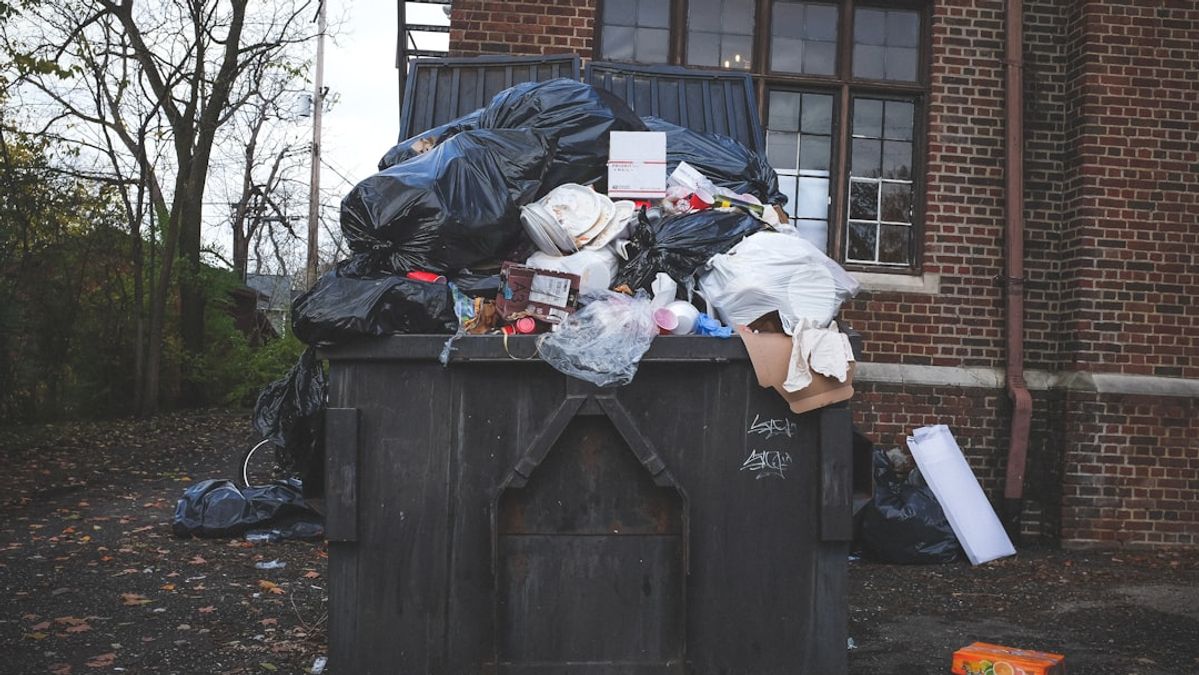
TheThe West Bank is grappling with an escalating trash crisis, a direct consequence of intensified Israeli movement restrictions following the October 7, 2023, Hamas-led attack on southern Israel. This environmental and humanitarian challenge underscores the complex interplay between security measures, occupation, and the daily lives of 3.4 million Palestinians. The crisis has seen garbage accumulate in unprecedented volumes, transforming transfer stations into de facto landfills and posing significant public health and environmental risks.
Since October 2023, the Israeli military has dramatically increased its presence and control over movement within the West Bank. The United Nations Office for the Coordination of Humanitarian Affairs (UN OCHA) documented 925 checkpoints, barriers, or roadblocks by the end of 2025—a 43% increase over the preceding two decades. These heightened restrictions, including massive concrete gates around Palestinian villages and hundreds of new checkpoints, have severely impeded the collection and disposal of waste. Garbage trucks now face hours, sometimes days, of delays attempting to navigate these barriers to reach the West Bank's two operational landfills, one in the north and one in the south. This logistical nightmare has led to uncollected waste piling up in residential areas, illegal dumping, and the overflow of temporary transfer sites, such as the main station in Ramallah, which now holds an estimated 750 tons of garbage.
The trash crisis is not merely an infrastructural problem but a potent symbol of the broader geopolitical realities of the Israeli-Palestinian conflict. The Palestinian Authority, responsible for civilian issues in some areas of the West Bank, has long sought permission to open a third central landfill to alleviate pressure on existing sites, which are rapidly approaching capacity. However, Israel has consistently refused these requests. Palestinian entrepreneurs, like Ibrahim Ghazal, co-founder of Scrapcycle Solutions, interpret this refusal as a deliberate strategy to exert control and pressure on the Palestinian population. "They want the people to feel the pressure," Ghazal states, suggesting a motivation to demonstrate Israeli authority over every aspect of Palestinian life, including essential services like waste management. While the Israeli military has stated it is "advancing on a construction permit for a third landfill in Judea and Samaria" (its biblical term for the West Bank), the delay and the perceived intent behind it remain a point of contention.
This situation highlights the profound challenges of governance and self-determination for Palestinians living under occupation. The inability to manage basic municipal services independently due to external controls creates a cycle of dependency and vulnerability. The restrictions not only affect waste disposal but also broader economic activity, as tens of thousands of West Bank Palestinians who previously worked in Israel are now barred from entry, further straining local resources and livelihoods.
In response to this deepening crisis, Palestinian entrepreneurs are demonstrating remarkable resilience and innovation. Ibrahim Ghazal and Faris Abu Keshek, childhood friends, founded Scrapcycle Solutions, a startup near Ramallah focused on recycling plastic waste. Their facility sorts, washes, shreds, and melts plastic into reusable pellets, aiming to transform "waste plastic to raw material again." This initiative was born directly from the increased difficulties faced after October 7, recognizing the urgent need for localized solutions when traditional waste management routes became untenable.
Scrapcycle Solutions represents a grassroots effort to address a systemic problem. By focusing on plastics, which constitute approximately 16% of West Bank garbage, they aim to reduce the volume of waste requiring transport to distant, overcrowded landfills. Their business model involves supplying recycled pellets to 72 manufacturers within the West Bank, demonstrating a viable circular economy approach despite the formidable logistical and political obstacles. The entrepreneurs have sought funding from international agencies, such as the Japan International Cooperation Agency (JICA), underscoring the need for external support to scale such vital projects. As Firas Farsakh, director of JICA's Ramallah office, notes, "garbage is not just garbage. It reflects all the political situation on the ground. It shows you how difficult it is to accomplish anything in this challenging area."
The West Bank's trash crisis is a stark illustration of how geopolitical conflict directly translates into humanitarian and environmental degradation. The accumulation of waste poses severe health risks, including the spread of disease and the release of toxic fumes from illegal burning, as evidenced by a past fire at the Ramallah transfer station that smoldered for weeks. Environmentally, the overflowing landfills and widespread pollution threaten ecosystems and long-term sustainability in an already confined and densely populated region.
While initiatives like Scrapcycle Solutions offer a beacon of hope and a model for self-reliance, they cannot fully resolve a crisis rooted in political control and restricted sovereignty. The long-term solution requires a fundamental shift in the geopolitical landscape, allowing the Palestinian Authority greater autonomy over its infrastructure and resources, including the establishment of essential waste management facilities. Until then, the daily struggle against mounting garbage will continue to be a poignant reminder of the human and environmental cost of unresolved conflict and occupation, driving local communities to find innovative ways to survive and thrive against immense odds.
Source referenced: NPR
This brief was synthesized by our Editorial Engine and reviewed by The Ground Narrative team.