TRENDING

Sunday, 18 October 2026
----------------------
7 Jumada Al-Awwal 1448 AH
An arson attack by Israeli settlers on a mosque, homes, and a factory in the West Bank village of Al-Tuwani highlights a significant surge in violence amidst the ongoing Israeli-Palestinian conflict. This incident, condemned by Palestinian officials as a terrorist act, underscores the escalating tensions and profound geopolitical implications for regional stability and the prospects for peace.
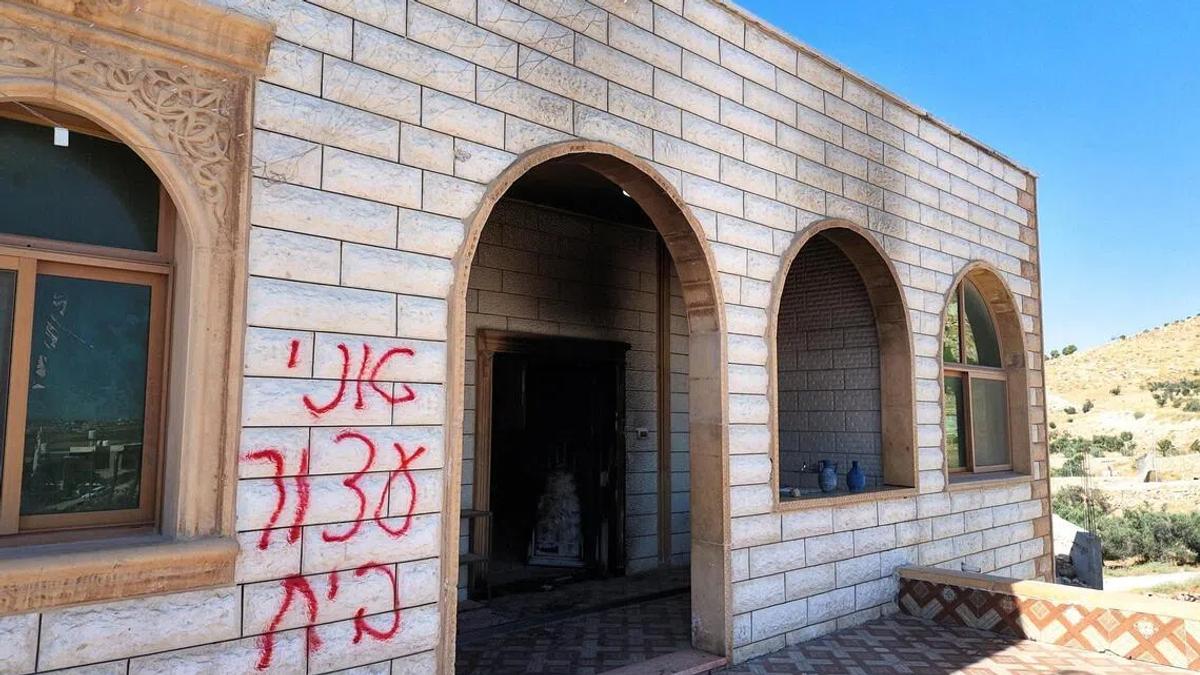
In the early hours of July 19, 2026, the Palestinian village of Al-Tuwani in the Israeli-occupied West Bank became the site of a significant act of violence, with Israeli settlers accused of torching a mosque, two homes, and a dairy factory. According to Mohammed Rabie, head of the Al-Tuwani village council, more than two dozen masked settlers attacked the Al-Taqwa mosque, setting it ablaze and spray-painting Hebrew graffiti on its walls. The assault extended to two residential properties and a dairy factory operated by women from the Masafer Yatta community, causing extensive damage. Fortunately, the attack resulted in no casualties, with local volunteers successfully extinguishing the fires before they could spread further.
The Israeli police confirmed deploying officers to the village following reports of damage, including a torched vehicle, harm to a prayer structure's door, and graffiti. An investigation into the incident's circumstances is reportedly ongoing. However, Palestinian activist Osama Makhamra highlighted the proximity of an Israeli military watchtower to the mosque, suggesting the attack occurred "in full view of the Israeli army." Rabie, conversely, noted the arrival of Israeli army, police, and fire services approximately half an hour after the settlers had fled, to inspect the damage.
This incident in Al-Tuwani is not isolated but rather indicative of a concerning trend of escalating settler violence across the occupied West Bank. Palestinian officials, including the Religious Affairs Ministry, swiftly condemned the arson as a "full-fledged terrorist act," accusing Israel's "extremist occupation government" of fostering an environment that encourages such actions. They framed the attack as a deliberate attempt to displace Palestinians from areas like Masafer Yatta and to transform the long-standing political conflict into a religious one.
The timing of this attack is particularly salient, occurring amidst a period of heightened tensions and increased attacks against Palestinian communities by settlers since the onset of the 2023 Gaza war. The United Nations Office for the Coordination of Humanitarian Affairs (OCHA) recently reported an "unprecedented" surge in Israeli settler violence in the occupied West Bank, documenting an average of six attacks per day resulting in casualties or property damage. This data underscores a deteriorating security situation for Palestinians living under occupation.
The continuous rise in settler violence carries profound geopolitical implications for the Israeli-Palestinian conflict and regional stability. The West Bank, occupied by Israel since 1967, is home to approximately three million Palestinians and over 500,000 Israeli settlers residing in communities widely considered illegal under international law. Attacks like the one in Al-Tuwani exacerbate an already volatile environment, fueling Palestinian resentment and undermining any prospects for a peaceful resolution.
Strategically, such incidents contribute to the fragmentation of Palestinian territory and the erosion of the two-state solution's viability. The destruction of property, particularly a mosque and a community-run factory, directly impacts Palestinian livelihoods, cultural heritage, and freedom of worship, intensifying the humanitarian crisis in the occupied territories. The alleged encouragement of settler actions by elements within the Israeli government, as claimed by Palestinian officials, further complicates diplomatic efforts and draws international condemnation, placing additional strain on Israel's international standing.
Moreover, the perceived inaction or delayed response of Israeli security forces, as highlighted by Palestinian accounts, raises serious questions about accountability and the protection of civilians in occupied territories. This perception can deepen distrust between Palestinian communities and Israeli authorities, potentially leading to further cycles of violence and retaliation. The spray-painting of Hebrew graffiti, often carrying nationalistic or religious messages, adds a layer of ideological motivation to these attacks, reinforcing the Palestinian concern that the conflict is being deliberately reframed as a religious war.
The Al-Tuwani incident serves as a stark reminder of the persistent challenges to peace and stability in the Middle East. As settler violence continues to surge, the risk of broader escalation across the West Bank increases, potentially drawing in other regional actors and further destabilizing an already fragile geopolitical landscape. The international community's response, or lack thereof, to these "unprecedented" levels of violence will be critical in shaping future dynamics.
The destruction of Palestinian property and the targeting of religious sites not only inflict immediate harm but also contribute to a long-term strategy of displacement and demographic change, as perceived by Palestinians. This ongoing pressure on Palestinian communities, coupled with the broader context of the Gaza war, creates a fertile ground for extremism and makes the path to any future political settlement increasingly arduous. The incident in Al-Tuwani, therefore, is more than a local crime; it is a significant indicator of the deepening crisis in the Israeli-Palestinian conflict, with far-reaching consequences for human rights, international law, and regional peace.
Editor's Note: The provided article is dated July 19, 2026, reporting an event on the same date. This analysis proceeds based on the reported date as presented in the source material.
Source referenced: STRAITSTIMES
This brief was synthesized by our Editorial Engine and reviewed by The Ground Narrative team.