TRENDING

Thursday, 12 November 2026
----------------------
2 Jumada Al-Thani 1448 AH
Donald Trump announced the end of U.S. military aid to Israel on election day, a move that upended Netanyahu’s strategy and left both nations exposed. The fallout reverberates through Israeli politics, American voters, and the broader Middle East.
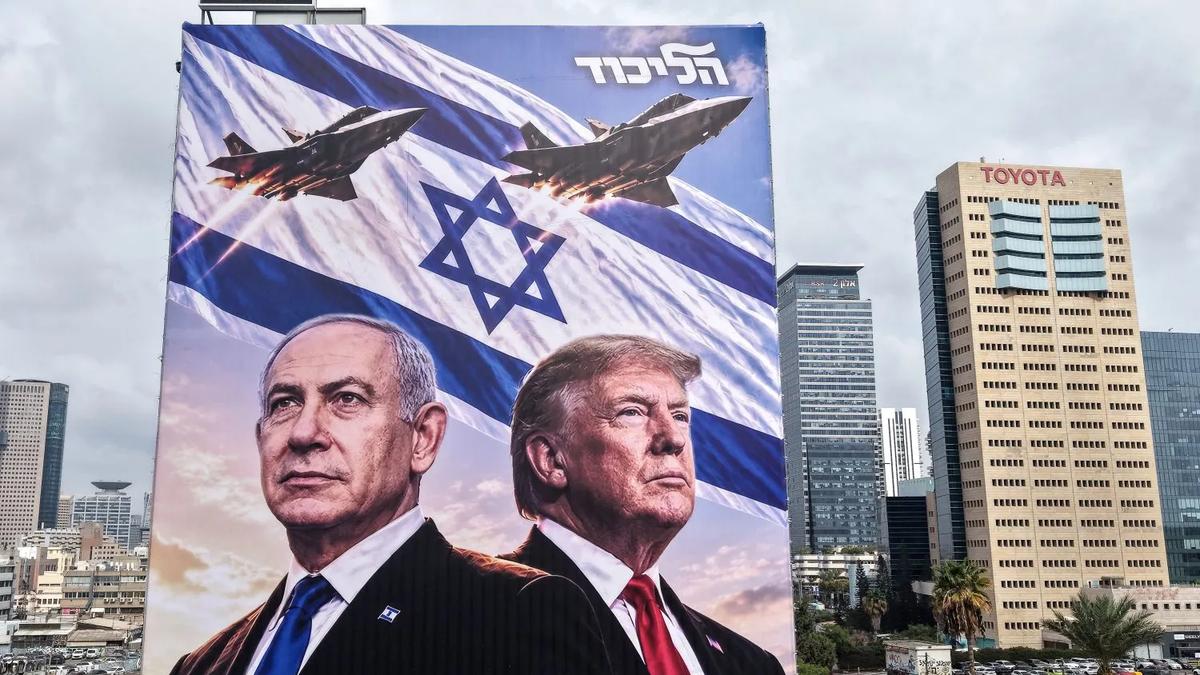
On November 7, 2026, Donald Trump used a Fox News interview to declare that the United States would cease all military assistance to Israel by year‑end, claiming the decision was mutually agreed with Benjamin Netanyahu. The announcement coincided with the U.S. midterm elections and came just days after Israel’s own parliamentary vote on October 27, which left the composition of the new Knesset uncertain. Netanyahu’s office quickly reframed the aid termination as a “transition to partnership and mutual investment,” while opposition leaders denounced the claim as a political bargain struck for Trump’s endorsement.
The Republican midterm disaster was rooted in voter fatigue over the costly war with Iran, soaring fuel prices, and a perception that U.S. foreign aid was a drain on domestic resources. Prominent GOP figures, including Vice President J.D. Vance, openly linked the party’s losses to the Israel‑Iran conflict, signaling a shift away from the traditional pro‑Israel stance that had anchored the party for decades.
Facing a fragmented Knesset and a looming coalition battle, Netanyahu sought to cement a high‑profile endorsement from Trump, betting that a visible U.S. ally would bolster his right‑wing base. By allegedly tying the aid cut to Trump’s support, he aimed to portray himself as the only leader capable of securing American backing against Iran, even as his own statements oscillated between celebrating a dismantled nuclear threat and warning of an imminent Iranian attack.
U.S. military assistance—over $3 billion annually—has long functioned as both a security guarantee for Israel and a steady stream of contracts for the American defense industry. By threatening to end the flow, Trump turned aid into a bargaining chip to rally his base, while also signaling to Tehran that Washington could recalibrate its Middle East posture without the fiscal burden of Israeli subsidies.
The abrupt policy shift unsettles Israel’s defense budgeting, forcing the Israel Defense Forces to reconsider procurement plans for air‑defense systems and armored vehicles. Communities near the Gaza Strip and the northern border face heightened uncertainty, as reduced U.S. funding may delay upgrades to missile‑intercept shields that have become a daily reassurance for civilians.
While the aid cut appears to save U.S. taxpayers money, the reality is more complex. A significant portion of the assistance is recycled into American defense contracts, supporting jobs in states such as Michigan and Alabama. The termination threatens those jobs, adding another layer of economic anxiety to a populace already grappling with inflation.
A potential escalation between Israel and Iran would likely draw in neighboring populations, from Lebanese Shiite militias to Gulf civilians fearing spillover. Any renewed conflict risks civilian casualties, displacement, and a humanitarian crisis that would strain international aid mechanisms already stretched thin by years of war.
Official statements from the State Department and congressional leaders downplay the partisan nature of the aid decision, framing it as a strategic realignment rather than a political payoff. Behind the scenes, senior officials are wary of alienating the powerful defense lobby that profits from the aid pipeline, leading to muted criticism of the move.
Netanyahu’s office has not released any written agreement confirming the aid termination, yet the narrative that a deal existed is being amplified through state‑aligned media. Opposition parties argue that the prime minister exceeded his authority, effectively bargaining away a cornerstone of national security without parliamentary oversight.
While Gulf Arab governments publicly condemn Iran’s nuclear ambitions, they have been quietly monitoring the U.S.–Israel aid shift. The potential weakening of Israel’s deterrent could alter the balance of power in the Gulf, prompting countries like Saudi Arabia and the United Arab Emirates to reassess their own security partnerships with Washington.
The coming weeks will reveal whether Gadi Eisenkot can forge a coalition that excludes Netanyahu’s hard‑line bloc, or whether the caretaker government will persist long enough for a renewed U.S.–Israel security pact to be renegotiated. In Washington, the next congressional session will test whether the Republican Party can reconcile its anti‑aid rhetoric with the defense industry’s lobbying power. Finally, any intelligence indicating Iranian preparations for chemical or nuclear escalation will likely reignite the aid debate, pulling the United States back into a direct role in the region’s security architecture.
No public written agreement has been released. Netanyahu’s office frames the change as a transition, while critics say the claim was a political bargain with Trump.
Reduced U.S. funding could delay procurement of missile‑defense systems and other equipment, increasing uncertainty for civilians near conflict zones.
While it appears to save taxpayer money, the cut threatens defense‑industry jobs that rely on aid‑related contracts, adding another economic concern for voters.
Editor's Note: Analysis based on publicly available reports and expert commentary; some internal diplomatic details remain unverified.
Source referenced: FOREIGNPOLICY
This brief was synthesized by our Editorial Engine and reviewed by The Ground Narrative team.


