TRENDING

Thursday, 5 November 2026
----------------------
25 Jumada Al-Awwal 1448 AH
After a bruising midterm defeat, the United States signaled a willingness to resume strikes against Iran, prompting Tehran to unveil a sweeping deterrence plan. The standoff pits political survival against civilian lives across the Middle East.
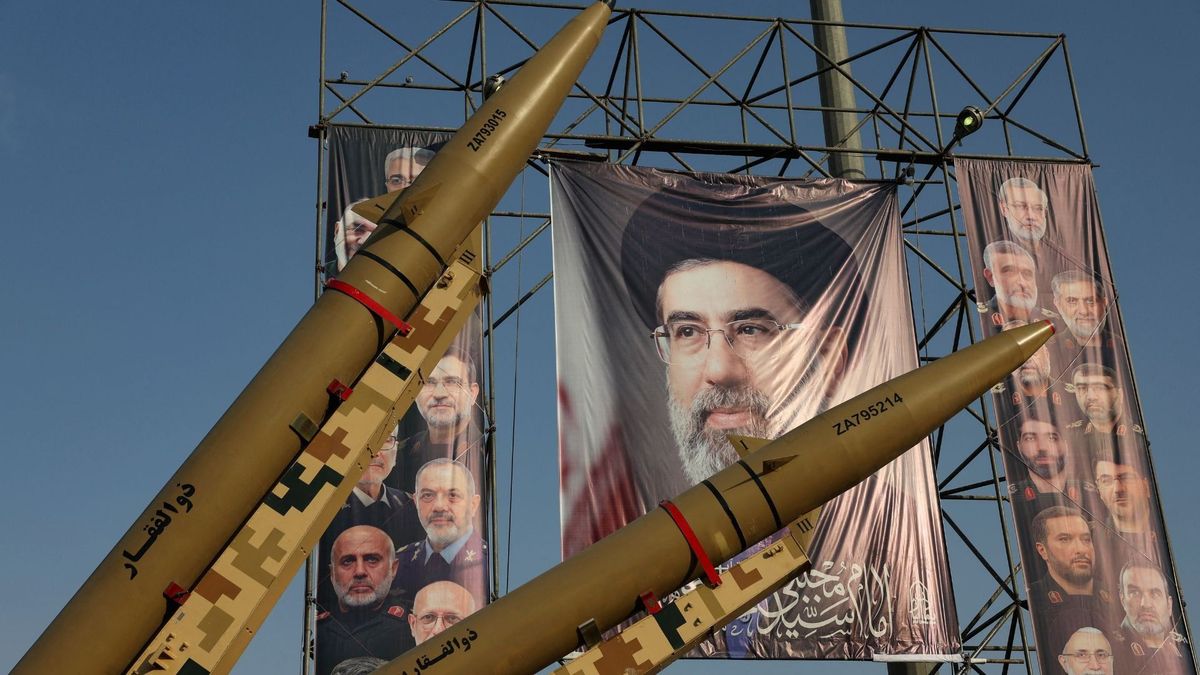
The day after the 2026 U.S. midterm elections, former President Donald Trump warned that the United States could launch fresh attacks on Iran once Congress reconvened. Tehran responded with a televised statement promising a "maximum deterrence" response without geographic limits. The exchange revived fears of a broader U.S.-Iran confrontation that had been dormant since the 2023 Israel‑Iran clash.
- Political survival for Trump: After losing the House and Senate, Trump faces a diminished platform to shape foreign policy. A hawkish stance on Iran offers a rallying point for his base, allowing him to claim he is protecting American interests abroad while deflecting domestic criticism over economic woes.
- Iran’s regional leverage: Tehran’s deterrence declaration is less about immediate military capability and more about signaling to allies—Syria, Hezbollah, and the Gulf’s Shia populations—that it can still project power. By framing the response as “without geographical restrictions,” Iran aims to deter not only U.S. strikes but also any regional coalition that might be tempted to intervene.
- U.S. alliance calculus: Israel, a staunch U.S. partner, benefits from a distracted Tehran, yet the American administration must balance that with the risk of overextending its military after a costly war in Ukraine. Congressional war‑weariness limits funding for another large‑scale operation, pushing the administration toward limited, high‑visibility strikes rather than a full‑scale invasion.
- Economic trade‑offs: Oil markets react instantly to any hint of conflict in the Persian Gulf. A renewed U.S. campaign could spike global crude prices, hurting American consumers while enriching oil‑exporting states that can capitalize on higher revenues.
- Alliance math in the Gulf: Saudi Arabia and the United Arab Emirates watch the U.S.–Iran posturing closely. While they share a common interest in curbing Tehran’s influence, they also fear being drawn into a conflict that could destabilize their own economies and invite retaliatory attacks on their oil infrastructure.
- Iranian civilians: Cities like Ahvaz and Khorramshahr sit within range of U.S. precision‑strike packages. Even limited bombing runs risk civilian casualties, displacement, and long‑term infrastructure damage that could cripple health services and education.
- American service members: A renewed campaign would likely rely on carrier‑based aircraft and special‑operations forces, exposing troops to anti‑access/area‑denial (A2/AD) systems that Iran has been acquiring from Russia and China. Casualties would reignite domestic debates about the cost of overseas wars.
- Gulf labor migrants: Millions of South Asian workers live in the UAE, Qatar, and Saudi Arabia. Escalation could trigger airport closures, visa freezes, and a sudden loss of income for families back home, amplifying poverty in Bangladesh, Pakistan, and India.
- Global consumers: Higher oil prices translate into higher gasoline and heating costs for households worldwide, disproportionately affecting low‑income families in Europe, Africa, and the Americas.
- U.S. domestic political framing: Official statements emphasize “protecting American lives,” yet they downplay the electoral calculus driving Trump’s rhetoric. The administration avoids acknowledging that the threat serves more to rebuild a personal brand than to address a concrete security gap.
- Iran’s economic desperation: Tehran’s public deterrence narrative masks severe domestic shortages, inflation, and sanctions‑induced hardship. By focusing on military readiness, the regime diverts attention from internal dissent and the growing protest movements in Tehran and Mashhad.
- Proxy dynamics hidden in plain sight: Both sides rely on proxy forces—Hezbollah in Lebanon, the Houthis in Yemen, and various militia groups in Iraq. Official briefings rarely mention how a new U.S. strike could trigger a cascade of retaliatory attacks across the region, expanding the battlefield far beyond Iran’s borders.
- China’s silent role: While not overtly mentioned, Beijing supplies Iran with drones and missile components. The U.S. narrative omits how a renewed conflict could accelerate Chinese influence in the Middle East, reshaping the long‑term balance of power.
- Congressional funding bills: Look for language that either authorizes or blocks new military aid for the Middle East in the weeks following the election. Funding decisions will reveal whether the threat is a bargaining chip or a genuine operational plan.
- Iranian military drills: Tehran’s announced “maximum deterrence” will likely be tested in large‑scale exercises. Satellite imagery of missile deployments near the Strait of Hormuz will indicate how seriously Iran intends to enforce its no‑geography limit.
- Oil price volatility: Sudden spikes above $120 per barrel could signal market anticipation of conflict, prompting central banks to adjust policy and affecting global inflation trends.
- Regional diplomatic overtures: Track any back‑channel talks involving Saudi Arabia, the UAE, and Israel. A sudden surge in diplomatic activity may indicate an effort to contain escalation before it becomes irreversible.
- Public sentiment polls: Both in the United States and Iran, shifts in public opinion on the war will pressure leaders to either double down or seek de‑escalation. Monitoring these trends will help predict the next rhetorical turn.
By pulling back the curtain on the political incentives, economic calculations, and hidden alliances, the unfolding standoff reveals a classic power play: a leader seeking relevance, a regime fighting for survival, and ordinary people caught in the crossfire of rhetoric and real‑world consequences.
Trump warned that the United States could resume strikes against Iran once Congress reconvened, framing the threat as a response to Iranian aggression and a way to rally his political base.
Any escalation in the Persian Gulf typically pushes crude prices higher, increasing fuel costs worldwide and disproportionately hurting low‑income households.
Even limited strikes could cause civilian casualties, displace families, and damage essential infrastructure such as hospitals and schools, deepening humanitarian crises.
Editor's Note: Analysis based on publicly available statements and expert commentary; on‑the‑ground developments may shift rapidly.
Source referenced: ALJAZEERA
This brief was synthesized by our Editorial Engine and reviewed by The Ground Narrative team.