TRENDING

Sunday, 25 October 2026
----------------------
14 Jumada Al-Awwal 1448 AH
The US-Iran confrontation has intensified into a sustained campaign of pressure, focusing on degrading Iran's maritime capabilities in the Strait of Hormuz. This escalation, marked by military strikes and forceful rhetoric, threatens global energy security and regional stability, drawing in other flashpoints like the Bab el-Mandeb.
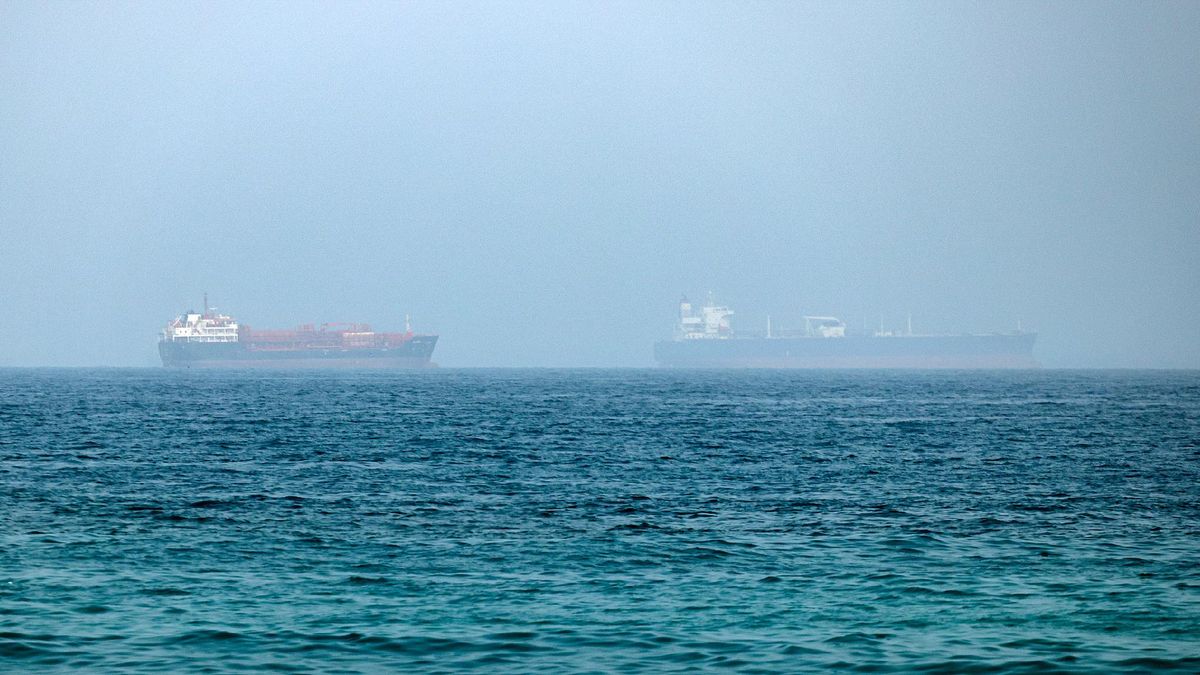
The geopolitical landscape of the Middle East has entered a new phase of volatility as the confrontation between the United States and Iran over the Strait of Hormuz has escalated from a series of retaliatory exchanges into a broader, sustained campaign of pressure. Over nearly two weeks, US forces have conducted continuous strikes against Iranian military infrastructure, signaling a deliberate shift in Washington's strategy from punitive responses to a systematic effort to degrade Tehran's capacity to disrupt maritime traffic through the critical waterway.
This intensified conflict, which reignited following the collapse of a ceasefire deal earlier this month, is centered on the Strait of Hormuz, a chokepoint through which a significant portion of the world's seaborne oil passes. For the United States, maintaining the unimpeded flow of global energy supplies through this strait is a paramount strategic and economic imperative. Any sustained disruption risks significant increases in global fuel prices, carrying substantial domestic political and economic consequences. Conversely, for Iran, leverage over the Strait of Hormuz represents one of its most potent bargaining tools against a militarily superior United States, a strategic asset Tehran appears determined to preserve.
Washington's operational rhythm has involved targeting a range of Iranian military assets, including command centers, missile and drone facilities, and coastal surveillance systems. This approach, as observed by analysts like Li Zixin of the China Institute of International Studies, suggests preparations for a broader campaign rather than a temporary surge. The deployment of additional aerial refueling aircraft, for instance, significantly extends the operational reach of US combat aircraft, potentially enabling strikes against strategic targets deeper within Iran, moving beyond previously limited coastal operations.
Accompanying this military pressure is increasingly forceful rhetoric from US President Donald Trump. Warnings of "major military punishment" against both Iran and Houthi fighters, coupled with statements indicating Iran had not "received enough pain yet," underscore a strategy of psychological deterrence. Threats to expand potential targets beyond conventional military infrastructure to include Iranian bridges and power plants signal a willingness to inflict greater economic costs on Tehran, while simultaneously preserving room for further escalation should maritime attacks persist. The renewed focus on Pickaxe Mountain, a site the US alleges is linked to secret Iranian nuclear activity, adds another layer of strategic complexity. While analysts like Su Xiaohui suggest this facility may not be easily destroyed militarily, the threat serves broader strategic and political purposes, testing Iran's response and reaffirming US resolve on the nuclear issue amidst escalating tensions.
Iran has responded with an "eye for an eye" approach, vowing continued retaliation against US regional assets if attacks persist. Tehran has also threatened broader disruptions to regional oil exports and maritime security, rejecting ceasefire proposals that do not adequately address the future of the Strait of Hormuz. This stance, as noted by Niu Xinchun of the China-Arab Research Institute, highlights the perceived strategic importance of the strait for both nations, leaving little room for compromise.
The confrontation's stakes extend far beyond the Strait of Hormuz, increasingly threatening to draw in other regional flashpoints and disrupt global energy flows. The entry of Houthi fighters into the conflict, with attacks on Saudi oil tankers in the Red Sea, has revived concerns over the Bab el-Mandeb, another narrow but vital waterway connecting the Red Sea to the Gulf of Aden. This creates simultaneous threats at two of the world's most important maritime chokepoints, amplifying global energy security concerns. Furthermore, Iranian retaliation has expanded to targets linked to US assets in Jordan and Kuwait, underscoring how regional countries are increasingly exposed as the conflict widens.
The overlapping disruptions have already had tangible effects on global markets. Shipping insurers have raised premiums, and some vessels have altered routes to avoid the southern Red Sea, adding costs and delays to global trade. Energy markets have reacted sharply, with Brent crude prices climbing above $100 a barrel, and industry experts warning of potential increases to $120 a barrel if both the Strait of Hormuz and the Bab el-Mandeb suffer prolonged disruption.
Despite the intense escalation, analysts like Qin Tian of the China Institutes of Contemporary International Relations observe signs of restraint from both Washington and Tehran. While US strikes have expanded deeper into Iran, large-scale attacks on major cities have been avoided. Similarly, Iran, while escalating pressure in the Gulf, has not returned to the highest levels of conflict seen in previous peaks. This suggests that neither side is currently seeking an all-out war, but rather a prolonged struggle characterized by calculated military pressure, diplomatic maneuvering, and economic strain, with the ultimate objective of shaping the future control and accessibility of the Strait of Hormuz and, by extension, regional power dynamics.
Source referenced: CGTN
This brief was synthesized by our Editorial Engine and reviewed by The Ground Narrative team.