TRENDING

Thursday, 12 November 2026
----------------------
2 Jumada Al-Thani 1448 AH
At COP31 in Antalya, UN Secretary‑General Antonio Guterres warned that the world is on a path of mutually‑assured destruction due to sluggish climate action. The brief unpacks who controls the agenda, who suffers, and what signals to track in the months ahead.
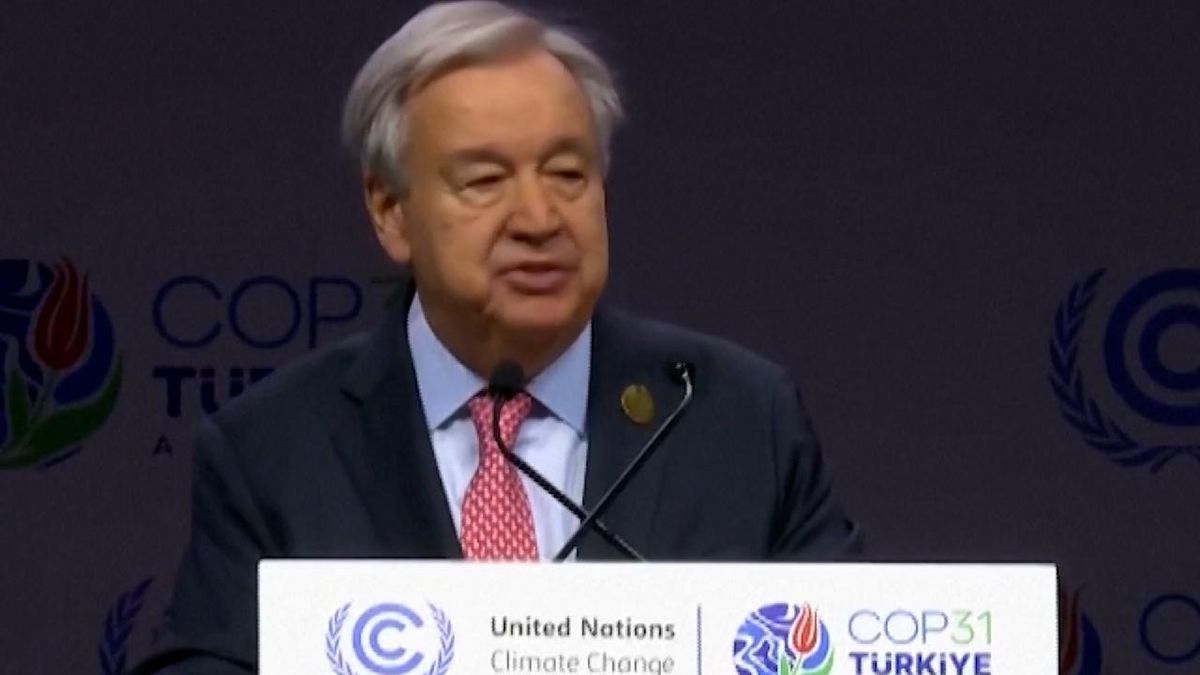
The summit in Antalya, Türkiye, turned tense on November 11 when UN Secretary‑General Antonio Guterres delivered a stark address to world leaders. He described the current pace of climate mitigation as a “mutually‑assured destruction” scenario, urging immediate, coordinated action across emissions cuts, finance, and adaptation. The warning came amid stalled negotiations on loss‑and‑damage funding and a contentious debate over phasing out coal.
- Fossil‑fuel interests vs. climate ambition
The global energy market remains dominated by a handful of multinational oil and gas corporations that wield significant lobbying power in both developed and developing capitals. Their influence shapes national energy policies, often delaying the transition to renewables in exchange for subsidies, tax breaks, or guaranteed market access. This creates a structural inertia that makes rapid emissions cuts politically costly.
- Development priorities of the Global South
Many low‑income countries argue that strict climate targets could jeopardize poverty‑reduction goals. They demand affordable energy, infrastructure investment, and technology transfer, positioning these needs as non‑negotiable. International finance mechanisms—especially the promised $100 billion annual climate finance—have consistently fallen short, reinforcing a bargaining chip for these nations.
- Alliance math within the UN framework
The UN climate architecture relies on consensus, giving veto‑like power to blocs that can block ambitious language. The European Union pushes for aggressive mitigation, while the Gulf States and some Asian economies prioritize energy security. This tug‑of‑war creates a middle ground that often dilutes commitments, preserving the status quo for powerful incumbents.
- Corporate climate finance and carbon markets
Emerging carbon‑credit schemes promise to mobilize private capital, yet they are frequently designed by the very industries they aim to regulate. By setting the rules, corporations can secure cheap offsets, limiting the pressure to cut real emissions. This market‑based approach also shifts responsibility from state actors to private actors, obscuring accountability.
- Island nations facing existential threat
Low‑lying states such as the Maldives, Kiribati, and Tuvalu confront sea‑level rise that could render their territories uninhabitable within decades. Their economies, heavily reliant on tourism and fisheries, are already feeling the squeeze from coral bleaching and storm surges.
- Rural farmers in the Sahel and South Asia
Erratic rainfall patterns and expanding deserts are eroding crop yields for millions of smallholder farmers. Food insecurity spikes, prompting migration to urban centers and heightening social tensions.
- Urban poor in megacities
Heatwaves in cities like Delhi, Lagos, and Mexico City disproportionately affect informal settlements lacking cooling infrastructure. Hospital admissions rise, and electricity blackouts become more frequent as grids strain under demand.
- Workers in fossil‑fuel sectors
While the narrative focuses on future generations, current labor forces in coal mines, oil rigs, and related supply chains face job insecurity as the world pivots. Without just‑transition policies, entire communities risk economic collapse.
- Governments downplaying financing gaps
Official statements often highlight pledged climate finance, yet the actual disbursement to vulnerable nations remains a fraction of commitments. By emphasizing pledges over delivery, states sidestep scrutiny of their fiscal priorities.
- Corporate framing of "net‑zero" as a branding exercise
Many multinational firms market net‑zero targets while continuing to invest in new fossil‑fuel projects abroad. This selective disclosure creates a perception of progress without substantive emissions reductions.
- Media focus on headline‑grabbing pledges
Coverage tends to spotlight high‑profile announcements—such as a country’s renewable‑energy goal—while ignoring the underlying policy instruments, subsidies, or regulatory rollbacks that may undermine those goals.
- Strategic omission of loss‑and‑damage accountability
Negotiators frequently sidestep discussions on liability for climate‑induced harm, framing loss‑and‑damage as a humanitarian issue rather than a legal claim. This shields wealthy emitters from potential compensation claims.
- The next round of climate finance negotiations slated for the UN Climate Summit in 2027, where the gap between pledged and delivered funds will be a litmus test for credibility.
- Legislative moves in major economies to either protect or dismantle fossil‑fuel subsidies, especially in the United States, China, and the European Union. Policy shifts here will ripple through global markets.
- Developments in carbon‑credit standards as civil‑society groups push for stricter verification to prevent green‑washing.
- Legal actions by vulnerable nations seeking compensation for climate damage, which could reshape international liability norms.
- Grassroots climate movements in the Global South that are increasingly linking climate demands with social justice, potentially reshaping negotiation dynamics.
Staying attuned to these signals will reveal whether the warning at COP31 remains a rhetorical flourish or becomes a catalyst for measurable change.
He warned that the current pace of climate mitigation creates a mutually‑assured destruction scenario, urging leaders to accelerate emissions cuts, finance, and adaptation measures.
Many argue that rapid decarbonisation could jeopardize poverty‑reduction goals, as they need affordable energy and infrastructure investment to sustain economic growth.
Discrepancies between pledged amounts and actual disbursements, bureaucratic bottlenecks, and competing domestic budget priorities often delay or reduce the flow of funds to vulnerable nations.
Source referenced: CGTN
This brief was synthesized by our Editorial Engine and reviewed by The Ground Narrative team.


