TRENDING

Monday, 19 October 2026
----------------------
8 Jumada Al-Awwal 1448 AH
Ukrainian drone attacks targeted critical energy and military infrastructure in St. Petersburg, coinciding with Russia's flagship economic forum. The strikes highlight Kyiv's strategy of long-range retaliation and expose Russia's domestic vulnerabilities, challenging its narrative of stability.
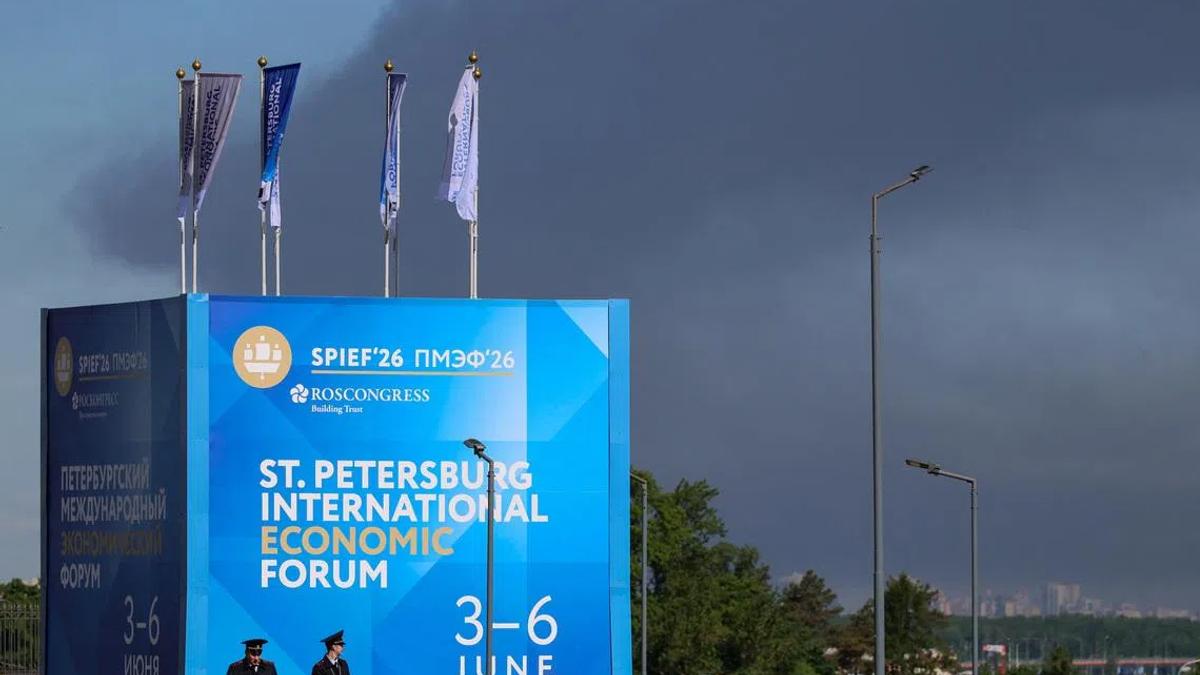
Early on June 3, 2026, Ukrainian drones launched a series of attacks on St. Petersburg, Russia, targeting an oil terminal and the Kronstadt military base. These strikes occurred precisely as the St. Petersburg International Economic Forum (SPIEF) commenced, an event once dubbed "Russia's Davos" and intended to showcase Russia's economic resilience and international partnerships. The timing and location of the attacks carry significant geopolitical weight, underscoring Ukraine's evolving strategy of long-range engagement and challenging Russia's claims of domestic security.
St. Petersburg Governor Alexander Beglov confirmed damage to "several" infrastructure facilities, though no fatalities were reported. Ukrainian President Volodymyr Zelensky explicitly linked the attacks to Kyiv's strategy of "long-range sanctions," framing them as necessary steps to hasten peace. This terminology suggests a deliberate effort to inflict economic and strategic costs on Russia, mirroring the impact of international sanctions, but through direct military action on Russian soil. The attacks also forced the temporary closure of St. Petersburg's main airport, causing flight delays and immediate disruption.
The drone strikes on St. Petersburg are not isolated incidents but rather part of a broader pattern of escalating Ukrainian attacks deep within Russian territory. Kyiv views these actions as direct retaliation for Russia's continuous barrages of missiles and drones against Ukrainian cities, which had killed 23 people across Ukraine just a day prior to the St. Petersburg incident. By targeting critical energy infrastructure, Ukraine aims to disrupt Russia's war economy, which heavily relies on oil and gas revenues. The inclusion of the Kronstadt military base, a significant naval facility, further indicates an intent to degrade Russia's military capabilities and project a threat to its strategic assets.
The choice of St. Petersburg, a city of immense historical and symbolic importance to Russia and the birthplace of President Vladimir Putin, amplifies the psychological impact of the attacks. Launching strikes during SPIEF, an event attended by some 20,000 guests from 130 countries, including heads of state and ministers, serves multiple strategic purposes. It aims to embarrass the Kremlin on the international stage, demonstrate Russia's vulnerability despite its robust security claims, and potentially deter foreign investment and participation in Russian economic initiatives. The visible smoke from the conference venue, as noted by an adviser to the Ukrainian defence minister, served as a stark, undeniable backdrop to Russia's efforts to project normalcy and strength.
The St. Petersburg International Economic Forum itself offers a crucial lens through which to view Russia's changing geopolitical standing. Historically, SPIEF was a premier platform for courting Western investment, attracting leaders like French President Emmanuel Macron and then-German Chancellor Angela Merkel. However, since Russia's full-scale invasion of Ukraine in February 2022, the forum has become a barometer of Russia's increasing international isolation from Western powers.
In 2026, the forum's guest list primarily featured leaders from Russia's closest allies and countries from the Global South, including the presidents of Uzbekistan and Tanzania, and ministers from Cuba, Belarus, the United Arab Emirates, and Saudi Arabia. Kremlin envoy Kirill Dmitriev framed SPIEF as a gathering of "sovereign countries," explicitly contrasting it with "globalist" rivals like the World Economic Forum in Davos. This narrative underscores Russia's pivot towards non-Western partnerships, seeking to build a new economic order less dependent on Western influence. The presence of UN Secretary-General Antonio Guterres, who had condemned Russian strikes on Ukraine just days before, added a complex diplomatic layer, highlighting the ongoing international debate surrounding Russia's actions.
The St. Petersburg drone strikes carry significant geopolitical implications. They demonstrate Ukraine's growing capability to project power deep into Russian territory, challenging the notion that the conflict can be contained to the front lines. This capability necessitates a re-evaluation of Russia's air defense systems and internal security measures, particularly around critical infrastructure and major urban centers.
For Russia, the attacks during SPIEF complicate its efforts to project an image of stability and attract foreign partners. While the Kremlin seeks to pivot to the Global South, incidents like these can still raise concerns among potential investors about the security environment and the long-term stability of the Russian economy. The continued exchange of long-range strikes by both sides indicates a protracted conflict with escalating risks, potentially leading to further damage to civilian and economic infrastructure in both nations.
Ultimately, these events underscore the enduring and expanding nature of the conflict. Ukraine's strategy of "long-range sanctions" aims to impose a cost on Russia that is difficult to ignore, even in its most symbolic cities. As the war continues, the targeting of strategic and economic assets deep within adversary territory is likely to remain a key feature, shaping the conflict's trajectory and its broader geopolitical consequences.
Source referenced: STRAITSTIMES
This brief was synthesized by our Editorial Engine and reviewed by The Ground Narrative team.