TRENDING

Monday, 19 October 2026
----------------------
8 Jumada Al-Awwal 1448 AH
Ukrainian forces have conducted significant long-range strikes, targeting Crimea and critical energy and military infrastructure in St. Petersburg, Russia, during a key economic forum. These actions, framed by Kyiv as justified retaliation, have prompted international warnings of a 'real' risk of escalation in the ongoing conflict.
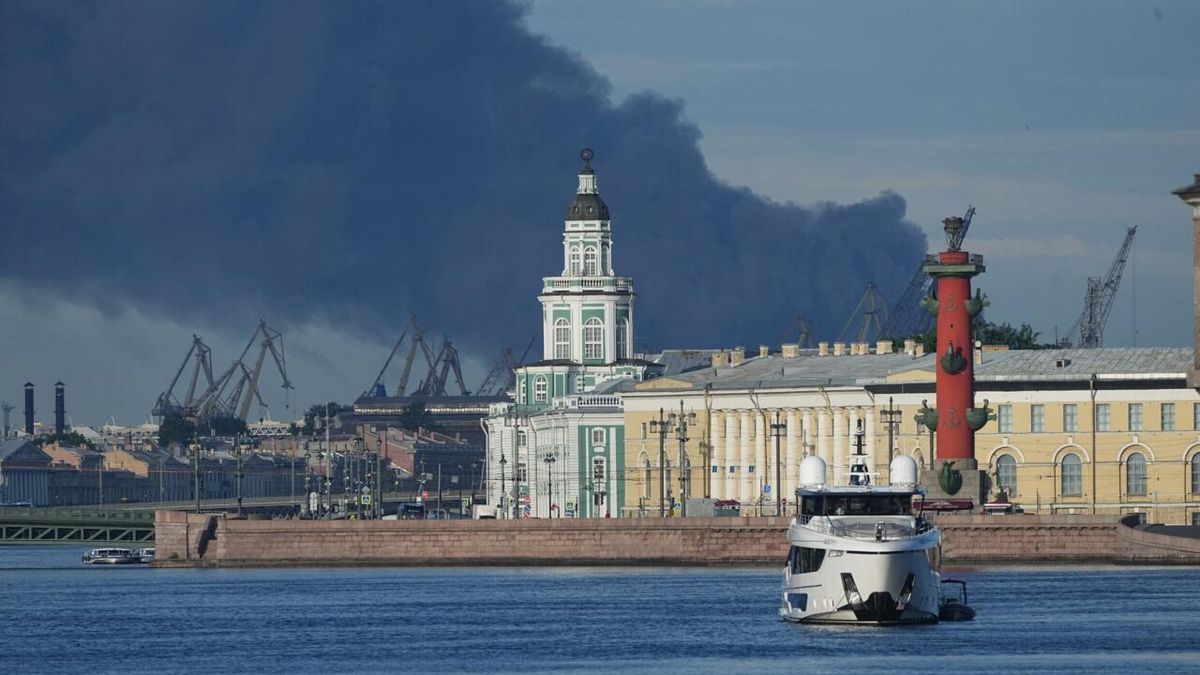
Recent developments in the conflict between Ukraine and Russia have seen a notable escalation in the scope and depth of Ukrainian military operations. On June 4, 2026, Moscow-installed authorities reported a Ukrainian strike in Crimea, specifically targeting non-residential buildings in Simferopol, which resulted in three fatalities and seven injuries. This incident followed a series of Ukrainian attacks on June 3, 2026, that targeted energy and military facilities in Saint Petersburg, a major Russian city far from the Ukrainian border. These strikes notably coincided with the Saint Petersburg International Economic Forum (SPIEF), an event once dubbed "Russia's Davos," where President Vladimir Putin was scheduled to deliver a keynote address.
The attacks on Saint Petersburg, which included an oil terminal and the Kronstadt military base, were strategically significant. Ukrainian officials, including an adviser to the defence minister, Sergiy Sternenko, explicitly stated that the strikes aimed to disrupt the forum, with plumes of black smoke visible from the conference venue as sessions commenced. Ukrainian President Volodymyr Zelensky affirmed that his country was responding "accordingly" to Russian bombardments, signaling a potential increase in the intensity of their responses. This tit-for-tat dynamic was underscored by concurrent Russian attacks that reportedly killed at least 10 people across Ukraine, alongside drone strikes in Russian-occupied east Ukraine, the Bryansk region, and the Kharkiv region.
Ukraine's decision to strike deep within Russian territory, particularly at a high-profile economic event like SPIEF, carries multiple strategic motivations. Primarily, these actions serve as a direct response and perceived retaliation for the intensified Russian bombardment of Ukrainian cities and infrastructure. By demonstrating the capability to strike critical Russian assets far from the front lines, Kyiv aims to impose costs on Russia, disrupt its economic and military operations, and challenge the Kremlin's narrative of control and security.
The targeting of Saint Petersburg, a city of immense historical and economic importance to Russia, also functions as a powerful psychological and political message. It underscores Ukraine's resolve and its evolving long-range strike capabilities, which US Secretary of State Marco Rubio acknowledged as "increasingly effective." Such strikes aim to undermine Russian public confidence and signal to the international community that the conflict's reach is expanding, potentially impacting Russia's ability to project stability and attract foreign investment, even at its flagship economic forum.
The international community has reacted with heightened concern regarding the potential for further escalation. US Secretary of State Marco Rubio explicitly warned of a "real" risk of the Ukraine war escalating, noting that this risk is "more real than it was two years ago." His comments highlight the growing apprehension among global powers about the trajectory of the conflict, particularly as neither side appears willing to make the concessions necessary for peace.
EU foreign affairs chief Kaja Kallas suggested that Ukraine's attacks indicate "panic on the Russian side," attributing Russia's increased attacks on Ukraine to a lack of clear strategy in response to these deep strikes. She posited that "Putin is losing money, men, and momentum," and that this perceived weakness is driving Russia's intensified actions against civilians. Conversely, Kremlin spokesman Dmitry Peskov vowed a "systemic" response to Ukraine's strikes, indicating Russia's intent to retaliate, thereby perpetuating the cycle of violence.
The recent strikes represent a significant development in the conflict, signaling a potential shift in Ukraine's operational strategy towards more frequent and deeper incursions into Russian territory. This approach, while aimed at pressuring Russia and demonstrating capabilities, inherently carries a heightened risk of further escalation. The targeting of economic and military hubs far from the front lines could provoke more severe Russian responses, potentially involving advanced weaponry or broader targeting criteria.
The ongoing inability of either side to achieve decisive military victory, coupled with the lack of diplomatic breakthroughs, suggests that the conflict is entering a more dangerous phase characterized by reciprocal long-range attacks. This trajectory not only threatens regional stability but also poses a continuous challenge to international efforts to de-escalate tensions and find a peaceful resolution. The international community remains watchful, as the implications of these escalating strikes could reshape the geopolitical landscape of Eastern Europe and beyond.
Source referenced: FRANCE24
This brief was synthesized by our Editorial Engine and reviewed by The Ground Narrative team.