TRENDING

Saturday, 19 September 2026
----------------------
8 Rabi' Al-Thani 1448 AH
Ukrainian President Volodymyr Zelenskiy confirmed a drone strike on a Russian oil refinery in the Tyumen region, over 2,000 km from Ukraine, signaling a significant expansion of Kyiv's long-range strike capabilities. This attack, coupled with the announcement of new 3,000 km range drones, underscores Ukraine's strategy to target Russia's economic and military infrastructure deep within its territory.
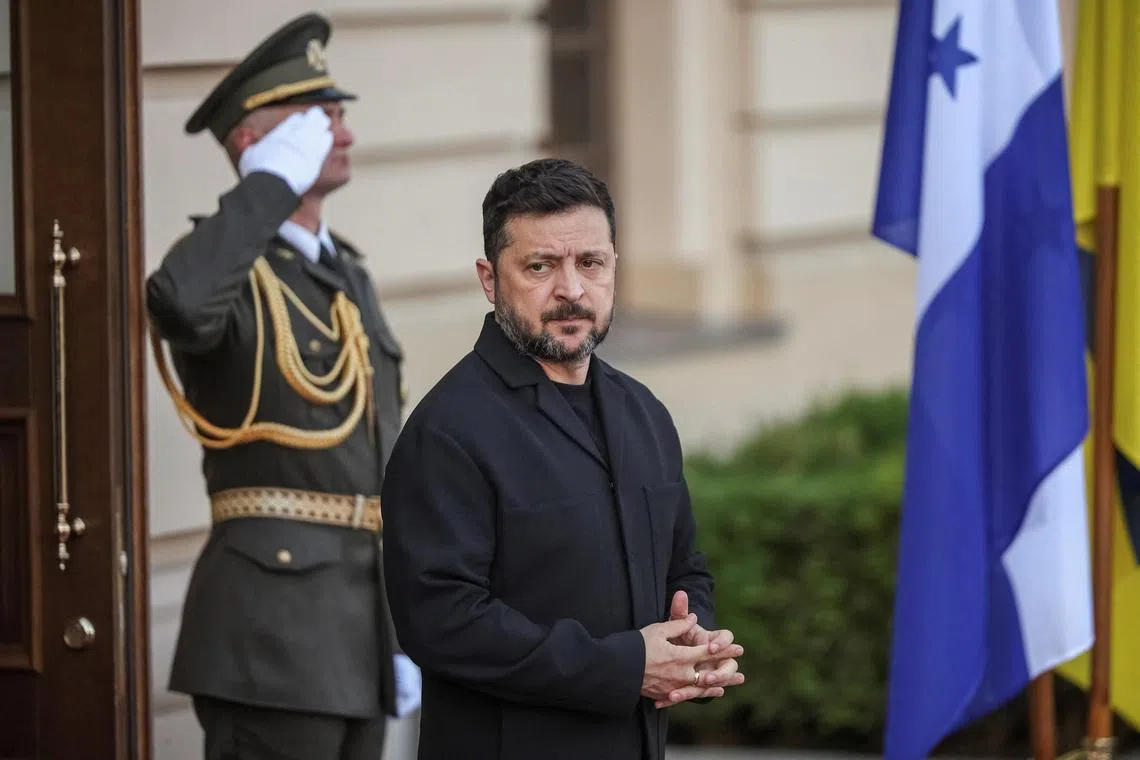
Ukrainian President Volodymyr Zelenskiy's confirmation of a drone strike on an oil refining facility in Russia's Tyumen region marks a significant development in the ongoing conflict, demonstrating Ukraine's expanding capability to project power deep into Russian territory. The attack, occurring over 2,000 kilometers from Ukraine's state border, coupled with the announcement of new long-range drones capable of operating over 3,000 kilometers, signals a strategic shift in Kyiv's approach to pressuring Moscow's war economy and military logistics.
On Saturday, June 20, 2026, President Zelenskiy publicly acknowledged that Ukrainian drones had successfully targeted an oil refinery in Tyumen, a region in western Siberia. This confirmation came during his nightly video address, where he specifically thanked the Ukrainian military's special operations for their "effective work" in reaching such a distant target. The Tyumen refinery is a substantial asset within Russia's energy infrastructure, boasting a nominal capacity of approximately 8 million metric tons per year and processing around 6 million tons of crude annually, yielding significant quantities of gasoline and diesel.
While Zelenskiy celebrated the strike, Tyumen Region Governor Alexander Moor reported that Russian air defenses had repelled the drone attack, claiming no damage to the facility and that staff had been evacuated as a precautionary measure. The discrepancy in reporting highlights the information warfare inherent in modern conflicts, where both sides seek to control the narrative regarding operational success and impact. Regardless of the immediate physical damage, the psychological and strategic implications of a strike at such a distance remain profound.
Ukraine's military has been engaged for months in a concerted campaign of medium and long-range strikes against Russian targets, with a particular focus on the oil industry. The primary strategic motivation behind these attacks is to degrade Russia's capacity to fund and sustain its war effort. Oil and gas revenues constitute a critical pillar of the Russian economy, directly supporting its military budget. By targeting refining facilities, Ukraine aims to disrupt the production of refined petroleum products essential for military vehicles and logistics, as well as to reduce Russia's export capabilities, thereby diminishing its foreign currency earnings.
President Zelenskiy explicitly framed these deep strikes as "entirely justified responses to Russian strikes against our state," reinforcing Ukraine's narrative of self-defense and retaliation against ongoing Russian aggression. This framing seeks to legitimize Ukraine's actions on the international stage, presenting them as a necessary measure to counter an invading force.
Perhaps the most significant aspect of Zelenskiy's announcement was the revelation that Ukraine has developed and successfully deployed new, modernized long-range drones capable of reaching targets at a distance of 3,000 kilometers. This represents a substantial technological leap for Ukraine's indigenous defense industry. Previously, the range of Ukrainian drones was a limiting factor in their ability to strike deep into Russia. The 3,000-kilometer capability fundamentally alters the strategic calculus, bringing a vast swathe of Russian territory, including critical industrial, military, and logistical hubs, within potential striking distance.
This enhanced capability has several far-reaching implications:
Increased Vulnerability for Russia: It exposes previously considered secure Russian assets, forcing Moscow to re-evaluate its air defense strategies and potentially divert resources from the front lines to protect its interior.
Economic Pressure: The ability to strike more distant and strategically vital energy infrastructure could inflict greater economic pain on Russia, impacting global energy markets and potentially influencing international perceptions of Russia's stability.
Psychological Impact: Strikes deep within Russia can have a significant psychological effect on the Russian populace and leadership, demonstrating Ukraine's resolve and the war's reach beyond the immediate conflict zones.
Shifting Dynamics: This technological advancement could compel Russia to adapt its military operations, potentially affecting its ability to project power and sustain its offensive.
The Tyumen strike and the unveiling of 3,000 km drones underscore a broader trend in modern warfare: the increasing role of unmanned aerial vehicles in asymmetric conflict. For Ukraine, these drones offer a cost-effective means to challenge a larger adversary, circumventing traditional air superiority challenges.
From a geopolitical perspective, this development could lead to several outcomes. International partners of Ukraine may view this as a legitimate defensive measure, while Russia will undoubtedly condemn it as an escalation. The potential for further deep strikes could strain Russia's air defense network, which is already heavily engaged along the front lines and in protecting border regions. It also raises questions about the long-term security of critical infrastructure in all conflict zones and the evolving nature of territorial defense.
As Ukraine continues to implement its "plan of long-range operations," the strategic landscape of the conflict is likely to evolve further. The ability to strike deep into an adversary's territory, particularly at economically vital targets, introduces new layers of complexity and risk, potentially influencing the trajectory of the war and future diplomatic efforts. The Tyumen strike, regardless of its immediate physical damage, serves as a potent symbol of Ukraine's adapting capabilities and its unwavering commitment to defending its sovereignty through innovative and asymmetric means.


