TRENDING

Monday, 21 September 2026
----------------------
10 Rabi' Al-Thani 1448 AH
Recent Ukrainian drone attacks, including a major strike on Moscow, highlight evolving warfare tactics and expose significant gaps in Russia's air defense capabilities. These incidents underscore Russia's strategic challenges in protecting its vast territory and critical infrastructure amidst ongoing conflict.
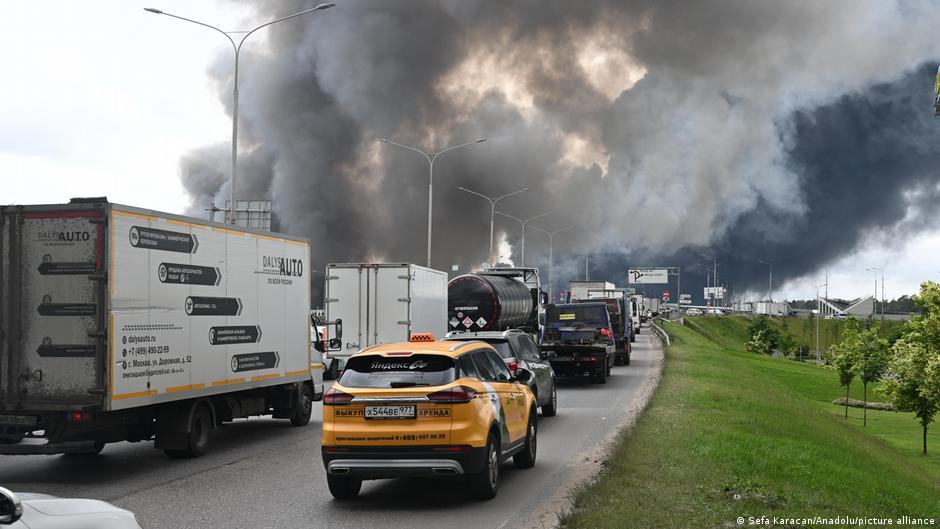
The recent surge in Ukrainian drone attacks targeting Russian territory, culminating in the significant June 18 assault on Moscow, has ignited a critical debate regarding the efficacy and vulnerabilities of Russia's air defense systems. This escalation marks a notable shift in the conflict, extending the battlefield deep into Russian heartland and posing complex strategic challenges for Moscow.
On June 18, Ukrainian unmanned aerial vehicles (UAVs) executed what has been described as the largest attack on Russia since the full-scale invasion began. The strikes targeted multiple locations across Moscow, notably causing a major oil refinery, responsible for 40% of the region's fuel supply, to catch fire and halt production. Additionally, evacuations were triggered at one of Russia's largest airports. Eyewitness accounts and social media footage suggested instances where Russian air defenses appeared to struggle with interception, fueling public and expert speculation about systemic weaknesses.
While military analyst Ruslan Leviev of the Conflict Intelligence Team noted that over 90% of the UAVs over Moscow were reportedly downed, the few that penetrated caused substantial damage. This highlights a critical aspect of modern drone warfare: even a small percentage of successful strikes can yield significant strategic and psychological impact, especially when targeting critical infrastructure or symbolic locations.
Experts point to a confluence of factors contributing to the perceived vulnerabilities in Russia's air defense. Ukrainian aviation expert Anatoliy Khrapchynskyi attributes the breaches to a combination of the systemic degradation of Russia's defense architecture and the technological evolution of Ukraine's strike capabilities.
One primary technical challenge lies in the design of older Russian air defense systems, such as the Pantsir-S1. These systems were primarily developed to counter larger, more radar-reflective targets like cruise missiles. Modern Ukrainian drones, however, often utilize composite materials like plastic or plywood, making them significantly less detectable by conventional radar systems. This renders some of Russia's established defenses "blind" to these smaller, stealthier threats.
Beyond technological limitations, geographical realities present an immense hurdle. Russia's vast territory makes establishing an impenetrable "air wall" virtually impossible. Moscow, with its high urban density and numerous high-rise buildings, paradoxically offers drones ample cover, allowing them to evade radar detection by flying at low altitudes and utilizing the urban landscape for concealment. Ukraine has reportedly capitalized on this by developing long-range drones capable of plotting complex flight paths to navigate around known interception zones.
A significant contributing factor to Russia's current air defense predicament is the strategic redeployment of its assets. A substantial portion of Russia's layered air defense systems, including advanced S-300 units, has been moved to Russian-occupied territories in Ukraine to support front-line operations. This reallocation has transformed what was once a robust, multi-layered defense network into a more fragmented "patchwork" over its own sovereign territory.
Furthermore, reports suggest that sanctions imposed on Russia have hindered its ability to acquire replacement components for these sophisticated systems. Khrapchynskyi also posits that Russia has fallen into a "trap of the very 'math of war' it once tried to impose." By repurposing S-300 systems for surface-to-surface strikes against Ukraine, Russia has inadvertently depleted its own stockpiles of interceptor missiles, creating a deficit in its air defense capabilities. This strategic miscalculation underscores the complex resource allocation dilemmas inherent in prolonged, high-intensity conflicts.
The drone attacks carry significant geopolitical and psychological weight beyond their immediate physical damage. For Ukraine, these strikes serve multiple purposes: they demonstrate Kyiv's growing capability to project power deep into Russian territory, aim to disrupt Russia's war economy by targeting critical infrastructure, and, crucially, seek to unsettle public opinion within Russia. Exiled Russian journalist Ivan Filippov noted the growing alarm among pro-Kremlin bloggers, who, despite their hawkish stance, express pessimism about the feasibility of necessary defense reforms. This internal critique, even from nationalist circles, suggests a potential erosion of confidence in the Kremlin's ability to protect its citizens and territory.
The Kremlin's response, characterized by spokesperson Dmitry Peskov's downplaying of the attacks and a redirection of focus to Russian strikes on Ukraine, reflects an effort to control the narrative and mitigate domestic alarm. However, as Leviev suggests, these attacks function as "political strikes," designed to sow unease, particularly ahead of upcoming elections for Russia's lower house of parliament, the State Duma, in September. The ability of Ukraine to consistently breach Russian airspace, even with a high rate of interception, challenges the Kremlin's narrative of control and security, potentially impacting domestic stability and international perceptions of Russia's military prowess.
In essence, the escalating drone warfare highlights the evolving nature of modern conflict, where asymmetric threats can expose vulnerabilities in even advanced conventional defenses. For Russia, it presents a multifaceted challenge: adapting its military technology, addressing resource allocation dilemmas, and managing the psychological impact of a war that is increasingly reaching its home front.


