TRENDING

Sunday, 20 September 2026
----------------------
9 Rabi' Al-Thani 1448 AH
Kyiv has accepted Brazil's offer to mediate peace in the Russia-Ukraine conflict, signaling a potential shift in diplomatic strategy as previous U.S.-backed efforts faltered. The move highlights Brazil's ambition for a greater role in global conflict resolution and Ukraine's search for broader international support.
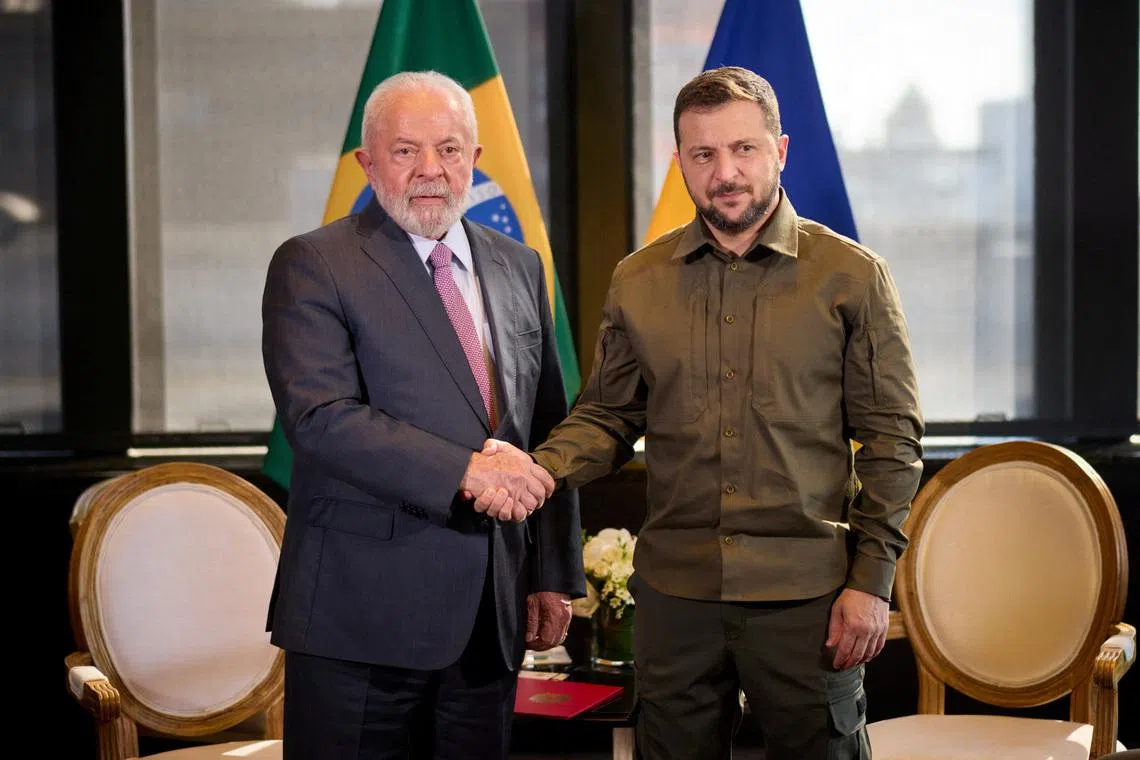
In a significant development for international diplomacy, Ukraine has formally accepted a proposal from Brazilian President Luiz Inacio Lula da Silva to facilitate peace efforts in the ongoing conflict with Russia. The acceptance, confirmed by a Ukrainian presidential adviser on Friday, June 19, 2026, marks a notable shift in Kyiv's approach to ending the more than four-year-old war, particularly as previous U.S.-backed mediation attempts have stalled.
The agreement emerged from a meeting between Ukrainian President Volodymyr Zelenskiy and President Lula da Silva on the sidelines of the Group of Seven (G7) summit in Evian-les-Bains, France, earlier in the week. During their discussions, the two leaders explored avenues to reactivate diplomacy, with Lula proposing several ideas, including direct contacts with the permanent members of the United Nations Security Council (UNSC). Ukrainian presidential communications adviser Dmytro Lytvyn indicated that both presidents agreed to pursue these ideas, with further discussions planned based on initial results.
President Lula da Silva has long positioned Brazil as a potential mediator in the Russia-Ukraine conflict, advocating for a non-aligned approach and emphasizing the need for a peaceful resolution. His persistent offers for diplomatic engagement had previously met with limited interest from Kyiv, making this recent acceptance a significant diplomatic victory for Brazil. Lula's proactive stance reflects a broader ambition to elevate Brazil's influence on the global stage, particularly among nations of the Global South, by demonstrating its capacity to contribute to resolving major international crises.
Brazil's engagement with the permanent members of the UNSC—the United States, France, Britain, Russia, and China—is central to Lula's strategy. While Ukraine maintains close ties with the U.S., France, and the U.K., the inclusion of Russia, a belligerent party, and China, a nation with significant geopolitical ties to Moscow, underscores the complexity and potential reach of this new initiative. Lula has reportedly already engaged with all five permanent members and intends to continue these discussions, aiming to build a consensus for de-escalation and negotiation.
Kyiv's decision to embrace Brazil's mediation efforts signals a potential reassessment of its diplomatic strategy. Earlier U.S.-backed mediation attempts had reportedly faltered, primarily due to Russia's unwavering insistence on further territorial concessions from Ukraine—demands that Kyiv has consistently rejected. The prolonged nature of the conflict, coupled with the challenges in achieving a breakthrough through existing channels, may have prompted Ukraine to explore alternative diplomatic avenues and broaden its base of international support beyond its traditional Western allies.
President Zelenskiy's previous calls for U.S. President Donald Trump to re-engage in mediation and broker a face-to-face meeting with Russian President Vladimir Putin, which Putin has so far ruled out, further highlight Ukraine's urgent need for effective diplomatic pathways. By accepting Lula's offer, Ukraine is not only acknowledging Brazil's growing diplomatic weight but also signaling a pragmatic willingness to engage with diverse international actors in the pursuit of peace, even if the core principles of its territorial integrity remain non-negotiable.
The involvement of Brazil introduces a new dynamic into the complex geopolitical landscape surrounding the Russia-Ukraine war. It represents an attempt by a prominent Global South nation to carve out an independent path for peace, potentially offering a different perspective from the Western-led efforts. This initiative could also place renewed pressure on Russia and China to engage more constructively in peace talks, given Brazil's diplomatic outreach to them.
However, the path to peace remains fraught with significant challenges. Russia's steadfast demands for territorial concessions continue to be a major impediment, and there is no immediate indication that Moscow's position has softened. The success of Brazil's initiative will depend heavily on its ability to bridge the fundamental disagreements between the warring parties and to garner meaningful support from all UNSC permanent members, particularly Russia and China. While the acceptance of Lula's proposal is a positive step towards reinvigorating diplomacy, it is merely the beginning of what promises to be a long and arduous process towards a lasting resolution.


