TRENDING

Thursday, 15 October 2026
----------------------
4 Jumada Al-Awwal 1448 AH
Former US President Donald Trump's recent social media posts targeting Somali American kindergartners in Minnesota have ignited widespread condemnation, deepening domestic divisions and raising questions about the United States' commitment to diversity and religious freedom on the global stage. The incident underscores a persistent political strategy of leveraging xenophobia, with significant implications for national cohesion and international perceptions of American values.
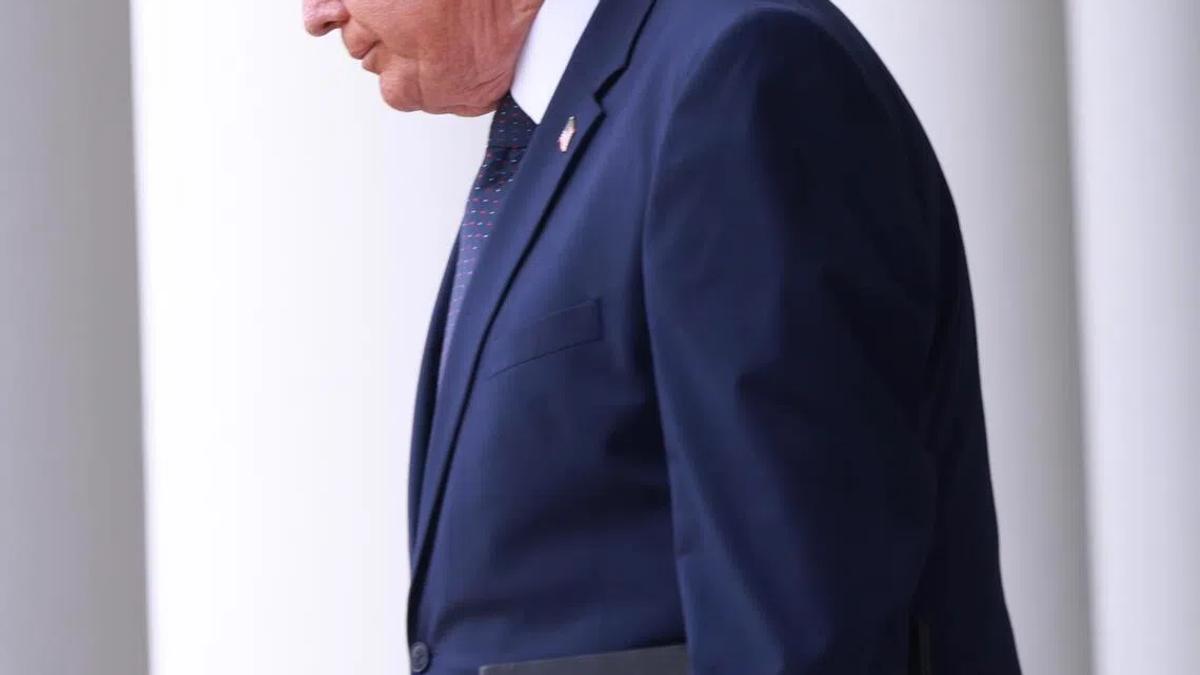
On July 6, 2026, former US President Donald Trump shared a video on his social media platform depicting Somali American kindergartners wearing hijabs during a promotion ceremony at a St. Paul, Minnesota, school. The posts, which included a comment from a right-wing account highlighting the children's attire, quickly drew sharp criticism for what was widely perceived as the targeting of innocent children and the promotion of Islamophobia. This incident is not isolated but rather a continuation of a sustained pattern of xenophobic rhetoric directed at Minnesota's significant Somali community, raising profound concerns about social cohesion within the United States and its standing in the international community.
For over a year, Mr. Trump has consistently employed divisive language against the Somali community in Minnesota. His past statements have included disparaging Somali immigrants as "garbage," portraying their children as a burden on public schools, and demonizing Somali-born Representative Ilhan Omar. His administration previously initiated immigration crackdowns and and investigations, which a judge later found were intended to "harass and retaliate against" Democratic officials in the state, leveraging a welfare fraud scandal concentrated within the Somali community. The recent posts, however, struck a particularly sensitive nerve, with community organizers like Khalid Omar describing it as a "red line" due to the direct targeting of young children.
White House spokesperson Abigail Jackson defended Mr. Trump's previous statements, asserting that "aliens who come to our country, complain about how much they hate America, fail to contribute to our economy, rip off Americans and refuse to assimilate into our society should not be here." This official stance further solidifies the perception that the rhetoric is not merely an oversight but a deliberate political strategy.
The immediate aftermath of the posts revealed a stark polarization within American society. National civil rights organizations and state leaders, including Minnesota Attorney General Keith Ellison and State Senator Zaynab Mohamed, swiftly condemned Mr. Trump's actions, characterizing them as bigoted and dangerous. Senator Mohamed drew a parallel, questioning the public reaction if the children had been wearing yarmulkes, underscoring the perceived selective application of concern for religious freedom.
Conversely, Mr. Trump's social media followers responded with an outpouring of support, often expressed in overtly racist, Islamophobic, and anti-Muslim terms. Messages calling the students "future terrorists" and advocating for the deportation of all Muslims highlighted the extent to which such rhetoric can normalize hate speech and incite prejudice among segments of the population. This dynamic illustrates the profound challenge to national unity, where political discourse increasingly exacerbates existing societal fault lines rather than bridging them.
From a geopolitical perspective, Mr. Trump's actions carry significant weight, particularly given his status as a former president and potential future political leader. Domestically, this rhetoric serves as a potent political tool, designed to energize a specific base by appealing to anti-immigrant and nationalist sentiments. This strategy, while effective in mobilizing supporters, comes at the cost of deepening political polarization and eroding social cohesion within the United States. The documented rise in religious discrimination and bullying against Muslim children, as highlighted by a 2025 poll from the Institute for Social Policy and Understanding, demonstrates the tangible, negative consequences of such high-level political discourse on vulnerable communities.
Internationally, such incidents can significantly impact the United States' soft power and global standing. As a nation that often champions human rights, religious freedom, and democratic values, rhetoric perceived as xenophobic or Islamophobic from a prominent American political figure can undermine its credibility on the world stage. It risks alienating allies, particularly those in Muslim-majority nations, and provides fodder for adversaries who seek to portray the US as hypocritical or internally fractured. The selective concern for religious bias, as noted by critics, further complicates the US's diplomatic efforts to promote religious freedom globally.
The incident underscores the critical role of political leadership in shaping public discourse and its real-world effects. The normalization of anti-Muslim hate and demeaning rhetoric, as tracked by national advocacy groups, has been linked to increased discrimination and potential for violence. The challenge for the United States lies in navigating these deep divisions while upholding its foundational principles of diversity, inclusion, and religious freedom. The ongoing debate surrounding Mr. Trump's posts is not merely a domestic political squabble; it is a reflection of broader global trends concerning nationalism, identity politics, and the weaponization of social media, with lasting implications for the fabric of American society and its role in a complex international order.
Source referenced: STRAITSTIMES
This brief was synthesized by our Editorial Engine and reviewed by The Ground Narrative team.