TRENDING

Friday, 16 October 2026
----------------------
5 Jumada Al-Awwal 1448 AH
US President Donald Trump has withdrawn his proposal for a 20 percent transit fee in the Strait of Hormuz, opting instead for 'massive' trade and investment deals from Gulf States. This strategic pivot occurs amidst a rapidly escalating conflict between the US and Iran, highlighting complex diplomatic and economic maneuvers in a volatile region.
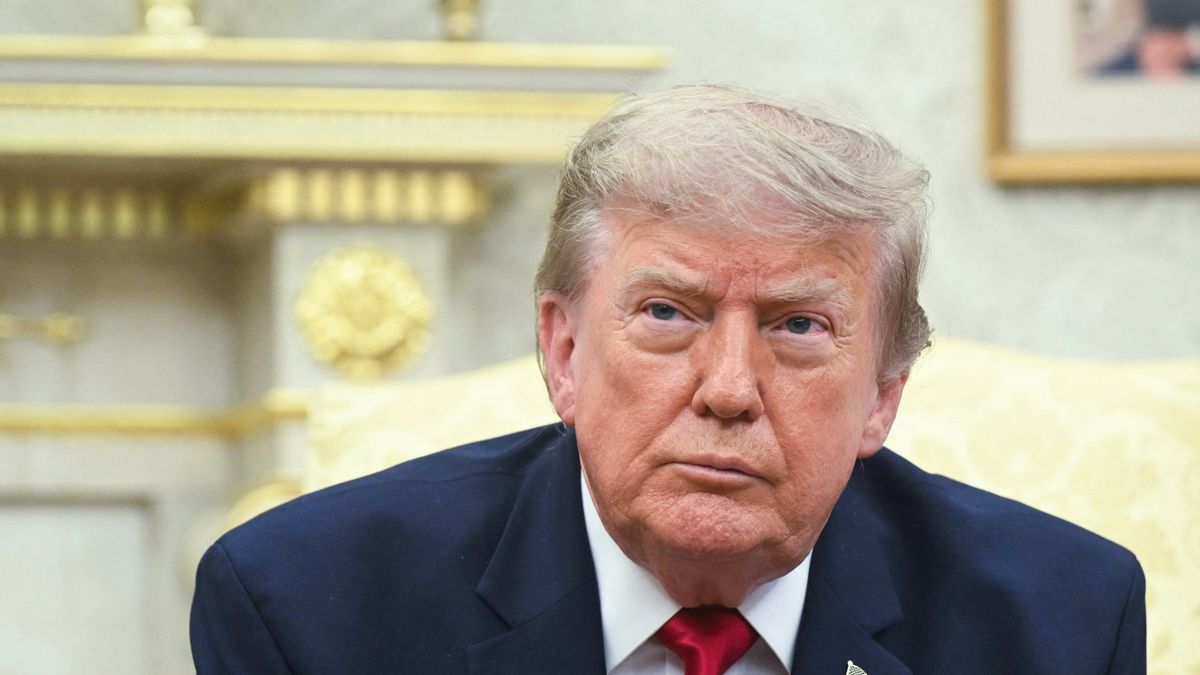
United States President Donald Trump has reversed his administration's controversial proposal to levy a 20 percent transit fee on vessels passing through the Strait of Hormuz. The decision, announced on Tuesday, July 14, 2026, comes just a day after the initial declaration and is set against a backdrop of intensifying military conflict between the US and Iran, which has seen a preliminary peace memorandum collapse and a renewed US military blockade of Iran.
Initially, President Trump had stated on Truth Social that the 20 percent fee would serve as a "reimbursement" for "any and all costs necessary to do the job of providing safety and security to this very volatile section of the World." This proposal, however, immediately raised significant concerns. The Strait of Hormuz is an international waterway, and the US does not control it, making the legality and enforcement of such a fee highly questionable under international maritime law. Notably, the Trump administration had previously rejected Iran's right to charge transit fees, with then-Secretary of State Marco Rubio asserting that such actions would undermine international law. The initial fee announcement was seen as the closest the administration had come to translating its rhetoric of taking "control" of the Strait into concrete policy, despite the inherent challenges.
The abrupt reversal saw President Trump declare that the fee would be replaced with "Trade and Investment Deals that the various Gulf States will be making with the United States." He attributed this shift to "highly productive conversations with Middle East leadership" and vowed that the investments from Gulf countries would be "massive." This pivot suggests a strategic recalibration, moving away from a direct financial imposition that could be legally contentious and economically burdensome for global shipping, towards leveraging existing economic relationships with key regional allies.
This change in approach indicates a recognition of the diplomatic and economic sensitivities involved. Gulf States, heavily reliant on the Strait for oil exports, would have been significantly impacted by a 20 percent transit fee. Their willingness to engage in "massive" investment deals with the US could be interpreted as a means to secure continued US security guarantees in the region, avoid direct financial penalties, and maintain stable trade relations amidst the ongoing conflict. Several countries in the region had already pledged multibillion-dollar investments in the US prior to the escalation of hostilities with Iran, suggesting a pre-existing framework for such economic cooperation.
The policy shift regarding the Strait of Hormuz fee cannot be isolated from the broader, rapidly deteriorating security situation in the Middle East. The US and Israel launched a war with Iran on February 28, 2026, leading to widespread conflict. A brief respite in mid-June, marked by a memorandum of understanding (MoU) that saw a temporary end to fighting and the opening of the Strait of Hormuz, has now been shattered. The latest reports indicate a renewed US military blockade of Iran, with significant attacks reported across Iranian cities such as Bushehr, Bandar Abbas, Mahshahr, Abadan, and on Qeshm and Kish islands. Iran, in turn, has vowed to continue attacks on US assets and regional targets, with incidents reported in Bahrain, Jordan, and on vessels within the Strait of Hormuz. Kuwait has also reported engaging aerial targets.
This intense military backdrop underscores the volatility of the region and the high stakes involved in any policy decision concerning critical chokepoints like the Strait of Hormuz. The initial fee proposal, while framed as a security cost recovery, could have been perceived by Iran as an act of economic warfare, further fueling the conflict. The pivot to investment deals, while still serving US financial interests in regional security, presents a less confrontational economic mechanism, potentially aimed at maintaining a degree of diplomatic flexibility with Gulf allies even as military tensions with Iran remain at an all-time high.
The US administration's decision to replace a direct transit fee with investment pledges from Gulf States represents a tactical adjustment in its approach to funding regional security operations and managing its alliances. It aligns the US back with its traditional stance on international maritime law, avoiding a precedent that could be exploited by other actors. However, this policy shift does not fundamentally alter the trajectory of the US-Iran confrontation, which continues to escalate with significant military actions and threats, including President Trump's previous threat to attack Iran's 'Pickaxe Mountain' nuclear facility.
The Strait of Hormuz remains a critical global chokepoint for oil transit, and its security is paramount for international energy markets. The ongoing conflict and the renewed blockade pose severe risks to global shipping and regional stability. The willingness of Gulf States to commit "massive" investments highlights their vested interest in regional security and their reliance on US protection, even as they navigate the complex dynamics of a region engulfed in conflict. The long-term implications of this strategy will depend on its effectiveness in funding US security operations, maintaining regional alliances, and, crucially, on the broader trajectory of the US-Iran conflict.
Source referenced: ALJAZEERA
This brief was synthesized by our Editorial Engine and reviewed by The Ground Narrative team.