TRENDING

Tuesday, 13 October 2026
----------------------
2 Jumada Al-Awwal 1448 AH
Former U.S. President Donald Trump has announced a purported agreement for a ceasefire between Israel and Hezbollah, following indirect talks. This development, if sustained, carries significant geopolitical implications for regional stability and U.S. engagement with non-state actors.
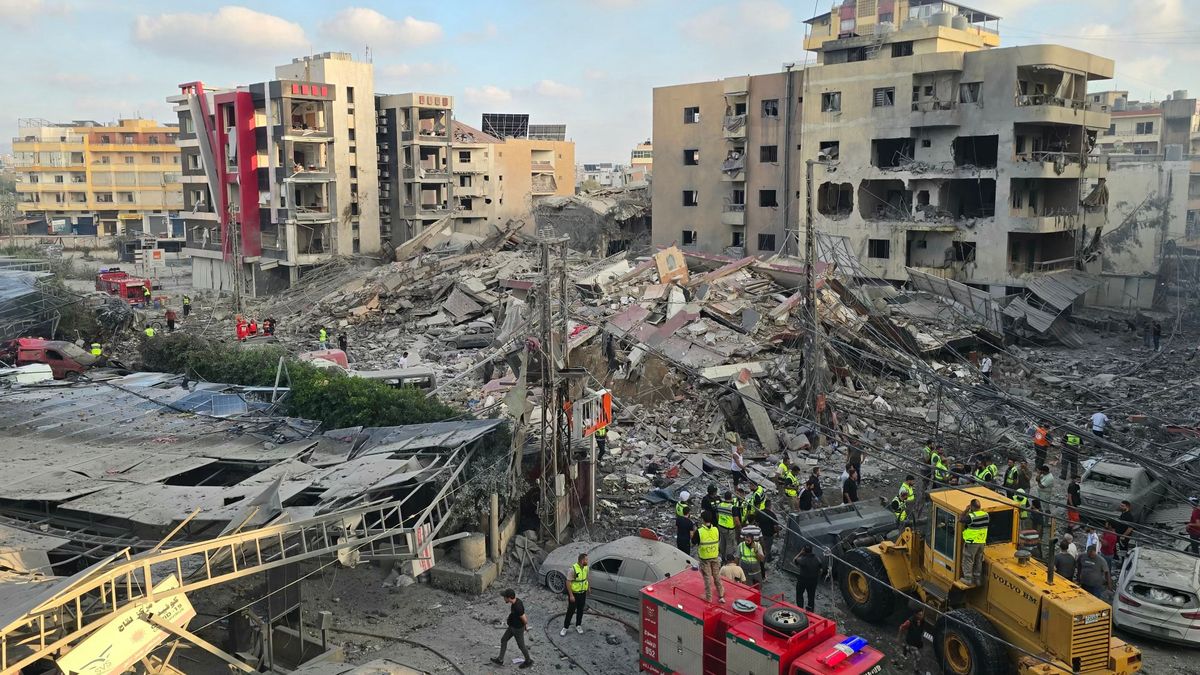
Former United States President Donald Trump announced on Monday, June 2, 2026, that Israel and the Lebanese armed group Hezbollah have agreed to halt attacks, following what he described as indirect talks through intermediaries. This claim, posted on Truth Social, suggests a significant, albeit fragile, diplomatic breakthrough in a conflict that has severely escalated in recent months, causing widespread devastation and displacement in Lebanon.
Trump stated he had engaged with Israeli Prime Minister Benjamin Netanyahu and, through "highly placed representatives," with Hezbollah. According to the Lebanese embassy in Washington, the proposed arrangement entails Hezbollah ceasing attacks on Israel in exchange for Israel halting strikes on Beirut and its southern suburbs. Trump further indicated that Netanyahu had agreed to withdraw Israeli troops preparing to attack Beirut. However, Netanyahu's office quickly issued a conditional statement, asserting Israel's right to strike Beirut if Hezbollah's attacks persist, underscoring the precarious nature of the alleged agreement.
The current escalation between Israel and Hezbollah began in late February 2026, when Hezbollah initiated firing on northern Israel following reported US-Israeli strikes on Tehran. This marked a resumption of hostilities after a November 2024 ceasefire, which Hezbollah claims Israel frequently breached. Since early March, Israel has launched near-daily attacks on Lebanon, resulting in over 3,400 fatalities and 10,000 injuries, and displacing more than one million people, according to the Lebanese Ministry of Public Health. These operations have seen Israel occupy approximately one-fifth of Lebanese territory, pushing beyond the Litani River and into areas previously considered a buffer zone, known as the "Yellow Line."
The conflict in Lebanon is deeply intertwined with broader regional dynamics, particularly the ongoing tensions between the United States and Iran. Tehran has explicitly linked any agreement to end its war with the US to an Israeli withdrawal from Lebanon, highlighting Hezbollah's strategic role as a key Iranian proxy. The reported suspension of message exchanges between Washington and Tehran, following the escalation in Lebanon, further illustrates this interconnectedness.
Trump's direct, albeit indirect, engagement with Hezbollah is unprecedented for a former US president, especially given Washington's designation of the group as a "terrorist" organization. This move could be interpreted as a pragmatic attempt to de-escalate a volatile regional conflict, potentially signaling a shift in diplomatic approach towards non-state actors in crisis situations. For Trump, it also presents an opportunity to project influence on the global stage.
Hezbollah, through its MP Hassan Fadlallah and Lebanese parliamentary speaker Nabih Berri, has expressed support for a "full ceasefire on all Lebanese territory," viewing it as a precursor to the withdrawal of Israeli troops. This stance aligns with Iran's broader demands and underscores Hezbollah's long-standing objective of resisting Israeli presence in Lebanon. The group's acceptance of the US proposal, even if conditional, suggests a strategic calculation to alleviate pressure and potentially consolidate its position.
Israel's response, while acknowledging discussions with Trump, maintains a firm stance on its right to self-defense. The continued attacks on southern Lebanon, even after Trump's announcement, indicate that Israel's military objectives extend beyond a simple cessation of hostilities, likely aiming to degrade Hezbollah's capabilities and secure its northern border. The threat to strike Beirut's Dahiyeh area, a Hezbollah stronghold, serves as a clear deterrent.
Previous attempts at ceasefires between Israel and Lebanon have repeatedly collapsed, including a 10-day truce in April 2026 that was later extended but failed to hold. While direct negotiations between Israeli and Lebanese officials have occurred since April 2026—the first since 1983—indirect communication channels, often facilitated by Lebanese state figures like Parliament Speaker Berri, have historically been crucial for de-escalation. The current situation, however, involves a former US president directly claiming to broker such a deal, adding a unique layer of complexity.
Analysts, such as Sami Nader of the Levant Institute for Strategic Affairs, emphasize the need to decouple the Lebanon ceasefire from the broader Iranian-US conflict to achieve a sustainable resolution. The systemic demolition of infrastructure in Lebanon and the humanitarian crisis underscore the urgency of a lasting peace. The durability of this latest proposed ceasefire remains highly uncertain, given the differing interpretations and conditions set by both Israel and Hezbollah. The coming days will be critical in determining whether this unprecedented diplomatic intervention can translate into a tangible and sustained reduction in hostilities, or if it will join the list of failed attempts in a deeply entrenched regional conflict.
Source referenced: ALJAZEERA
This brief was synthesized by our Editorial Engine and reviewed by The Ground Narrative team.


